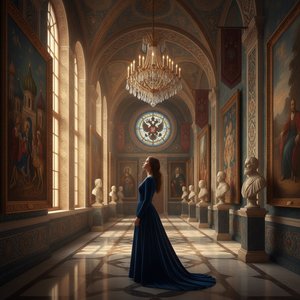
Carlo Bartolomeo Rastrelli: The Sculptor Who Brought Baroque Splendor to Russia
Carlo Bartolomeo Rastrelli (1675-1744) stands as a monumental figure in the history of European art, particularly renowned for his transformative role in establishing Baroque aesthetics within the Russian Empire. Born in Florence, Italy, Rastrelli’s artistic journey began amidst the turbulent economic landscape of his homeland—a formative experience that ultimately propelled him toward a career marked by grandeur and innovation. His talent was recognized early on, fostering training encompassing bronze casting, jewelry crafting, drawing, and architectural design – skills honed before he reluctantly abandoned Florence's challenges for Rome and Paris.Early Life & Training
Rastrelli’s upbringing instilled in him a profound appreciation for craftsmanship and artistic excellence. His father, Francesco Rastrelli, was a wealthy nobleman who ensured Carlo received a comprehensive education, equipping him with the foundational knowledge necessary for his future endeavors. This early exposure to aristocratic patronage nurtured his ambition and cultivated an unwavering dedication to mastering diverse artistic disciplines—a cornerstone of his remarkable success. He studied under Giovanni Battista Foggini in Florence, producing a marble statue of Mary Magdalene (1705), demonstrating immediate talent and establishing a trajectory toward monumental sculpture.Roman Influences
Rastrelli’s time in Rome proved decisive in shaping his artistic sensibilities. The vibrant Baroque scene captivated him—characterized by dramatic ornamentation, emotional intensity, and masterful illusionism. Artists like Gian Lorenzo Bernini profoundly impacted Rastrelli's vision, inspiring him to embrace bold sculptural techniques and explore ambitious compositional concepts. These influences would indelibly shape his artistic worldview and propel him toward creating works of unparalleled grandeur.Parisian Patronage & Family Life
Moving to Paris alongside his wife, Rastrelli benefited from the patronage of influential figures who recognized his potential—particularly Louis XIV’s court. He welcomed a son into his family, Francesco Bartolomeo Rastrelli, who would later become a celebrated architect in Russia—a lineage destined to contribute significantly to the artistic legacy of both Italy and Russia. This familial connection fostered an environment conducive to artistic innovation and cemented Rastrelli's position as a pivotal figure within European artistic circles.The Invitation to Russia & Architectural Ascendancy
A momentous turning point arrived in 1706 when Rastrelli secured the commission to sculpt the tomb of Louis XIV’s minister, Jean-Baptiste Colbert—a project that solidified his reputation as a master sculptor and garnered him the honorific title of Count. However, Rastrelli's ambitions extended beyond sculpture; he eagerly accepted an invitation from Peter I (the Great) to relocate to Saint Petersburg in 1715, driven by the promise of artistic opportunity and royal patronage. This decision irrevocably altered his trajectory, establishing him as Russia’s foremost architect during a period of ambitious modernization.Saint Petersburg Projects
Rastrelli spearheaded several transformative architectural initiatives in Saint Petersburg—including the planning of Vasilyevsky Island and the construction of Peterhof Palace (Hermitage Gardens), demonstrating an unparalleled vision for urban design and landscape architecture. He championed the ambitious design of the Senate Building, incorporating innovative hydraulic features intended to elevate its prestige and grandeur—a testament to his commitment to pushing artistic boundaries. His meticulous attention to detail and masterful execution transformed Saint Petersburg into a symbol of Baroque splendor.Sculptural Masterpieces & Peter the Great's Portrait
Rastrelli’s sculptural output solidified his place among the Baroque titans—most notably his monumental statue of Peter I (St. Michael’s Castle), a breathtaking depiction of Russia’s autocratic ruler embodying power and majesty. Equally significant was his wax figure of Peter the Great, meticulously crafted to capture the Tsar's likeness with remarkable accuracy—a portrait that remains an iconic representation of the era. Furthermore, Rastrelli produced numerous busts commemorating Peter I’s prominent advisors and dignitaries, showcasing his technical prowess and artistic sensitivity.Legacy & Influence
Carlo Bartolomeo Rastrelli’s influence extended far beyond his immediate projects—inspiring a generation of Russian architects and sculptors who embraced the Baroque style's expressive grandeur. His son Francesco Bartolomeo Rastrelli continued his father’s legacy, shaping the architectural landscape of Russia with equally opulent designs—most notably the Winter Palace and Catherine Palace—establishing Rastrelli’s family as cornerstones of Russian artistic heritage. Rastrelli’s contribution to Baroque art in Russia ensured that its splendor would endure for centuries to come, cementing his enduring reputation as one of Europe's most influential sculptors.Domande e risposte
Di dove è Carlo Bartolomeo Rastrelli?
Carlo Bartolomeo Rastrelli è nato/a in Italia.
Dove e quando è nato Carlo Bartolomeo Rastrelli?
Carlo Bartolomeo Rastrelli è nato a Firenze nel 1675.
Dove si possono trovare le opere di Carlo Bartolomeo Rastrelli raggruppate per movimento artistico?
I movimenti di Carlo Bartolomeo Rastrelli sono consultabili nella pagina Tutti i movimenti, che raggruppa le opere per movimento.