x
Acquista stampa Acquista stampaAcquista immagine Acquista immagine InviaInvia
Dettagli operaDettagli opera Aggiungi ai preferiti Aggiungi ai preferiti Scarica immagineScarica immagine SimiliSimili SlideshowSlideshow


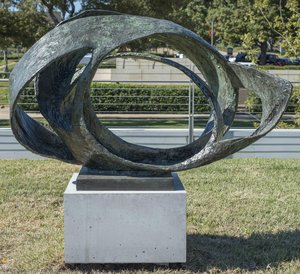
Figure lying on its side (Version V)

William Kenneth Armitage's 'Figure Lying on Its Side (Version V)' is a poignant bronze sculpture exploring themes of vulnerability and human form. Discover its geometric beauty and profound emotional depth.

Esplora il capolavoro satirico di William Hogarth, 'La Marcia della Guardia a Finchley', un vibrante dipinto ad olio del 1750 che raffigura la difesa Giacobata di Londra. Un'opera d'arte unica nella storia!

Riproduzione a olio fatta a mano

Olio su tela dipinto a mano nelle tue dimensioni e con la tua cornice, realizzato su ordinazione dai nostri artisti. (Acquista stampa Acquista stampaAcquista immagine Acquista immagine)

Formato standard
su misura
CM
INCH

Scegli tra le nostre dimensioni predefinite, che rispettano le proporzioni originali dell'opera d'arte.

larghezza
altezza

È possibile inserire dimensioni personalizzate per adattare l'opera a una cornice o a uno spazio specifico. Se la dimensione selezionata non corrisponde alle proporzioni dell'immagine originale, provvederemo a ritagliare l'opera o a estendere il dipinto con elementi aggiuntivi dipinti a mano. Un mockup digitale ti sarà inviato per approvazione prima dell'inizio della produzione.
Si prega di notare che l'anteprima a schermo non riflette il ritaglio o l'estensione effettivi. Solo il mockup mostrerà accuratamente la composizione finale.
Sebbene siano disponibili dimensioni personalizzate, consigliamo di selezionare una dimensione dall'elenco predefinito per preservare le proporzioni originali.

Esempi di ciò che può essere modificato: sostituire il volto con una foto del cliente; aggiungere un animale domestico (ad esempio, sostituire un gatto con un cane); inserire un messaggio nascosto nello sfondo; cambiare il paesaggio o gli elementi dello sfondo.
Dopo l'ordine, il team di WahooArt.com contatterà il cliente via e-mail per le istruzioni e fornirà un'anteprima del mockup

Consegna in tutto il mondo () in 3/4 settimane anziché nelle normali 5 settimane. (4 Settembre). Nessun compromesso sulla qualità.

why_choose_icon
Spedizione espressa gratuita in tutto il mondo
why_choose_icon
Tela in lino di alta qualità
why_choose_icon
Assicurazione completa sulla spedizione
why_choose_icon
Garanzia di rimborso dei dazi doganali
why_choose_icon
Garanzia di fedeltà cromatica
why_choose_icon
Politica di reso entro 60 giorni (solo per difetti di fabbricazione)
why_choose_icon
Garanzia di rimborso al 100%
why_choose_icon
Offerta per acquisti multipli

Prezzo totale

$ 272

reproduction

Figure lying on its side (Version V)

Tecnica di riproduzione

Dimensioni riproduzione

-

Prezzo totale calcolato

$ 272

Informazioni rapide

  • Artist: William Kenneth Armitage
  • Medium: Bronze
  • Artistic style: Geometry of Fear
  • Title: Figure lying on its side (Version V)
  • Dimensions: 38.1 x 82.5 x 22.3cm
  • Influences: Ancient art
  • Notable elements: Geometric, semi-abstract

Quiz d'arte

Per ogni domanda è presente una sola risposta corretta.

Domanda 1:
What is the primary subject of William Kenneth Armitage’s sculpture, ‘Figure Lying on Its Side (Version V)’?
Domanda 2:
In what year was ‘Figure Lying on Its Side (Version V)’ created?
Domanda 3:
William Kenneth Armitage is known for his use of which primary material in his sculptures?
Domanda 4:
The sculpture’s style, often described as ‘Geometry of Fear,’ reflects which broader artistic trend?
Domanda 5:
Which of the following best describes Armitage’s approach to representing the human figure?

The Sculptor's Introspection: William Kenneth Armitage’s “Figure Lying on Its Side”

William Kenneth Armitage’s “Figure Lying on Its Side (Version V)” isn’t merely a sculpture; it’s a distilled essence of human experience, rendered in the cool, enduring solidity of bronze. Completed in 1957, this piece stands as a pivotal work within Armitage's oeuvre, embodying his signature style – a deliberate simplification of the human form coupled with an underlying current of unease and existential questioning. The sculpture immediately commands attention not through overt drama, but through its quiet intensity; it’s a study in restraint, inviting prolonged contemplation rather than immediate judgment.

Armitage, emerging from the austerity of post-war Britain, was deeply influenced by the anxieties of his time. His work reflects this, eschewing traditional heroic representations and instead focusing on the vulnerability inherent within the human condition. The figure itself is remarkably ambiguous – neither definitively male nor female, young nor old – existing in a state of suspended animation, caught between repose and imminent movement. This deliberate lack of specificity allows viewers to project their own emotions and experiences onto the sculpture, fostering a deeply personal connection.

A Geometry of Fear: Armitage’s Artistic Language

Armitage's style is often described as “Geometry of Fear,” a term coined by critics to capture the way he employed sharp angles and fragmented forms to convey a sense of disorientation and psychological tension. “Figure Lying on Its Side” exemplifies this perfectly. The figure’s limbs are elongated, almost skeletal, creating a feeling of precariousness and vulnerability. The subtle curve of the torso is countered by the rigid lines of the chair-like structure attached to its side – an element that simultaneously grounds the sculpture and reinforces its sense of confinement. The bronze itself, chosen for its durability and ability to capture minute details, contributes significantly to the work’s impact; it possesses a tactile quality that invites touch while simultaneously conveying a sense of permanence.

Interestingly, Armitage drew inspiration from ancient art forms, particularly Cycladic sculpture – the enigmatic, abstract figures found on the Greek islands. These primitive forms, devoid of narrative and imbued with an almost ritualistic quality, resonate within Armitage’s work, suggesting a connection to primal human emotions and beliefs. The deliberate simplification of the figure echoes this ancient aesthetic, stripping away extraneous detail to reveal the core essence of form.

Symbolism and Interpretation: A Fragmented Self

The chair-like appendage attached to the figure’s side is particularly intriguing. It can be interpreted as a symbol of societal constraints, representing the pressures and expectations that shape our lives. Alternatively, it might suggest a yearning for connection or support – a desire to anchor oneself in a world often characterized by isolation. The figure's prone position further reinforces this sense of vulnerability, suggesting a state of surrender or perhaps even resignation.

Furthermore, the sculpture’s monochrome palette—a stark contrast against the warm tones of bronze—heightens its emotional impact. The absence of color forces viewers to focus on the form itself, intensifying the feeling of unease and prompting deeper reflection. The work is not about depicting a specific narrative; instead, it invites us to confront our own anxieties and uncertainties.

A Legacy of Quiet Intensity

“Figure Lying on Its Side (Version V)” remains a powerful testament to Armitage’s artistic vision – a poignant exploration of the human condition rendered in bronze. It's a work that rewards repeated viewing, revealing new layers of meaning with each encounter. Reproductions of this sculpture offer an accessible way to experience its profound emotional resonance, bringing its quiet intensity into homes and galleries alike. Its enduring appeal lies not in grand gestures or dramatic displays, but in its ability to capture the subtle complexities of human existence – a reminder that even in moments of vulnerability, there is beauty and significance to be found.


Biografia dell'artista

A Life Sculpted in Bronze: The World of Kenneth Armitage

William Kenneth Armitage, known to the art world as Kenneth Armitage, emerged from the industrial heartland of Leeds, England, in 1916, a year steeped in the shadows of the First World War. His journey toward becoming one of Britain’s most significant sculptors of the 20th century was not predetermined but forged through dedication, artistic exploration, and the disruptive forces of global conflict. Early talent blossomed at Leeds College of Art from 1934 to 1937, a foundation upon which he built further skills at the prestigious Slade School of Fine Art in London until 1939. However, the looming specter of war interrupted his studies as he answered the call to serve in the Royal Artillery. This period undoubtedly shaped his perspective, instilling a sense of resilience and perhaps contributing to the underlying tension often perceived within his work. Following demobilization, Armitage found himself drawn to education, taking on a pivotal role at the Bath Academy of Art from 1946 to 1956, where he headed the sculpture department, nurturing a new generation of artists while simultaneously refining his own distinctive style.

The Geometry of Fear and Human Form

Armitage’s artistic signature lies in his compelling exploration of the human figure rendered primarily in bronze. He didn't seek to replicate reality but rather to distill it, stripping away extraneous detail to reveal the essence of form and emotion. His sculptures are characterized by a semi-abstract quality; figures remain recognizable as human, yet they are simplified, stylized, and often fragmented. This wasn’t merely an aesthetic choice but a deliberate attempt to convey a sense of vulnerability and existential questioning that resonated with the post-war climate. Geometric shapes play a crucial role in his visual language, lending structure and a certain austerity to his figures. Critics coined the term ‘Geometry of Fear’ to describe the work of Armitage alongside contemporaries like Lynn Chadwick and Henry Moore, recognizing a shared preoccupation with anxiety, alienation, and the fragility of human existence. However, while acknowledging Moore's profound influence – particularly his exploration of the human form in space – Armitage forged his own path, embracing a more angular, geometric approach that set him apart. The echoes of ancient art also resonate within his work; he drew inspiration from the simplified forms and archaic qualities found in Ancient Egyptian and Cycladic sculptures, imbuing his pieces with a timeless quality. He believed that sculpture could communicate emotion without resorting to narrative or explicit representation—a conviction that underpinned his entire artistic practice.

Early Influences and Artistic Development

Armitage’s formative years were marked by exposure to the avant-garde movements of the time, notably Surrealism and Cubism. These influences instilled in him a fascination with fragmentation and distortion – techniques he would later masterfully employ in his sculptures. His early works demonstrated an acute sensitivity to tonal variations and textural contrasts, anticipating the developments of Abstract Expressionism. Simultaneously, Armitage cultivated a deep appreciation for classical sculpture, particularly the monumental figures of Michelangelo and Bernini—a connection that informed his understanding of proportion and dynamism. This dual engagement with modern and ancient art served as a cornerstone of his artistic vision, shaping his stylistic preferences and intellectual convictions throughout his career.

Major Achievements and Recognition

Throughout his prolific output, Armitage achieved considerable acclaim for his contributions to British sculpture. He was awarded the CBE in 1969 recognizing his distinguished service to the arts and education—a testament to his unwavering commitment to fostering artistic excellence. Furthermore, he gained international recognition as an Associate Royal Academician in 1994 – a prestigious honor bestowed upon him by the Royal Academy of Arts for his enduring legacy as one of Britain’s foremost sculptors. Perhaps Armitage's most poignant achievement was the unveiling of “Both Arms,” commissioned for Millennium Square, Leeds, in 2001—a monumental bronze sculpture that served as a powerful symbol of reconciliation and hope for the city he called home. This artwork cemented his place in architectural history and solidified his reputation as an artist who dared to confront profound themes with uncompromising honesty.

A Continuing Dialogue

Kenneth Armitage passed away peacefully in London in 2002, leaving behind a rich artistic legacy that continues to inspire and provoke thought. His sculptures are celebrated not only for their aesthetic qualities but also for their ability to tap into universal human emotions – anxiety, loneliness, resilience, and the search for meaning. He wasn’t simply creating objects; he was initiating a dialogue about what it means to be human in a complex and often unsettling world. His work stands as a testament to the power of art to reflect, challenge, and ultimately transcend the limitations of our time. Today, his pieces are exhibited in major museums and public spaces across the UK and internationally, ensuring that his unique vision continues to resonate with generations to come. His enduring influence can be seen in the work of contemporary sculptors who continue to explore the boundaries between abstraction and figuration—demonstrating the timeless relevance of Armitage’s artistic innovations.
Kenneth Armitage

Kenneth Armitage

1916 - 2002 , Regno Unito

Dati rapidi

  • Artistic Movement Or Style: Semi-astratto scultura
  • Artists Who Influenced This Artist:
    • Henry Moore
    • Barbara Hepworth
  • Date Of Birth: 18 luglio 1916
  • Date Of Death: 22 gennaio 2002
  • Full Name: William Kenneth Armitage
  • Nationality: Britannico
  • Notable Artworks:
    • Both Arms
    • Figura sdraiata su lato (Versione V)
    • Legs Walking
  • Place Of Birth: Leeds, Regno Unito