


 Oil On CanvasWallArtAcademic art
 189319th Century
 191.0 x 122.0 cm
Olio su tela dipinto a mano nelle tue dimensioni e con la tua cornice, realizzato su ordinazione dai nostri artisti. ( Acquista stampa Acquista immagine)





























Scegli tra le nostre dimensioni predefinite, che rispettano le proporzioni originali dell'opera d'arte.

È possibile inserire dimensioni personalizzate per adattare l'opera a una cornice o a uno spazio specifico. Se la dimensione selezionata non corrisponde alle proporzioni dell'immagine originale, provvederemo a ritagliare l'opera o a estendere il dipinto con elementi aggiuntivi dipinti a mano. Un mockup digitale ti sarà inviato per approvazione prima dell'inizio della produzione.
Si prega di notare che l'anteprima a schermo non riflette il ritaglio o l'estensione effettivi. Solo il mockup mostrerà accuratamente la composizione finale.
Sebbene siano disponibili dimensioni personalizzate, consigliamo di selezionare una dimensione dall'elenco predefinito per preservare le proporzioni originali.
Consegna in tutto il mondo () in 3/4 settimane anziché nelle normali 5 settimane. (6 Settembre). Nessun compromesso sulla qualità.


Jeunesse
Dimensioni riproduzione
In the realm of nineteenth-century Academic art, few works capture the ethereal intersection of the human and the divine as tenderly as William-Adolphe Bouguereau’s Jeunesse. Painted in 1893, this oil on canvas masterpiece serves as a profound meditation on innocence and the enduring spirit of youth. The composition centers on a woman of remarkable grace, her presence anchored by a luminous white dress and the delicate shimmer of a pearl necklace. She is not alone in her contemplation; flanking her are two celestial beings, angels whose gentle proximity suggests a shared secret or a whispered prayer. As she reaches up to hold the ears of these winged companions, a sense of profound intimacy emerges, drawing the viewer into a private moment of spiritual communion that transcends the boundaries of time.
The technical mastery displayed in Jeunesse is a testament to Bouguereau’s status as a titan of the French Academic school. His brushwork, though nearly invisible to the naked eye, achieves a level of hyper-realistic perfection that breathes life into the skin tones and the soft textures of the fabric. The artist employs a luminous color palette, where light does not merely strike the subjects but seems to emanate from within them. This technique creates a soft, pearlescent glow that enhances the painting's Neoclassical ideals of beauty and harmony. Every detail, from the subtle musculature of the angels to the decorative elegance of the vase in the background, is rendered with a precision that commands respect and invites prolonged study.
Beyond its surface beauty, Jeunesse is rich with symbolic resonance. The title itself, meaning "Youth," hints at a state of being rather than merely an age. The interaction between the woman and the angels symbolizes the connection between the earthly realm and the spiritual world, suggesting that purity of heart allows for a direct encounter with the divine. The pearls around her neck serve as symbols of wisdom and purity, while the serene atmosphere of the scene acts as an emotional sanctuary for the observer. For the collector or interior designer, this piece offers more than mere decoration; it provides an atmospheric anchor that can infuse a room with a sense of peace, sophistication, and timelessness.
Integrating a high-quality reproduction of such a significant work into a modern living space allows for a dialogue between historical grandeur and contemporary elegance. Whether placed in a sunlit gallery or a quiet study, the painting’s ability to evoke emotion remains undiminished. It stands as a breathtaking tribute to the era of Bouguereau, reminding us that even in a fast-paced world, there is an eternal value in stillness, beauty, and the pursuit of the sublime.

William-Adolphe Bouguereau ricevette la sua formazione artistica all'École des Beaux-Arts di Parigi. Studiò sotto François-Edouard Picquenot, una figura significativa nel suo sviluppo iniziale. Bouguereau fu fortemente influenzato dalle opere di Raffaello e Tiziano, evidente nei suoi ricchi colori e nelle composizioni dettagliate. Questa base classica plasmò il suo approccio alla pittura per tutta la sua carriera.
Lo stile artistico di Bouguereau è caratterizzato dal realismo, catturando meticolosamente l'emozione umana e l'anatomia con notevole precisione. Era un maestro nel rappresentare la forma femminile, spesso ritraendo figure mitologiche e scene di genere con una bellezza idealizzata. Alcune delle sue opere più notabili includono:
I dipinti di Bouguereau spesso presentavano temi mitologici, scene allegoriche e raffigurazioni idealizzate delle donne, riflettendo i gusti popolari del pubblico frequentatore dei Salon.
L'opera di Bouguereau si è evoluta nel tempo, pur mantenendo un forte impegno per il realismo accademico. Inizialmente influenzato da Raffaello e Tiziano, sviluppò uno stile distintivo caratterizzato da una resa impeccabile dell'anatomia umana, una particolare attenzione alla luce e all'ombra, e una capacità di evocare emozioni sottili attraverso l'espressione dei volti. La sua abilità nel rappresentare la figura femminile lo rese particolarmente popolare, ma anche oggetto di critiche da parte degli artisti impressionisti che preferivano un approccio più libero e spontaneo.
Nonostante abbia raggiunto un'immensa popolarità durante la sua vita, il lavoro di Bouguereau cadde in disgrazia nei primi anni del XX secolo quando le tendenze artistiche si spostarono verso l'astrazione e il modernismo. Tuttavia, la sua eredità ha sperimentato una significativa ripresa negli ultimi anni. Gli storici dell'arte e i collezionisti ora riconoscono la sua abilità tecnica e la dedizione ai valori artistici tradizionali.
Le opere di Bouguereau si possono trovare in prestigiosi musei in tutto il mondo:
I suoi dipinti fanno anche parte di numerose collezioni private, contribuendo ulteriormente al suo fascino duraturo.

1825 - 1905 , Francia
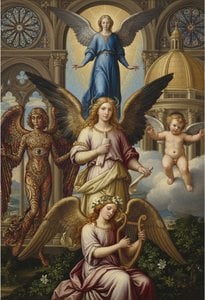
Explore the profound beauty of angelic figures in art history. From Renaissance masterpieces to celestial symbolism, our expert guide offers a sophisticated journey through the divine imagery of the Old Masters for discerning collectors and art enthusiasts.

Explore the refined world of Neoclassical portraiture. Discover the mastery of line, light, and order through an expert exploration of academic art history, from Jacques-Louis David to Jean-Antoine Houdon. Immerse yourself in the timeless elegance of classical realism.

Explore the profound elegance of Neoclassical art. Discover the principles of order, symmetry, and virtue through the works of masters like David and Mengs. Immerse yourself in a journey of classical grace and timeless aesthetic perfection.

 Anteprima in scala reale
 Invia
Invia Condividi
 Dettagli opera

 Scarica immagine
 Simili
 Radiografia
 Slideshow
 Espandi i dettagli







 L'opzione vetro è disponibile solo per dimensioni inferiori a 110 cm


