Anteprima in scala reale Prova in AR Ordina la riproduzione dipinta a mano Passa all'immagine digitale Condividi
Dettagli Aggiungi ai preferiti Scarica Articoli simili Radiografia Slideshow Statistiche

Untitled (10)

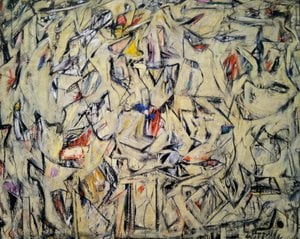
This monumental abstract expressionist painting by Willem de Kooning embodies the turbulent spirit of postwar America. Featuring fragmented figures and vibrant colors within a chaotic collage of furniture, it exemplifies De Kooning's signature "action painting" style.

Esplora il mondo audace di Willem de Kooning (1904-1997), un pioniere dell'Espressionismo Astratto. Scopri i suoi dipinti iconici come 'Donna I', noti per le pennellate dinamiche, la figurazione e l'intensità emotiva. Una figura chiave della New York School.

Giclée / Stampe d'arte

Stampa giclée o su tela di qualità museale, con produzione rapida e diverse opzioni di finitura. ( Ordina la riproduzione dipinta a mano Passa all'immagine digitale)

P118B $10
P118H $10
P118W $10
P438Z $10
P508JH $12
P508YH $12
P805H $10
P805Z $10
P919BZ $10
P919G $10
P919XJ $10
P959ZH $10
P968JZ $12
W106C $8
W218G $10
W218JH $8
W218Y $10
W307PJ $10
W316G $10
W316PJ $8
W316Y $10
W398PJ $8
W4111J $10
W500HY $15
W500JH $15
W692G $12
W849H $8
W940BG $15
W953PJ $8

Standard
personalizzato
CM
INCH

Scegli tra le nostre dimensioni predefinite, che rispettano le proporzioni originali dell'opera d'arte.

larghezza
altezza

È possibile inserire dimensioni personalizzate per adattare l'opera a una cornice o a uno spazio specifico. Se la dimensione selezionata non corrisponde alle proporzioni dell'immagine originale, procederemo al ritaglio dell'opera o all'estensione dell'immagine con un bordo specchiato o a tinta unita. Un mockup digitale ti verrà inviato per approvazione prima dell'inizio della produzione.
Si prega di notare che l'anteprima a schermo non riflette il ritaglio o l'estensione effettivi. Solo il mockup mostrerà accuratamente la composizione finale.
Sebbene siano disponibili dimensioni personalizzate, si raccomanda di selezionare una dimensione dall'elenco predefinito per preservare le proporzioni originali.

Consegna in tutto il mondo () in 2 settimane invece delle normali 4/5 settimane. (15 Settembre)

why_choose_icon
Spedizione espressa gratuita in tutto il mondo
why_choose_icon
Tela in lino di alta qualità
why_choose_icon
Assicurazione completa sulla spedizione
why_choose_icon
Garanzia di rimborso dei dazi doganali
why_choose_icon
Garanzia di perfetta fedeltà cromatica
why_choose_icon
Politica di reso entro 100 giorni (solo per difetti di fabbricazione)
why_choose_icon
Garanzia di rimborso al 100%
why_choose_icon
Sconto per acquisti multipli

Prezzo totale

$ 68

reproduction

Untitled (10)

Giclée / Stampe d'arte

Dimensioni della riproduzione

-

Prezzo totale

$ 68

Dettagli rapidi

  • Artistic style: Action Painting
  • Artist: Willem de Kooning
  • Notable elements or techniques: Collage, Fragmented Figures
  • Title: Untitled (10)
  • Subject or theme: Chaos, Emotion
  • Location: Private Collection

Quiz d'arte

Per ogni domanda è presente una sola risposta corretta.

Domanda 1:
What artistic movement is Willem de Kooning primarily associated with?
Domanda 2:
The painting depicts a scene featuring several figures, but they appear to be...
Domanda 3:
What is a prominent technique employed by Willem de Kooning in this artwork?
Domanda 4:
Approximately when was this painting created?
Domanda 5:
The artwork’s overall mood can be described as...

A Symphony of Chaos: The Visceral World of Willem de Kooning

In the pantheon of mid-century modernism, few works command the room with such raw, unbridled energy as Willem de Kooning’s Untitled (10). Painted in 1950, this monumental canvas serves as a profound window into the heart of Abstract Expressionism, specifically the high-octane subgenre known as action painting. To stand before this piece is to witness an artist in the midst of a physical struggle with his medium. De Kooning did not merely paint; he famously described his process as attacking the canvas, and that sense of combat is palpable in every stroke. The work eschews the comfort of recognizable landscapes or serene portraits, opting instead to prioritize spontaneous gesture and impulsive marks as the primary conduits for human emotion.

The technique employed here is nothing short of sculptural. Through a heavy use of thick impasto, De Kooning creates palpable ridges and valleys of pigment that catch the light and cast miniature shadows across the surface. This layered approach gives the painting a three-dimensional vitality, where the texture itself mimics the feeling of psychological exertion and struggle. For the discerning collector or interior designer, this tactile quality offers an unparalleled depth, making the artwork feel less like a static image and more like a living, breathing entity that evolves as one moves around it.

Fragmented Identities and Domestic Tension

While the painting defies easy categorization, it is far from purely abstract. Within the swirling vortex of color and texture, one can discern the ghostly, distorted remnants of human figures and domestic objects. These fragmented forms—ostensibly human yet rendered with a grotesque, unsettling distortion—appear caught in an agitated confrontation. This deliberate fragmentation serves as a powerful symbol of psychological complexity and the fractured nature of identity in the post-war era. De Kooning uses these shapes to mirror the inner turmoil and anxieties that characterized the intellectual climate of the 1950s.

Adding a layer of profound unease to the composition is the inclusion of mundane objects, such as a chair and a dining table, scattered amidst the chaos. These elements ground the abstraction in a recognizable, albeit fractured, reality. The presence of furniture suggests a domestic setting fraught with tension, transforming a simple scene into an arena of existential dread. This juxtaposition of the familiar with the chaotic creates a captivating tension that draws the viewer deeper into the narrative, making it an ideal centerpiece for spaces that value intellectual depth and provocative conversation.

An Enduring Legacy for Modern Interiors

For those looking to curate a space of distinction, Untitled (10) offers more than just visual interest; it provides an emotional anchor. The vibrant and varied color palette, ranging from aggressive primaries to muted, earthy tones, allows the piece to integrate seamlessly into diverse high-end environments—from minimalist galleries to richly textured, eclectic studies. It is a work that demands attention and rewards prolonged contemplation.

Owning a high-quality reproduction of this masterpiece allows one to bring the revolutionary spirit of the New York School into the contemporary home. It serves as a tribute to an era when art broke free from its representational chains to explore the very essence of the human soul. Whether used to add a sense of movement to a quiet corner or to act as the bold protagonist of a large-scale room, this work remains a timeless testament to the power of spontaneous, uninhibited expression.


Biografia dell'artista

primi anni e carriera

Willem de Kooning, un rinomato artista astrattista americano-olandese, nacque il 24 aprile 1904 a Rotterdam, nei Paesi Bassi. I suoi genitori, Leendert de Kooning e Cornelia Nobel, divorziarono nel 1907 e De Kooning visse con suo padre prima di trasferirsi all'accudimento della madre. Lasciò la scuola nel 1916 e divenne apprendista in un'agenzia di arte commerciale.

sviluppo artistico

De Kooning frequentò lezioni serali presso l'Accademia di Belle Arti e Scienze Applicate a Rotterdam dal 1916 al 1924. Nel 1927 si trasferì a New York City, dove lavorò come pittore edile e iniziò a sviluppare il suo stile artistico unico.

astrattismo

Il lavoro di De Kooning si spostò verso l'astratto espressionismo negli anni '50, caratterizzato da pennellate audaci e colori vibranti. Il suo dipinto Woman I (1950-1952) è un'opera fondamentale in questo movimento, che fonde la figurazione con la spontaneità e l'intensità emotiva.

opere notevoli e collezioni

* The Glazier (137 x 112 cm, olio su tela): un cupo dipinto dalle tonalità terrose ispirato agli affreschi di Boscoreale. * Door to the River (astratto espressionismo): un dipinto con ampie pennellate che ricorda il suo passato come pittore edile. * Standing Man (astratto espressionismo): un esempio caratteristico dello stile astratto espressionista di De Kooning.

musei e collezioni

* Museo Boijmans Van Beuningen, Rotterdam, Paesi Bassi: presenta una collezione impressionante di oltre 151.000 opere d'arte. * Universiteitsbibliotheek, Leiden, Paesi Bassi: ospita un importante centro culturale con più di 5.200.000 volumi e 1.000.000 ebook. L'eredità di Willem de Kooning continua a ispirare artisti e appassionati d'arte, consolidando il suo posto come pioniere dell'astratto espressionismo.
Willem de Kooning

Willem de Kooning

1904 - 1997 , Paesi Bassi

Informazioni rapide

  • Artisti Influenti: ['Arshile Gorky']
  • Data Di Morte: 1997
  • Data Di Nascita: 24 aprile 1904
  • Luogo Di Nascita: Rotterdam, Paesi Bassi
  • Movimento Artistico: Espressionismo astratto
  • Nazionalità: Olandese-Americano
  • Nome Completo: Willem de Kooning
  • Opere Notevoli:
    • Donna I
    • The Glazier
    • Excavation
Esplora le opere d'arte organizzate per temi, stili e caratteristiche.