


Stampa giclée o su tela di qualità museale, con produzione rapida e diverse opzioni di finitura. ( Acquista il dipinto realizzato a mano Acquista immagine)





























Scegli tra le nostre dimensioni predefinite, che rispettano le proporzioni originali dell'opera d'arte.

È possibile inserire dimensioni personalizzate per adattare l'opera a una cornice o a uno spazio specifico. Se la dimensione selezionata non corrisponde alle proporzioni dell'immagine originale, procederemo al ritaglio dell'opera o all'estensione dell'immagine con un bordo specchiato o a tinta unita. Un mockup digitale ti verrà inviato per approvazione prima dell'inizio della produzione.
Si prega di notare che l'anteprima a schermo non riflette il ritaglio o l'estensione effettivi. Solo il mockup mostrerà accuratamente la composizione finale.
Sebbene siano disponibili dimensioni personalizzate, si raccomanda di selezionare una dimensione dall'elenco predefinito per preservare le proporzioni originali.
Consegna in tutto il mondo () in 2 settimane invece delle normali 4/5 settimane. (7 Settembre)


Quadrature
Dimensioni riproduzione
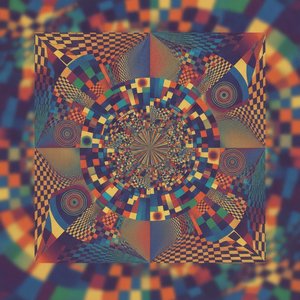
Victor Vasarely's *Quadrature* isn't merely a painting; it’s an invitation – an invitation to question the very nature of visual reality. Created by a visionary who anticipated the digital age, this work embodies the core tenets of Op Art, a movement that sought to manipulate perception through carefully constructed geometric forms and vibrant color fields. Painted in 1960s, *Quadrature* showcases Vasarely’s mastery of optical illusion, transforming two dynamic spheres into an experience that seems to vibrate with energy before your eyes. The bold use of yellow and orange, punctuated by strategic blue accents, isn't simply decorative; it’s a calculated orchestration designed to disrupt our ingrained assumptions about depth and space.
Vasarely’s artistic journey began far from the canvas. Initially trained as a medical student, his fascination with visual form led him to abandon conventional pursuits in favor of exploring abstraction. This path was profoundly shaped by his time at Sándor Bortnyik’s Műhely workshop, directly influenced by the revolutionary principles of the Bauhaus school. The Bauhaus emphasized functional design and geometric reduction – stripping away extraneous detail to reveal the essential structure of objects. Vasarely absorbed these ideas, translating them into a uniquely personal style characterized by precisely rendered circles, squares, and spheres arranged in dynamic compositions. *Quadrature* stands as a testament to this rigorous training, demonstrating a deep understanding of how our eyes perceive and interpret visual information.
At the heart of *Quadrature* lies the captivating technique that defines Op Art – the creation of an illusion of movement or depth through static imagery. Vasarely meticulously controlled color, scale, and repetition to achieve this effect. The overlapping spheres create a sense of infinite space, drawing the viewer’s eye across the canvas in a perpetual dance. This isn't about depicting a realistic scene; it’s about manipulating our visual system, triggering a neurological response that generates an impression of motion. The painting is a powerful demonstration of how art can actively engage with the viewer’s perception, challenging the boundaries between what is seen and what is felt.
While seemingly abstract, *Quadrature* resonates with profound symbolic weight. The geometric forms themselves represent fundamental building blocks of reality – circles symbolizing wholeness and unity, squares representing stability and order. The dynamic arrangement suggests a constant state of flux, mirroring the ever-changing nature of perception itself. More than just an aesthetic experience, *Quadrature* evokes a sense of wonder and intrigue, prompting contemplation about our relationship with space, time, and visual information. It’s a piece that rewards repeated viewing, revealing new layers of complexity with each encounter.
*Quadrature* represents a pivotal moment in the history of art, solidifying Vasarely's place as a pioneer of Op Art and kinetic art. His influence extends far beyond the 1960s, inspiring generations of artists and designers. Today, reproductions like this one offer an accessible way to experience the brilliance of Vasarely’s vision – a timeless exploration of perception that continues to captivate and challenge viewers worldwide.
Victor Vasarely (nato Károly Vaszary) è stato una figura fondamentale nello sviluppo dell'Op Art e dell'arte cinetica. La sua opera mirava a trascendere la pittura tradizionale esplorando illusioni ottiche e creando esperienze visive dinamiche. Nato a Pécs, all'epoca parte dell'Austria-Ungheria (ora Croazia), la sua prima vita vide lo studio della medicina presso l'Università Eötvös Loránd di Budapest prima di dedicarsi completamente all'arte.
Il contributo di Vasarely alla storia dell'arte è multiforme. Ha superato le tecniche pittoriche tradizionali per creare opere che coinvolgono attivamente la percezione dello spettatore. Il suo approccio sistematico ha sfidato le nozioni convenzionali di creatività artistica e ha aperto la strada all'arte generata al computer e al design digitale. Abbracciando la riproducibilità e le applicazioni commerciali, Vasarely ha offuscato i confini tra arte figurativa e cultura popolare, lasciando un segno duraturo in entrambi.

1906 - 1997 , Croazia
Explore the mesmerizing world of Victor Vasarely. Discover how his Bauhaus-inspired Op Art masters the science of perception through geometric abstraction and vibrant color. A sophisticated guide for discerning art collectors seeking to understand the legacy of optical illusion.

Embark on a visual journey through the mesmerizing world of Op Art. Discover the masters of optical illusion, explore geometric abstraction, and learn how to curate high-impact kinetic works for your private collection with expert guidance from art professionals.

Explore the profound impact of geometric form in art history. From Cubism to Op Art, discover how shape creates movement and emotion in masterpieces, and learn how to curate these powerful compositions for your private collection.

 Anteprima in scala reale
 Invia
Invia Condividi
 Dettagli opera

 Scarica immagine
 Simili
 Radiografia
 Slideshow

 Espandi i dettagli







 L'opzione vetro è disponibile solo per dimensioni inferiori a 110 cm


