


Stampa giclée o su tela di qualità museale, con produzione rapida e diverse opzioni di finitura. ( Acquista il dipinto realizzato a mano Acquista immagine)





























Scegli tra le nostre dimensioni predefinite, che rispettano le proporzioni originali dell'opera d'arte.

È possibile inserire dimensioni personalizzate per adattare l'opera a una cornice o a uno spazio specifico. Se la dimensione selezionata non corrisponde alle proporzioni dell'immagine originale, procederemo al ritaglio dell'opera o all'estensione dell'immagine con un bordo specchiato o a tinta unita. Un mockup digitale ti verrà inviato per approvazione prima dell'inizio della produzione.
Si prega di notare che l'anteprima a schermo non riflette il ritaglio o l'estensione effettivi. Solo il mockup mostrerà accuratamente la composizione finale.
Sebbene siano disponibili dimensioni personalizzate, si raccomanda di selezionare una dimensione dall'elenco predefinito per preservare le proporzioni originali.
Consegna in tutto il mondo () in 2 settimane invece delle normali 4/5 settimane. (6 Settembre)


Olla
Dimensioni riproduzione
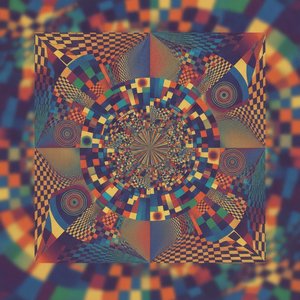
Victor Vasarely’s “Olla,” created in 1988, isn't merely a painting; it’s an experience—a visual vibration that challenges our perception of space and form. This striking work exemplifies the artist’s pioneering role in Op Art (Optical Art), a movement he essentially founded, aiming to create illusions of movement and depth through carefully orchestrated geometric patterns. "Olla," meaning “pot” or “vessel” in Spanish, hints at a contained energy, a vibrant core radiating outward. The title itself is intriguing, suggesting an organic form rendered entirely through the language of pure abstraction.
At first glance, "Olla" presents a deceptively simple composition: three overlapping circles, each varying slightly in size and hue, set against a shimmering gold background. However, this simplicity belies a sophisticated understanding of color theory and spatial relationships. Vasarely wasn't interested in representing the external world; instead, he sought to explore the fundamental principles that govern how we perceive it. The circles aren’t solid forms but rather fields of color interacting with one another, creating an illusion of depth and movement. The gold background isn't merely a backdrop but an active participant, reflecting and amplifying the vibrancy of the overlapping shapes. Vasarely employed screenprinting techniques, allowing for precise control over color placement and layering—a crucial element in achieving the desired optical effect. This method also speaks to his desire to democratize art, making it accessible beyond traditional painting mediums.
To fully appreciate "Olla," one must understand its place within the broader context of 20th-century art. Emerging in the 1960s, Op Art was a reaction against the perceived subjectivity and emotionalism of Abstract Expressionism. Vasarely, along with artists like Bridget Riley, sought to create art based on objective principles—mathematical precision and optical phenomena. His work drew inspiration from various sources, including tribal art, scientific diagrams, and even advertising design. "Olla" reflects this eclectic influence, combining geometric rigor with a playful sense of visual dynamism. It’s a testament to Vasarely's belief that art could be both intellectually stimulating and visually engaging—a bridge between science and aesthetics.
While "Olla" is rooted in mathematical principles, it also evokes a range of emotional responses. The vibrant colors – yellows and golds – convey a sense of energy, optimism, and warmth. The overlapping circles suggest interconnectedness and harmony, while the subtle variations in shape create a feeling of visual tension. The work doesn't depict any recognizable objects or figures, yet it resonates with a primal human fascination for patterns and rhythms. It’s an art that engages not just our intellect but also our senses—a mesmerizing dance of light and color that invites us to question the nature of perception itself. The golden background adds a layer of richness and sophistication, elevating the work beyond mere optical illusion into something truly captivating.
Victor Vasarely (nato Károly Vaszary) è stato una figura fondamentale nello sviluppo dell'Op Art e dell'arte cinetica. La sua opera mirava a trascendere la pittura tradizionale esplorando illusioni ottiche e creando esperienze visive dinamiche. Nato a Pécs, all'epoca parte dell'Austria-Ungheria (ora Croazia), la sua prima vita vide lo studio della medicina presso l'Università Eötvös Loránd di Budapest prima di dedicarsi completamente all'arte.
Il contributo di Vasarely alla storia dell'arte è multiforme. Ha superato le tecniche pittoriche tradizionali per creare opere che coinvolgono attivamente la percezione dello spettatore. Il suo approccio sistematico ha sfidato le nozioni convenzionali di creatività artistica e ha aperto la strada all'arte generata al computer e al design digitale. Abbracciando la riproducibilità e le applicazioni commerciali, Vasarely ha offuscato i confini tra arte figurativa e cultura popolare, lasciando un segno duraturo in entrambi.

1906 - 1997 , Croazia
Explore the mesmerizing world of Victor Vasarely. Discover how his Bauhaus-inspired Op Art masters the science of perception through geometric abstraction and vibrant color. A sophisticated guide for discerning art collectors seeking to understand the legacy of optical illusion.

Embark on a visual journey through the mesmerizing world of Op Art. Discover the masters of optical illusion, explore geometric abstraction, and learn how to curate high-impact kinetic works for your private collection with expert guidance from art professionals.

Explore the profound spiritual depth of geometric abstraction. From Malevich's Suprematism to modern masters, our expert guide reveals how pure form and color command presence in fine art collections.

Discover the profound beauty of abstract art. Our expert guide explores geometric abstraction, Op Art, and Expressionism, offering connoisseurs deep insights into collecting and curating powerful, non-representational masterpieces for sophisticated interiors.

 Anteprima in scala reale
 Invia
Invia Condividi
 Dettagli opera

 Scarica immagine
 Simili
 Radiografia
 Slideshow
 Espandi i dettagli







 L'opzione vetro è disponibile solo per dimensioni inferiori a 110 cm


