


Stampa giclée o su tela di qualità museale, con produzione rapida e diverse opzioni di finitura. ( Acquista il dipinto realizzato a mano Acquista immagine)
Scegli tra le nostre dimensioni predefinite, che rispettano le proporzioni originali dell'opera d'arte.

È possibile inserire dimensioni personalizzate per adattare l'opera a una cornice o a uno spazio specifico. Se la dimensione selezionata non corrisponde alle proporzioni dell'immagine originale, procederemo al ritaglio dell'opera o all'estensione dell'immagine con un bordo specchiato o a tinta unita. Un mockup digitale ti verrà inviato per approvazione prima dell'inizio della produzione.
Si prega di notare che l'anteprima a schermo non riflette il ritaglio o l'estensione effettivi. Solo il mockup mostrerà accuratamente la composizione finale.
Sebbene siano disponibili dimensioni personalizzate, si raccomanda di selezionare una dimensione dall'elenco predefinito per preservare le proporzioni originali.
Consegna in tutto il mondo () in 2 settimane invece delle normali 4/5 settimane. (7 Settembre)


Saint Lawrence
Dimensioni riproduzione
Tilman Riemenschneider’s “Saint Lawrence,” crafted around 1502–8, stands as a testament to the enduring power of medieval Christian iconography and artistic mastery. This sculpture, alongside fragments of a larger altarpiece destined for Rothenburg ob der Tauber (later demolished), embodies the spirit of late Gothic art—a period characterized by profound spiritual contemplation and an unwavering commitment to conveying biblical narratives with palpable emotion.
Historical Context: Created during a turbulent era marked by religious reformations and political instability – specifically amidst the Peasants’ War—Riemenschneider's sculpture reflects the anxieties and aspirations of his time. The altarpiece project itself was conceived in response to the Dominican convent’s desire for a monumental artwork that would inspire devotion and proclaim Christian faith.
Symbolism: Beyond its depiction of martyrdom, “Saint Lawrence” is laden with symbolic elements. The book held by Saint Lawrence represents knowledge—a cornerstone of Christian theology—while the grill symbolizes his sacrificial death—a poignant reminder of Christ’s suffering for humanity's salvation. These symbols resonate deeply within the Gothic aesthetic, communicating spiritual truths through visual imagery.
Emotional Impact: Viewing “Saint Lawrence” evokes a sense of solemn reverence and profound contemplation. The sculpture’s rough texture—resulting from traditional wood carving techniques—adds to its tactile quality, grounding the viewer in the materiality of art history. Lines are predominantly organic, mirroring the contours of the figure and chair, creating a harmonious balance between form and space. The muted brown palette—dominated by shades ranging from beige to umber—reflects the natural color of the wood and contributes to the sculpture’s overall atmosphere of solemn piety.
Further Research: Examining related artworks by Riemenschneider, such as “Saint Stephen” (1959.43) and two female saints preserved in Frankfurt, reveals a consistent stylistic approach—characterized by expressive faces and meticulous attention to detail—underscoring Riemenschneider’s mastery of Gothic sculpture.
Provenance: The sculpture's journey through history began with Richard von Passavant-Gontard, who acquired it from Bennebroek in the Netherlands. Subsequently, it entered the collection of Rosenberg & Stiebel Inc., New York, before finding its permanent home at the Cleveland Museum of Art.
Accession Number: 1959.42

Tilman Riemenschneider si erge come una figura cruciale nella transizione tra l'arte gotica tardiva e il Rinascimento. Attivo principalmente a Würzburg dal 1483 fino alla sua morte, fu rinomato per la sua prolifica produzione e versatilità, padroneggiando sia la scultura in pietra che intaglio nel legno di limewood. La sua opera riflette un insolito connubio tra sensibilità gotiche tardive e influenze umanistiche emergenti, rendendolo uno degli artisti più significativi del suo tempo.

1460 - 1531 , Italia
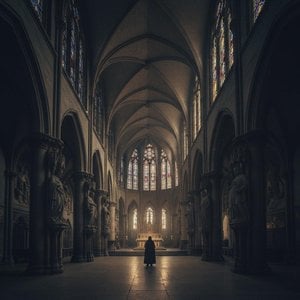
Embark on a journey through the dramatic era of Gothic art. Discover the profound beauty of illuminated manuscripts, sacred gold leaf masterpieces, and the transition to naturalism in this expert-led exploration of medieval artistry and historical grandeur.

 Invia
Invia Condividi
 Dettagli opera

 Scarica immagine
 Simili
 Slideshow


 Espandi i dettagli




































 L'opzione vetro è disponibile solo per dimensioni inferiori a 110 cm


