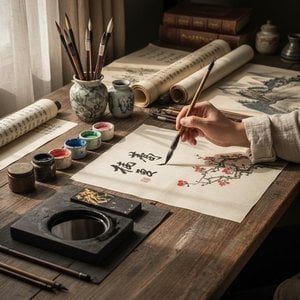
Il Maestro della Luce e della Linea: La Vita di Takeuchi Tsunekichi
Nel cuore del vibrante distretto tessile di Kyoto, nacque un'eredità che avrebbe per sempre alterato la traiettoria della pittura giapponese. Takeuchi Tsunekichi, conosciuto al mondo con il suo nome d'arte Takeuchi Seihō, emerse dall'era Meiji non semplicemente come un pittore, ma come un ponte tra due mondi. Il suo viaggio ebbe inizio tra i ritmi dei telai e gli intricati motivi legati all'attività di ristorazione e tessile della sua famiglia, un'infanzia che gli instillò una profonda sensibilità per la trama, il colore e la forma. Nel passare da studente di letteratura cinese e arti templari a dedito allievo del rinomato Kōno Bairei, Seihō iniziò a padroneggiare l'essenza della scuola Shijō, uno stile definito dal suo delicato realismo e da una connessione quasi spirituale con il mondo naturale.
L'evoluzione dell'arte di Seihō è una testimonianza del suo coraggio di fronte alla trasformazione culturale. Mentre molti dei suoi contemporanei si aggrappavano strettamente alle tradizioni del passato, Seihō guardò verso l'orizzonte. Il suo viaggio cruciale a Parigi durante l'Esposizione Universale del 1900 funse da incontro trasformativo con l'avanguardia. Immersosi nella luce atmosferica dell'Impressionismo e nelle profondità oniriche del Simbolismo, tornò in Giappone con una visione unicamente sua. Non abbandonò le tecniche tradizionali Nihonga; al contrario, infuse loro nuova vita sintetizzando la meticolosa pennellata dei maestri giapponesi con la luminosa profondità spaziale presente nelle opere di leggende occidentali come Turner e Corot.
Una Sintesi tra Tradizione e Modernità
La vera genialità di Seihō risiede nella sua capacità di catturare l'anima effimera della natura attraverso una sofisticata dualità tecnica. La sua opera oscilla spesso tra la tranquillità minimalista del lavaggio all'inchiostro sumi-e e un realismo robusto e materico. In capolavori come "Passero in volo," si può ammirare la bellezza mozzafiato della semplicità estetica giapponese, dove ogni tratto d'inchiostro trasmette un senso di movimento senza peso e di profonda quiete. Al contrario, i suoi paesaggi e vedute marine più ampi dimostrano una maestria della luce e dell'atmosfera che appare straordinariamente moderna, utilizzando sfumature sottili per evocare gli spruzzi salmastri di un "Paesaggio marino" o le nebbie mutevoli di un mattino montano.
I suoi soggetti — che spaziano dagli intimi dettagli dei piccoli animali alla maestosa grandezza del paesaggio giapponese — fungono da tela per la sua esplorazione dei momenti fugaci della vita. Attraverso il suo pennello, convergono spesso i seguenti elementi:
- La precisione del realismo Shijō: Una dedizione nel catturare la verità anatomica e la vitalità organica delle creature viventi.
La profondità atmosferica occidentale: L'uso di luce e ombra per creare un senso di spazio tridimensionale precedentemente invisibile negli stili tradizionali giapponesi.
- Lo spirito del Nihonga: Un impegno incrollabile verso i pigmenti e i materiali tradizionali che radiciano le sue innovazioni moderne in un'autenticità storica.
Eredità e Significato Storico
L'impatto di Takeuchi Seihō sul mondo dell'arte si estende ben oltre i confini del Giappone. Navigando con successo tra la tensione della preservazione dell'eredità e la necessità dell'innovazione, egli fornì un modello per l'arte giapponese moderna. Dimostrò che la tradizione non è un reperto statico da proteggere, ma un'entità viva e pulsante capace di assorbire nuove influenze senza perdere la propria identità fondamentale. La sua vita, che abbraccia i trasformativi periodi Meiji e l'inizio dello Shōwa, rispecchia l'evoluzione stessa del Giappone: una nazione che si muove dall'isolamento verso un palcoscenico globale complesso e interconnesso.
Oggi, le sue opere rimangono preziosi simboli di sintesi culturale. Osservare un dipinto di Seihō significa sperimentare un momento di profondo equilibrio: la quiete dell'antica Kyoto che incontra l'energia dinamica di un mondo in modernizzazione. Egli rimane un titano del Nihonga, un artista il cui nome continua a evocare il delicato equilibrio tra luce, linea e l'eterna bellezza del mondo naturale.



 Anteprima in scala reale
 Ordina la riproduzione dipinta a mano
 Condividi
 Condividi
 Dettagli
 Guida stampabile

 Scarica
 Articoli simili
 Radiografia
 Slideshow
 Statistiche

 Leggi tutto






































 L'opzione vetro è disponibile solo per dimensioni inferiori a 110 cm