Anteprima in scala realeAnteprima in scala reale Prova in ARProva in AR Passa alle stampe Passa alle stampePassa all'immagine digitale Passa all'immagine digitale CondividiCondividi
DettagliDettagli Aggiungi ai preferiti Aggiungi ai preferiti ScaricaScarica Articoli similiArticoli simili RadiografiaRadiografia SlideshowSlideshow StatisticheStatistiche

Long Hope Orkney

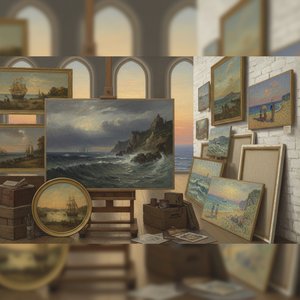
Sir John Lavery's "Long Hope Orkney" captures the rugged beauty of the Scottish island coast. This evocative oil painting, painted in 1917, showcases Lavery’s impressionistic style and wartime context – a stunning reproduction.

Sir John Lavery (1856-1941): ritrattista irlandese celebre per i suoi eleganti ritratti e scene di guerra, testimone del suo tempo con maestria impressionistica.

Riproduzione a olio fatta a mano

Olio su tela dipinto a mano nelle tue dimensioni e con la tua cornice, realizzato su ordinazione dai nostri artisti. (Passa alle stampe Passa alle stampePassa all'immagine digitale Passa all'immagine digitale)

P118B $10
P118H $10
P118W $10
P438Z $10
P508JH $12
P508YH $12
P805H $10
P805Z $10
P919BZ $10
P919G $10
P919XJ $10
P959ZH $10
P968JZ $12
W106C $8
W218G $10
W218JH $8
W218Y $10
W307PJ $10
W316G $10
W316PJ $8
W316Y $10
W398PJ $8
W4111J $10
W500HY $15
W500JH $15
W692G $12
W849H $8
W940BG $15
W953PJ $8

Standard
personalizzato
CM
INCH

Scegli tra le nostre dimensioni predefinite, che rispettano le proporzioni originali dell'opera d'arte.

larghezza
altezza

È possibile inserire dimensioni personalizzate per adattare l'opera a una cornice o a uno spazio specifico. Se la dimensione selezionata non corrisponde alle proporzioni dell'immagine originale, provvederemo a ritagliare l'opera o a estendere il dipinto con elementi aggiuntivi dipinti a mano. Un mockup digitale ti sarà inviato per approvazione prima dell'inizio della produzione.
Si prega di notare che l'anteprima a schermo non riflette il ritaglio o l'estensione effettivi. Solo il mockup mostrerà accuratamente la composizione finale.
Sebbene siano disponibili dimensioni personalizzate, consigliamo di selezionare una dimensione dall'elenco predefinito per preservare le proporzioni originali.

Esempi di personalizzazione: sostituire il volto con una foto del cliente; aggiungere un animale domestico (ad esempio, sostituire un gatto con un cane); inserire un messaggio nascosto nello sfondo; cambiare il paesaggio o gli elementi dello sfondo.
Dopo l'ordine, il team di WahooArt.com contatterà il cliente via e-mail per ricevere le istruzioni e fornirà un'anteprima del mockup

Consegna in tutto il mondo () in 3/4 settimane anziché nelle normali 5 settimane. (13 Settembre). Nessun compromesso sulla qualità.

why_choose_icon
Spedizione espressa gratuita in tutto il mondo
why_choose_icon
Tela in lino di alta qualità
why_choose_icon
Assicurazione completa sulla spedizione
why_choose_icon
Garanzia di rimborso dei dazi doganali
why_choose_icon
Garanzia di perfetta fedeltà cromatica
why_choose_icon
Politica di reso entro 100 giorni (solo per difetti di fabbricazione)
why_choose_icon
Garanzia di rimborso al 100%
why_choose_icon
Sconto per acquisti multipli

Prezzo totale

$ 322

reproduction

Long Hope Orkney

Tecnica di riproduzione

Dimensioni della riproduzione

-

Prezzo totale

$ 322

Dettagli rapidi

  • Notable elements: Visible brushwork
  • Medium: Oil on canvas
  • Influences: Whistler
  • Title: Long Hope Orkney
  • Artistic style: Impressionistic
  • Movement: Impressionism

Quiz d'arte

Per ogni domanda è presente una sola risposta corretta.

Domanda 1:
What is the primary subject matter depicted in Sir John Lavery’s ‘Long Hope Orkney’?
Domanda 2:
The visible brushstrokes and loose lines in ‘Long Hope Orkney’ are characteristic of which artistic movement?
Domanda 3:
Considering the date of creation (1917), what historical context is most strongly suggested by ‘Long Hope Orkney’?
Domanda 4:
What is the dominant color palette used in ‘Long Hope Orkney’?
Domanda 5:
The use of perspective in ‘Long Hope Orkney’ is primarily achieved through:

A Coastal Symphony: Long Hope Orkney by Sir John Lavery

Sir John Lavery’s “Long Hope Orkney,” painted in 1917, isn't merely a depiction of a windswept coastline; it’s a poignant meditation on resilience, isolation, and the enduring spirit of a people shaped by both the sea and the shadows of war. This evocative landscape captures a pivotal moment – likely during the tumultuous years of World War I – as evidenced by the presence of military vessels subtly integrated into the scene. Lavery masterfully employs Impressionistic techniques to convey not just what he saw, but also the atmosphere and emotional resonance of the Orkney Islands.

The painting’s palette is dominated by a restrained symphony of blues, greys, and whites, mirroring the often-overcast skies typical of this northern region. These muted tones aren't depressing; instead, they create a sense of quiet contemplation, emphasizing the vastness of the sea and the rugged beauty of the land. Visible brushstrokes—loose, gestural, and layered—are central to Lavery’s style, lending an immediacy and dynamism to the scene. The artist doesn’t strive for photographic realism but rather captures the fleeting effects of light and weather, imbuing the landscape with a palpable sense of movement. The composition itself is carefully balanced: the expansive sky occupies roughly one-third of the canvas, drawing the eye upwards while the water dominates the middle ground, its surface rippling with an implied current. The foreground—a cluster of buildings, docks, and figures – anchors the scene, grounding us in a tangible reality.

The Weight of History & Lavery’s Vision

Understanding “Long Hope Orkney” requires acknowledging the historical context within which it was created. Lavery, a prominent figure in Edwardian society, skillfully navigated the shifting social and political landscape of his time, often depicting scenes of both opulent leisure and the grim realities of war. The inclusion of military vessels strongly suggests this latter element; Orkney’s strategic location made it a vital area for naval operations during WWI. However, Lavery doesn't simply portray conflict. Instead, he imbues the scene with a sense of melancholy and introspection – perhaps reflecting on the impact of the war on the lives of ordinary people, or the enduring connection between humanity and the natural world.

Further research reveals that Lavery’s artistic journey was deeply intertwined with Scottish Impressionism. Influenced by artists like William Burrell, he embraced a looser brushstroke and an emphasis on capturing fleeting moments in time. His portraits of notable figures – Winston Churchill, H.H. Asquith – demonstrate his ability to capture the essence of his subjects, while his wartime scenes offer a stark contrast, revealing a sensitivity to human suffering. The painting’s composition echoes elements found in John Kyffin Williams' landscapes of Wales, sharing a similar focus on capturing atmospheric conditions and the rugged beauty of the British Isles.

Decoding Symbolism & Artistic Technique

Beyond its historical context, “Long Hope Orkney” is rich with symbolic potential. The distant shoreline, shrouded in mist, evokes feelings of isolation and uncertainty – themes frequently explored by artists during periods of upheaval. The figures on the land, indistinct yet present, represent the human element, suggesting a community grappling with challenges while maintaining a connection to their heritage. Lavery’s masterful use of perspective—size diminution as objects recede into the distance—creates a convincing sense of depth and space, drawing the viewer into the scene.

The painting's technique is equally noteworthy. Lavery employs layering and blending colors to create an atmospheric effect, simulating the diffused light characteristic of coastal environments. The visible brushwork adds texture and dynamism, while the loose lines capture the movement of water and clouds. The choice of oil paint on canvas allowed for a rich, luminous finish—a testament to Lavery’s skill as a colorist. The use of muted tones, combined with the expressive brushstrokes, creates a powerful emotional impact, inviting viewers to contemplate the beauty and fragility of the natural world.

Bringing “Long Hope Orkney” Home

WahooArt offers meticulously hand-painted reproductions of Sir John Lavery’s “Long Hope Orkney,” allowing you to experience this remarkable artwork in stunning detail. Each reproduction is created using archival-quality materials and techniques, ensuring that it will retain its beauty and vibrancy for generations to come. Whether displayed as a statement piece in your living room or incorporated into an interior design scheme, this painting’s evocative imagery and historical significance will undoubtedly captivate and inspire.


Biografia dell'artista

Sir John Lavery: Una Vita tra Ritratti e Società

  • Nato: Belfast, Irlanda (1856)
  • Morto: 1941

Sir John Lavery RA è stato un pittore irlandese molto apprezzato, rinomato per i suoi ritratti affascinanti e le suggestive rappresentazioni di scene belliche. Nato a Belfast, dimostrò talento artistico fin da giovane, frequentando l'Accademia Haldane a Glasgow negli anni '70 dell'Ottocento prima di perfezionare ulteriormente le sue abilità all'Académie Julian a Parigi nei primi anni dell'Ottocento.

Primi Anni e Influenze

Tornato a Glasgow, Lavery si associò agli artisti della influente Glasgow School. Un momento cruciale arrivò nel 1888 quando ricevette l'incarico di dipingere la visita ufficiale della Regina Vittoria alla Esposizione Internazionale di Glasgow. Questo prestigioso incarico lanciò la sua carriera come ritrattista richiesto dalla società, spingendolo a trasferirsi a Londra poco dopo.

  • Prime Influenze: Lavery fu notevolmente influenzato da James McNeill Whistler, evidente nel suo stile artistico e nell'approccio alla ritrattistica.
  • Associazione con la Glasgow School: Il suo periodo con la Glasgow School favorì una distinta sensibilità estetica che informò le sue opere successive.

Rappresentazioni Belliche e Riconoscimenti Ufficiali

Come William Orpen, Lavery fu nominato artista ufficiale durante la Prima Guerra Mondiale. Tuttavia, persistenti problemi di salute e un grave incidente automobilistico causato da un raid di Zeppelin gli impedirono di servire sul fronte occidentale. Invece, si concentrò sulla documentazione di scene belliche all'interno della Gran Bretagna, catturando barche, aeroplani e dirigibili.

  • Artista Ufficiale: Nonostante le limitazioni, i contributi di Lavery come artista ufficiale fornirono preziose testimonianze visive di una nazione in guerra.
  • Opere Belliche Notevoli: La sua serie includeva "War Room – depicts surrender of high seas fleet 1918," "Munitions, Newcastle, 1917,” e “A Coast Defence – an 18-pounder anti-aircraft gun, Tyneside, 1917.”

Vita Successiva ed Eredità

Dopo la guerra, Lavery fu nominato cavaliere ed eletto alla Royal Academy nel 1921. La sua vita personale si intrecciò con eventi storici significativi; lui e sua moglie, Hazel, svolsero un ruolo discreto nella Guerra d'Indipendenza irlandese e nella Guerra Civile, fornendo la loro casa di Londra per i negoziatori irlandesi. Immortalizzò Michael Collins con il suo dipinto "Michael Collins, Love of Ireland," ora ospitato alla Hugh Lane Municipal Gallery.

  • Rapporti Anglo-Irlandesi: Il coinvolgimento dei Lavery rifletteva un complesso rapporto tra Gran Bretagna e Irlanda durante un periodo di intenso sconvolgimento politico.
  • L'Influenza di Hazel Lavery: Hazel Lavery, sua moglie, divenne un soggetto frequente nei suoi dipinti e servì come figura allegorica dell'"Irlanda" sulle banconote irlandesi dal 1928 al 1975.
  • Patronato Generoso: Lavery fece donazioni sostanziali delle sue opere all'Ulster Museum e alla Hugh Lane Municipal Gallery, consolidando la sua eredità nell'arte irlandese.

Stile Artistico e Opere Chiave

Lo stile artistico di Lavery mescolava elementi dell'Impressionismo con un occhio attento a catturare personalità e atmosfera. I suoi ritratti sono celebrati per il loro realismo, eleganza e la perspicace rappresentazione del carattere. Era anche abile nel dipingere paesaggi e scene della vita quotidiana.

  • Opere Chiave: "The Opening of the Modern Foreign and Sargent Galleries at the Tate Gallery, 26 June 1926," “On the Loing: An Afternoon Chat (also known as Under the Cherry Tree),” "A Visitor to the Studio," "Eileen, Her First Communion."
  • Temi Ricorrenti: Ritratti di figure importanti, scene della società britannica e rappresentazioni di esperienze belliche erano centrali nel suo *corpus*.
Sir John Lavery

Sir John Lavery

1856 - 1941 , Irlanda

Informazioni rapide

  • Artistic Movement Or Style: Impressionismo
  • Artists Who Influenced This Artist: ['James McNeill Whistler']
  • Date Of Birth: 20 marzo 1856
  • Date Of Death: 1941
  • Full Name: Sir John Lavery
  • Nationality: Irlandese
  • Notable Artworks:
    • Michael Collins, Love of Ireland
    • Summer on the River
    • War Room – depicts surrender
    • Lady Lavery
    • The Artist's Studio
    • A Visitor to the Studio
    • On the Loing: An Afternoon Chat
  • Place Of Birth: Belfast, Irlanda
Esplora le opere d'arte organizzate per temi, stili e caratteristiche.