A Moment of Quietude: Sir John Everett Millais's "My Second Sermon"
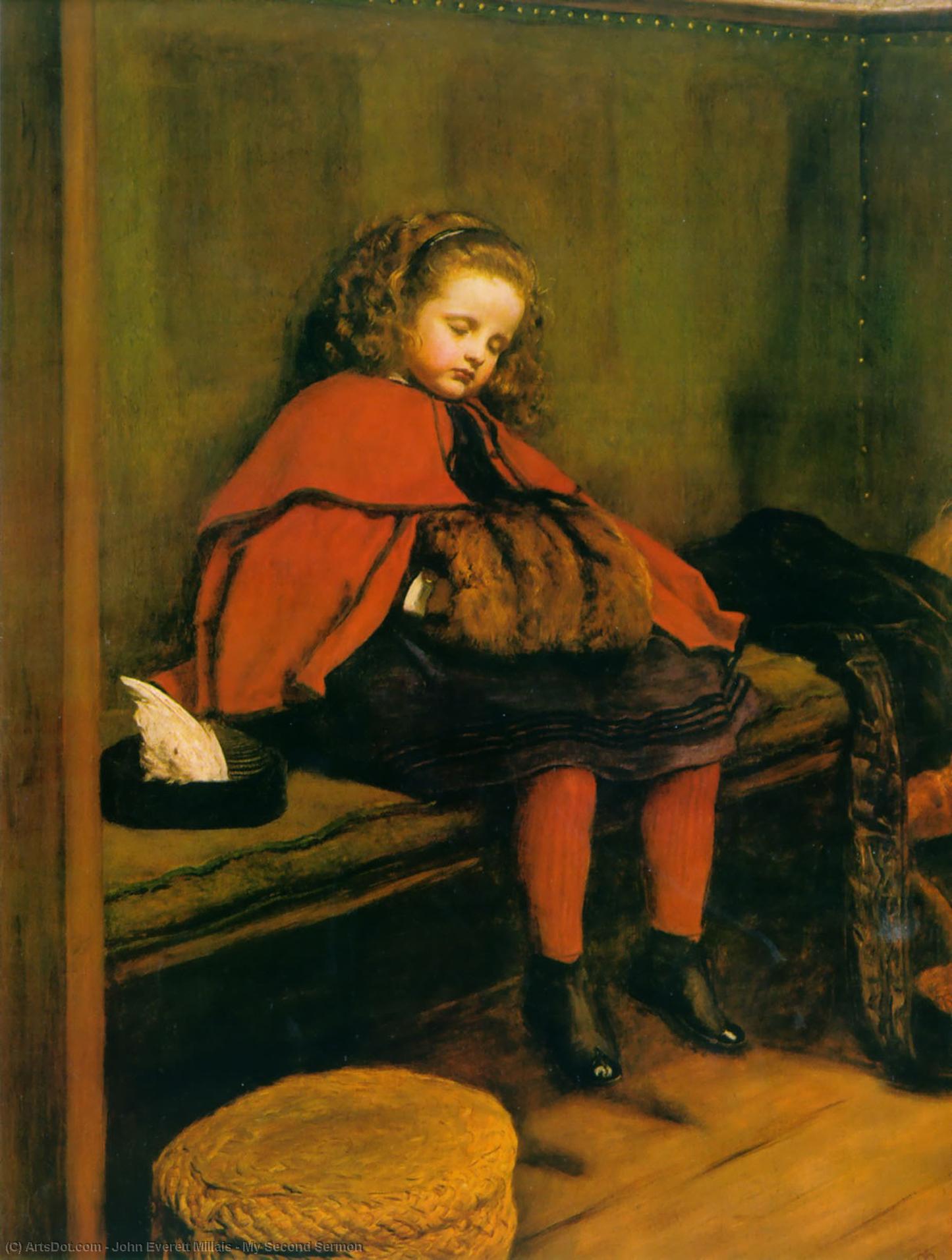
Sir John Everett Millais’s “My Second Sermon,” painted in 1864, is more than just a portrait; it’s a carefully constructed tableau of Victorian innocence and burgeoning artistic rebellion. Measuring 97 x 72 cm, this intimate scene captures a young girl lost in contemplation, her head resting on her hand as she cradles a beloved teddy bear. The painting immediately draws the viewer into a space of profound stillness, a quiet moment suspended in time that speaks to the anxieties and aspirations of the era.
- The Pre-Raphaelite Vision: Created by Millais during his pivotal role within the Pre-Raphaelite Brotherhood, “My Second Sermon” exemplifies their revolutionary approach to art. Rejecting the idealized forms and dramatic narratives favored by established artistic conventions, the Pre-Raphaelites sought a return to the clarity, detail, and emotional honesty of early Italian masters – hence the name.
- Technical Mastery: Millais’s meticulous technique is immediately apparent. The rendering of textures—the plush fur of the teddy bear, the worn fabric of the girl's coat, the smooth wood of the bench—is astonishingly realistic. His use of light and shadow creates a palpable sense of depth, drawing the viewer into the scene with an almost photographic precision.
Subject Matter and Victorian Context
The subject itself – a young girl engaged in private reflection – was deliberately chosen to explore themes of childhood innocence and vulnerability. The mid-19th century witnessed a growing fascination with children within British art, often depicted as symbols of purity and moral rectitude. However, Millais subtly subverts this traditional portrayal. The girl’s expression is ambiguous; she isn't actively engaged in any particular activity, but rather lost in her own thoughts. This ambiguity reflects the anxieties of the Victorian era – a period marked by rapid industrialization, social upheaval, and a growing sense of uncertainty about the future.
- Domesticity and Gender Roles: The setting—a simple interior space—reinforces the importance of domestic life within Victorian society. The presence of the bowl on the bench suggests a scene of everyday activity, yet the girl’s solitary pose hints at the limitations placed upon women during this time.
- Symbolism of the Teddy Bear: The teddy bear itself is a significant symbol, representing comfort, security, and childhood nostalgia – themes frequently explored by Pre-Raphaelite artists. Its presence adds to the painting's overall sense of tenderness and vulnerability.
Emotional Impact and Artistic Legacy
"My Second Sermon" possesses a remarkable emotional resonance. The painting’s quietude invites contemplation, prompting viewers to consider themes of childhood, memory, and the passage of time. Millais’s ability to capture such a fleeting moment with such profound sensitivity is a testament to his artistic genius.
- Influence on Victorian Art: This work significantly influenced subsequent generations of British artists, solidifying Millais's position as one of the movement's leading figures.
- A Timeless Appeal: The painting’s enduring appeal lies in its ability to evoke a sense of nostalgia and quiet beauty – qualities that continue to resonate with audiences today.
WahooArt Reproduction
WahooArt offers meticulously crafted hand-painted reproductions of Sir John Everett Millais's "My Second Sermon," ensuring the preservation of this iconic artwork’s detail and emotional depth. Our skilled artisans employ traditional techniques, replicating Millais’s masterful brushwork and color palette to create a faithful representation that will enhance any interior space. Choose from a range of sizes to perfectly suit your needs and experience the timeless beauty of this Pre-Raphaelite masterpiece.



 Acquista stampa
 Invia
Invia Condividi
 Dettagli opera

 Scarica
 Simili
 Radiografia
 Slideshow


 Scopri di più






































 L'opzione vetro è disponibile solo per dimensioni inferiori a 110 cm