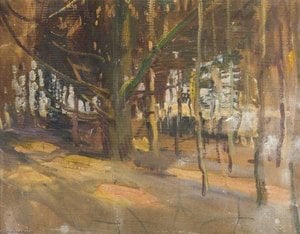
A Hazy Morning in Cornwall: The Soul of Polperro
In the quiet, mist-laden corners of the English coast, there exists a certain magic that transcends the mere sight of land and sea. Sir Alfred James Munnings, a master of capturing the fleeting essence of the British landscape, distills this very enchantment in his evocative work, Polperro. This painting is far more than a maritime study; it is an atmospheric window into a vanishing way of life. As the eye wanders through the harbor, one is immediately struck by the soft, diffused light that blankets the scene, blurring the boundaries between the sky, the water, and the weathered hulls of the fishing boats. The composition, dominated by the rhythmic verticality of masts reaching toward a pearlescent sky, creates a sense of profound stillness, as if the entire village of Polperro has paused to catch its breath in the early morning haze.
The color palette is a masterclass in subtlety, utilizing muted and earthy tones that evoke a deep sense of nostalgia. Shades of slate grey, deep umber, and soft cream dance alongside gentle blues, creating a harmony that feels both grounded and ethereal. A delicate touch of yellow-orange flickers upon the water’s surface, suggesting the first tentative rays of sunlight breaking through the coastal fog. This careful orchestration of color does not merely depict a location; it communicates a mood—one of quietude, tranquility, and a gentle melancholy that speaks to the timeless, cyclical nature of life in a fishing community.
The Impressionistic Touch: Texture and Technique
To behold Polperro is to witness the power of the impasto technique. Munnings does not shy away from the physicality of his medium; instead, he embraces the thick, tactile application of oil paint to breathe life into the canvas. The visible, gestural brushstrokes create a surface that is rich with movement and energy. One can almost feel the salt spray in the air through the choppy, short strokes used to render the reflections on the water, where the boats appear to float upon a shimmering, liquid mirror. This technique lends the work a dynamic quality, preventing the stillness of the subject matter from ever feeling stagnant.
The artist’s approach is quintessentially Impressionistic, prioritizing the sensation of light and atmosphere over the rigid precision of photographic detail. By employing broken brushwork and organic, irregular shapes, Munnings captures the "impression" of the harbor—the way the masts overlap to create depth, and how the distant shoreline softens into a ghostly silhouette through atmospheric perspective. For the discerning collector or interior designer, this piece offers a sophisticated interplay of texture and light, making it an ideal centerpiece for spaces that require a sense of calm, historical depth, and artistic prestige.
A Legacy of Coastal Nostalgia
Beyond its technical brilliance, Polperro serves as a poignant tribute to the maritime traditions of Cornwall. During an era of rapid industrialization, Munnings sought to preserve the romantic allure of the rural and coastal landscapes of England. The painting functions as a visual poem about the dignity of labor and the peaceful coexistence of man and nature. There is no grand drama here, only the quiet, enduring presence of the fishing fleet at rest. This lack of overt conflict allows the viewer to project their own emotions onto the canvas, finding either a sanctuary of peace or a bittersweet reflection on the passage of time.
For those seeking to adorn a home or gallery with a high-quality reproduction, this work offers an unparalleled opportunity to invite the spirit of the British seaside into a contemporary setting. Whether placed in a sunlit study or a grand living area, the muted tones and masterful textures of Polperro provide a sophisticated anchor, evoking a sense of heritage, elegance, and an eternal connection to the sea.



 Anteprima in scala reale
 Ordina la riproduzione dipinta a mano
 Condividi
 Condividi
 Dettagli
 Guida
Guida

 Scarica
 Articoli simili
 Radiografia
 Slideshow
 Statistiche

 Leggi tutto






































 L'opzione vetro è disponibile solo per dimensioni inferiori a 110 cm