Acrylic On CanvasWallArtBaroque French Painting
 1630
1630 131.0 x 104.0 cm
 Cleveland Museum of Art
Stampa giclée o su tela di qualità museale, con produzione rapida e diverse opzioni di finitura. ( Acquista il dipinto realizzato a mano Acquista immagine)





























Scegli tra le nostre dimensioni predefinite, che rispettano le proporzioni originali dell'opera d'arte.

È possibile inserire dimensioni personalizzate per adattare l'opera a una cornice o a uno spazio specifico. Se la dimensione selezionata non corrisponde alle proporzioni dell'immagine originale, procederemo al ritaglio dell'opera o all'estensione dell'immagine con un bordo specchiato o a tinta unita. Un mockup digitale ti verrà inviato per approvazione prima dell'inizio della produzione.
Si prega di notare che l'anteprima a schermo non riflette il ritaglio o l'estensione effettivi. Solo il mockup mostrerà accuratamente la composizione finale.
Sebbene siano disponibili dimensioni personalizzate, si raccomanda di selezionare una dimensione dall'elenco predefinito per preservare le proporzioni originali.
Consegna in tutto il mondo () in 2 settimane invece delle normali 4/5 settimane. (7 Settembre)


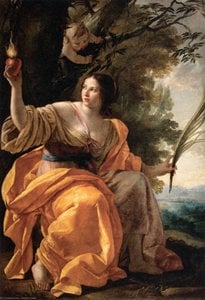
The Penitent Magdalen
Dimensioni riproduzione
Simon Vouet’s “The Penitent Magdalen,” painted around 1630, is more than just a portrait; it's a profound meditation on faith, repentance, and the enduring power of sorrow. Executed during a pivotal moment in French art history – the transition from Mannerism to the burgeoning Baroque style – this work encapsulates Vouet’s innovative approach, blending Italian influences with a distinctly French sensibility. The painting immediately draws the viewer into a scene of quiet contemplation, dominated by the figure of Mary Magdalene, rendered with an almost sculptural quality that speaks to both her physical presence and her spiritual weight.
Vouet, having spent formative years in Rome absorbing the dramatic lighting and emotional intensity of Caravaggio’s work, brought this Italian dynamism back to France. However, he didn't simply replicate these techniques; instead, he skillfully adapted them to suit the tastes of his royal patrons. Notice how the subdued palette – dominated by rich reds, deep blues, and earthy browns – creates a sense of solemnity and introspection. The lighting is carefully controlled, highlighting Magdalene’s face and hands while casting her figure in shadow, reinforcing the theme of penance and hidden suffering.
The composition itself is laden with symbolic meaning. Magdalene's posture – head bowed, hand resting on a book – immediately evokes images of prayer and devotion. The open book, often interpreted as representing scripture, suggests her ongoing journey toward redemption. Crucially, the presence of two birds—one perched on the left shoulder, the other near the upper right corner—adds layers of interpretation. Birds are frequently associated with freedom, hope, and the soul’s ascent to heaven; their inclusion here hints at Magdalene's potential for spiritual liberation through her remorse and piety.
The jar of ointment, a recurring motif in depictions of Magdalene, symbolizes her past sins—specifically, her betrayal of Christ. However, it also represents a willingness to offer amends and demonstrate genuine repentance. The careful rendering of the ointment’s texture and the subtle play of light on its surface further emphasize this duality – beauty born from sorrow.
Vouet’s mastery lies in his ability to seamlessly blend Italian realism with French elegance. He employs a technique known as “clai-obscure,” or chiaroscuro, which dramatically contrasts light and shadow to create depth and volume. This is particularly evident in Magdalene's face – the delicate modeling of her features, the subtle shading around her eyes, all contribute to an incredibly lifelike portrayal. Unlike the stark contrasts of Caravaggio, Vouet’s use of light is more diffused, lending a sense of grace and refinement to the scene.
Furthermore, Vouet's attention to detail—the folds of Magdalene’s dress, the texture of her hair, even the subtle imperfections in her hands—demonstrates his meticulous approach. This commitment to realism was highly valued by the French court, who sought artists capable of producing works that were both aesthetically pleasing and historically accurate.
"The Penitent Magdalen" is not merely a depiction of a biblical figure; it’s an exploration of human emotion—the pain of regret, the yearning for forgiveness, and the possibility of spiritual renewal. Vouet masterfully captures Magdalene's inner turmoil, inviting viewers to contemplate their own struggles with faith and redemption. The painting’s enduring appeal lies in its ability to resonate across centuries, offering a timeless meditation on the complexities of the human condition.
Reproductions of this powerful work offer an exceptional opportunity to bring this evocative scene into any space. Its rich colors, dramatic lighting, and profound symbolism create a focal point that speaks volumes about faith, sorrow, and ultimately, hope.

Simon Vouet fu una figura fondamentale nella transizione della pittura francese dal Manierismo allo stile Barocco. Nato in una famiglia di artisti – suo padre Laurent era un pittore e suo fratello Aubin si dedicò anch'egli all’arte – Vouet ricevette una formazione precoce che pose le basi per il suo futuro successo. Suo nipote, Ludovico Dorigny, avrebbe continuato l'eredità artistica della famiglia.
Durante il suo soggiorno italiano, Vouet assorbì una vasta gamma di influenze. Studiò le tecniche di illuminazione drammatica pioniere da Caravaggio, abbracciò elementi del Manierismo italiano e analizzò meticolosamente le palette cromatiche e la tecnica dello sotto in su (prospettiva accorciata) impiegata da Paolo Veronese. Si ispirò anche alle opere di Carracci, Guercino, Lanfranco e Guido Reni, sintetizzando questi diversi stili in una visione artistica unica.
L'eredità di Simon Vouet si fonda sul suo ruolo fondamentale come ponte tra l’arte italiana e quella francese. Importò con successo il dinamismo e la grandiosità del Barocco italiano, trasformandolo in uno stile che risuonava con i gusti della corte e dell'aristocrazia francese. La sua influenza è innegabile nello sviluppo della pittura francese durante il XVII secolo, e i suoi contributi continuano ad essere riconosciuti dagli storici dell’arte oggi.

1590 - 1649 , Francia
Explore the life & art of Simon Vouet, a pivotal French Baroque painter who introduced Italian styles to France. Discover his masterpieces and lasting influence on 17th-century art.

Scopri come portare il dramma e lo splendore dell'arte barocca nei tuoi interni con . Riproduzioni di alta qualità, consulenza d'arte personalizzata e ispirazione per uno stile unico.

Explore the dramatic world of Baroque art! Discover iconic artists like Caravaggio & Rubens, defining techniques, and its lasting impact on art history. Expert insights for collectors & enthusiasts at WahooArt.

Esplora i 10 capolavori barocchi di Caravaggio, Bernini e Rembrandt che hanno rivoluzionato l'arte. Scopri storie, tecniche e colori iconici. Trova riproduzioni d'arte di alta qualità per la tua casa su !
Explore the profound elegance of Baroque Classicism. Discover how 17th-century masters synthesized dramatic emotion with classical order through the lens of the Counter-Reformation and the works of legends like Carlo Maratta and Andrea Sacchi.

 Anteprima in scala reale
 Invia
Invia Condividi
 Dettagli opera

 Scarica immagine
 Simili
 Radiografia
 Slideshow
 Espandi i dettagli







 L'opzione vetro è disponibile solo per dimensioni inferiori a 110 cm