primi anni di vita e formazione
Sandro Botticelli, nato Alessandro di Mariano di Vanni Filippoipi intorno al 1445, è stata una figura chiave nel primo Rinascimento della pittura italiana. Inizialmente oscurato postumo, l'opera di Botticelli è stata rivitalizzata nella tarda ottava e novantina del secolo XIX dai pre-rafaeliani, portando a una rivalutazione dei suoi contributi artistici. Botticelli nacque a Firenze, in Italia, e visse tutta la sua vita nello stesso quartiere. La sua famiglia, inclusa il padre Mariano di Vanni d'Amedeo Filippoipi, era coinvolta in varie professioni, che li hanno portati a entrare in contatto con gli artisti. Giorgio Vasari riferì che Botticelli fu inizialmente addestrato come orefice.
stile artistico e opere notevoli
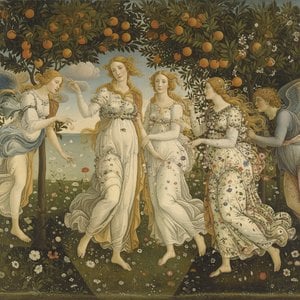
L'opera di Botticelli è caratterizzata da una elegante linearità, che colma il divario tra il tardo gotico italiano e il primo Rinascimento. Le sue opere più famose,
La nascita di Venere e Primavera, sono esposte alla
Galleria degli Uffizi a Firenze, che ospita una collezione significativa delle sue opere. *
La nascita di Venere (
visualizza su WahooArt) * Primavera (
esplora l'arte di Sandro Botticelli su WahooArt) *
Natività mistica (Galleria Nazionale d'Arte Moderna, Roma), datata 1501, è l'unica opera di Botticelli con una data precisa.
eredità e influenza
Lo stile di Botticelli si è evoluto in un approccio più personale negli anni '90 del Cinquecento, divergendo dai contemporanei come
Leonardo da Vinci e dallo stile rinascimentale alto emergente. La sua opera è stata riconosciuta come un contributo significativo al movimento dell'arte rinascimentale italiana. *
Il Rinascimento italiano *
Sandro Botticelli su Wikipedia - Artisti notevoli del Rinascimento italiano includono Sandro Botticelli, Leonardo da Vinci, Michelangelo e Tiziano.
- La Galleria degli Uffizi a Firenze ospita una collezione significativa delle opere di Botticelli.
- L'opera di Botticelli è stata riconosciuta come una figura chiave nel primo Rinascimento della pittura italiana.
date chiave: * 1445: Sandro Botticelli nacque a Firenze, Italia. * 1474: Trascorse del tempo a Pisa. * 1481-1482: Lavorò alla Cappella Sistina a Roma. * 1501:
Natività mistica (Galleria Nazionale d'Arte Moderna, Roma) fu datata.



 Anteprima in scala reale
 Ordina la riproduzione dipinta a mano
 Condividi
 Condividi
 Dettagli

 Scarica
 Articoli simili
 Radiografia
 Slideshow
 Statistiche

 Leggi tutto






































 L'opzione vetro è disponibile solo per dimensioni inferiori a 110 cm