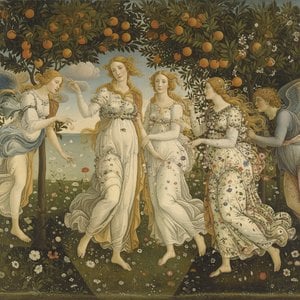
Adoration of the Magi: Botticelli’s Renaissance Vision
Sandro Botticelli's “Adoration of the Magi” (4) stands as an emblem of Early Renaissance artistry, transporting viewers back to Florence in 1475 and immersing them in a moment of profound religious significance—a spectacle orchestrated with meticulous detail and imbued with humanist ideals. This painting transcends mere depiction; it’s a portal into the evolving artistic sensibilities of its time, reflecting both spiritual devotion and the burgeoning fascination with classical beauty.
Subject & Narrative
The artwork portrays the pivotal biblical episode recounted in Matthew 2:11 – the arrival of the Magi—wise men, kings, or astrologers—to venerate the newborn Jesus Christ. Botticelli masterfully captures the essence of this sacred event by presenting a bustling scene populated with figures kneeling in adoration, offering lavish gifts (gold, frankincense, and myrrh), and engaging in reverent interactions with Mary and Joseph. The artist’s gaze is firmly fixed on the communal dimension of this miraculous birth, filling the composition with a diverse array of onlookers—shepherds, attendants, noblemen—all drawn to witness the divine incarnation. Botticelli's narrative skillfully weaves together biblical storytelling with humanist concerns, mirroring the broader intellectual currents shaping Renaissance Florence.
Style & Technique
Botticelli’s distinctive style is immediately recognizable for its elegant linearity and graceful forms. He bridges the gap between the late Gothic period and the burgeoning Renaissance, favoring flowing drapery, delicate facial features, and a refined sense of composition. Executed in oil on panel, this technique allows for subtle blending of colors and meticulous detail—a testament to Botticelli’s mastery of artistic craft. The artist's brushwork creates a slightly textured surface, particularly noticeable in the rich fabrics and skin tones, adding depth and realism to the scene. This deliberate textural quality contributes to the painting’s overall atmosphere of serenity and grandeur.
Historical Context & Influences
Born around 1445 in Florence, Botticelli flourished during an era defined by unprecedented artistic dynamism—the Early Renaissance. Commissioned by wealthy patrons like the Medici family, his work reflected both religious piety and humanist aspirations. The “Adoration of the Magi” was a popular subject for Renaissance artists, offering opportunities to showcase their skill in portraying complex narratives, elaborate costumes, and architectural grandeur. Botticelli’s approach distinguishes itself through its lyrical quality—a conscious departure from the rigid formalism of Gothic art—and his unwavering commitment to idealized beauty. He drew inspiration from earlier masters like Fra Filippo Lippi, whose influence is evident in Botticelli's compositional choices and stylistic refinements. However, Botticelli forged a uniquely personal style that would resonate throughout subsequent generations of artists.
Symbolism & Meaning
The painting overflows with symbolic significance. The gifts presented by the Magi—gold symbolizing kingship, frankincense representing divinity, and myrrh foreshadowing Jesus’ sacrificial death—are not merely material offerings but emblems of spiritual values. Furthermore, the architectural setting—reminiscent of a Roman temple or palace—suggests the universality of Christ's message and his claim to earthly dominion. The inclusion of numerous figures underscores the widespread recognition of Jesus as the Messiah—a visual affirmation of faith and divine grace. Botticelli’s meticulous attention to detail ensures that every element contributes to the painting’s overarching narrative and symbolic resonance.
Emotional Impact & Aesthetic Appeal
“Adoration of the Magi” evokes a profound sense of reverence, awe, and joyous celebration. The soft, diffused lighting creates an atmosphere conducive to contemplation—a deliberate stylistic choice designed to heighten the viewer's emotional engagement with the scene. The warm color palette—dominated by reds, blues, golds, and browns—contributes to the painting’s opulent aesthetic and imbues it with a palpable sense of warmth and luminosity.
This artwork is more than just visually stunning; it invites viewers to reflect on themes of faith, hope, and the transformative power of belief—a timeless masterpiece that continues to inspire admiration centuries after its creation. Consider framing a reproduction with ornate gold detailing to complement the painting’s rich color palette and historical context.
## Collecting & Reproduction
- Botticelli’s works are highly sought after by collectors worldwide, reflecting their enduring artistic merit and cultural significance.
- High-quality reproductions allow art enthusiasts to appreciate Botticelli's genius in their own homes or offices—bringing a touch of Renaissance elegance into any interior space.
- When selecting a reproduction, prioritize archival quality materials and framing techniques that safeguard the artwork’s vibrancy and preserve its beauty for generations to come.