CONSULENZA D'ARTE GRATUITA

x
Acquista stampa Acquista stampaOrdina la riproduzione Ordina la riproduzione InviaInvia
DettagliDettagli Aggiungi ai preferiti Aggiungi ai preferiti ScaricaScarica SimiliSimili RadiografiaRadiografia SlideshowSlideshow

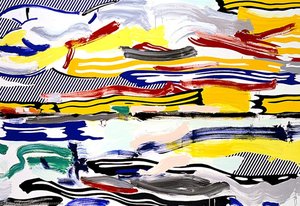
Mirror -4

Roy Lichtenstein's "Mirror -4" (1970): An iconic Pop Art piece exploring reflection and perception with Ben-Day dots—a bold statement about art’s role in modern culture!

Roy Lichtenstein (1923-1997) è stato una figura di spicco dell'arte Pop americana, noto per le sue iconiche dipinti in stile fumetto che esplorano il consumismo e l'arte fine. Scopri 'Whaam!', 'Drowning Girl' e molto altro.

Acquista un'immagine digitale ad alta risoluzione e ottimizzata, di qualità nettamente superiore all'anteprima online.

Ogni file è meticolosamente preparato dai nostri specialisti interni attraverso l'uso di strumenti avanzati e un sapiente ritocco manuale. Garantiamo che ogni immagine presenti una chiarezza eccezionale, una precisione cromatica impeccabile e dettagli raffinati.

Il file finale viene consegnato via e-mail entro 72 ore, ottimizzato per un uso immediato in contesti professionali, editoriali e di stampa. Si tratta della stessa qualità affidata dai più prestigiosi studi di design, editori e gallerie d'arte.

Immagine Digitale

Scarica un file ad alta risoluzione per uso personale, per la stampa e per progetti creativi.

Prezzo totale

$9.99

Incluso in ogni ordine di immagini digitali

Consegna digitale professionale e garantita

Quando scegli WahooArt.com, non riceverai solo un'immagine: riceverai un'opera d'arte digitale professionalmente ottimizzata, realizzata con la massima precisione e accompagnata da una garanzia di soddisfazione. Ecco tutto ciò che include il tuo ordine, automaticamente:

shipping_icon
Consegna rapida via email

Riceverai il file dell'immagine digitale ad alta risoluzione via email entro 72 ore dall'ordine, pronto per un uso immediato.

canvas_icon
File digitale ottimizzato dall'IA

La tua opera d'arte viene ottimizzata professionalmente attraverso l'uso di strumenti avanzati di intelligenza artificiale e una revisione manuale, garantendo il massimo livello di dettaglio, nitidezza e accuratezza cromatica.

insurance_icon
Riconsegna gratuita a vita

Hai eliminato o perso accidentalmente il tuo file? Non preoccuparti: te lo invieremo di nuovo in qualsiasi momento, gratuitamente.

tax_icon
Nessun costo di importazione - Sempre

Goditi la tua opera d'arte istantaneamente senza costi doganali, dazi o spese di spedizione: i download digitali sono sempre esenti da tasse.

color_icon
Garanzia di fedeltà cromatica

Garantiamo che la tua immagine digitale rifletta i colori originali con la massima fedeltà, grazie all'uso di strumenti professionali e a una gestione accurata del colore.

return_icon
Garanzia di soddisfazione di 60 giorni

Se non sei soddisfatto della tua immagine digitale, la revisioneremo o ti rimborseremo il 100% entro 60 giorni, senza domande.

guarantee_icon
Garanzia di rimborso al 100%

Non sei soddisfatto? Ricevi un rimborso completo entro 60 giorni dalla ricezione del tuo file digitale, senza dover fornire spiegazioni.

discount_icon
Sconti per ordini multipli

Acquista 3 immagini, risparmia il 10% - Acquista 5, risparmia il 15% - Acquista 10+, risparmia il 20%. Ideale per progetti creativi, gallerie e agenzie.

Informazioni rapide

  • Notable elements or techniques: Pointillism, Abstraction
  • Year: 1970
  • Artist: Roy Lichtenstein
  • Influences: Popular culture
  • Artistic style: Pop Art

Quiz d'arte

Per ogni domanda è presente una sola risposta corretta.

Domanda 1:
Roy Lichtenstein is most closely associated with which art movement?
Domanda 2:
The artwork 'Mirror -4' (1970) is characterized by what visual element, common in Lichtenstein’s work?
Domanda 3:
What was a significant influence on Lichtenstein's artistic development?
Domanda 4:
The image description focuses on what specific subject matter?
Domanda 5:
Lichtenstein's 'Mirror' series often references what artistic tradition?

Descrizione del Collezionabile

A Reflection on Modernity: Roy Lichtenstein’s “Mirror -4”

Roy Lichtenstein's "Mirror -4," created in 1970, is not a depiction of reflected reality but rather an exploration *of* reflection itself – both literal and conceptual. At first glance, the image presents a startlingly close-up view of a yellow tennis ball, punctuated by bold black stripes. This seemingly mundane subject matter, elevated to monumental scale in Lichtenstein’s larger works from this series, is characteristic of his Pop Art sensibility: finding profound artistic potential within the everyday objects and imagery of consumer culture. However, to understand “Mirror -4” fully requires delving into the broader context of Lichtenstein's career and his fascination with surface, perception, and the very act of seeing. Having initially gained prominence through his appropriation of comic book aesthetics, Lichtenstein continually pushed boundaries, seeking new ways to deconstruct visual language and challenge traditional notions of artistic representation. The “Mirror” series represents a pivotal moment in this evolution, moving beyond direct imitation towards a more abstract investigation of how images are constructed and perceived.

Deconstructing the Image: Technique and Style

The technique employed in "Mirror -4" is quintessential Lichtenstein. While seemingly simple, it’s rooted in meticulous planning and execution. The image isn’t rendered with subtle gradations or painterly brushstrokes; instead, it relies on a precise application of flat planes of color and the iconic Ben-Day dots that became his signature. These dots, borrowed from commercial printing processes, aren’t merely decorative elements but serve to break down the image into its constituent parts, highlighting its artificiality. The stark contrast between the vibrant yellow of the tennis ball and the assertive black stripes creates a dynamic visual tension, drawing the viewer's eye directly to the object. This deliberate flattening of perspective and emphasis on graphic clarity are hallmarks of Pop Art’s rejection of Abstract Expressionism’s subjective emotionality in favor of objective representation—or, more accurately, *a commentary* on representation. The choice of a tennis ball as subject matter is also significant; it's an emblem of leisure, athleticism, and American suburban life, further anchoring the work within the cultural landscape Lichtenstein so often explored.

Beyond Surface: Symbolism and Interpretation

The title “Mirror -4” itself invites multiple layers of interpretation. While there’s no literal mirror present in the image, the artwork functions as a metaphorical one, reflecting not an external reality but rather our own perceptions and preconceptions about art, representation, and consumer culture. The fragmented nature of the image—the extreme close-up, the simplified forms—suggests that what we see is never a complete or objective truth, but always a mediated experience. Furthermore, the tennis ball can be seen as symbolizing speed, energy, and competition – qualities often associated with modern life. By isolating this object and presenting it in such a stylized manner, Lichtenstein forces us to reconsider its significance and our relationship to the world around us. The series as a whole, including works like “Mirror #2 (Six Panels)” and “Mirror #3 (Six Panels),” explores the idea of fractured identity and the elusive nature of self-perception, suggesting that we are all, in some sense, reflections of the images and symbols that surround us.

A Lasting Legacy: Lichtenstein’s Impact on Contemporary Art

Roy Lichtenstein's influence on contemporary art remains profound. His innovative use of commercial techniques, his playful engagement with popular culture, and his relentless questioning of artistic conventions paved the way for generations of artists who followed. “Mirror -4,” though seemingly simple in its subject matter, embodies these core principles, offering a compelling meditation on the nature of representation and the complexities of modern life. For collectors and interior designers alike, a reproduction of this work offers not only a visually striking addition to any space but also a thought-provoking statement about art’s ability to challenge, provoke, and ultimately, reflect our own world back at us. It is a piece that continues to resonate with audiences today, reminding us that even the most ordinary objects can hold extraordinary artistic potential when viewed through the lens of a truly innovative mind.

Opere simili


Biografia dell'artista

vitae e istruzione

Roy Fox Lichtenstein, un illustre artista pop americano, è nato il 27 ottobre 1923 a New York City. È cresciuto in una famiglia ebraica della classe media alta, con suo padre agente immobiliare e sua madre casalinga. L'interesse di Lichtenstein per l'arte e il design è iniziato come hobby durante i suoi anni scolastici.

Carriera artistica

Dopo aver completato la sua istruzione superiore alla Dwight School nel 1940, Lichtenstein ha frequentato l'Art Students League of New York sotto la guida di Reginald Marsh. Ha poi conseguito una laurea in belle arti presso l'Ohio State University, che è stata interrotta da un periodo di tre anni nell'esercito durante la Seconda Guerra Mondiale.
  • Look Mickey (1961, National Gallery of Art, Washington, D.C.), una delle prime opere pop art di Lichtenstein, ha segnato l'inizio della sua influente carriera.
  • Il suo lavoro è stato fortemente influenzato dagli stili pubblicitari e dei fumetti popolari, con opere notevoli tra cui Wham!, Drowning Girl e Oh, Jeff...I Love You Too...But...
  • Il pezzo più costoso di Lichtenstein, Masterpiece, è stato venduto per 165 milioni di dollari nel gennaio 2017.

Insegnamento e influenze

Lichtenstein ha insegnato presso varie istituzioni, tra cui l'Università dello Stato di New York a Oswego e l'Università Rutgers. Il suo lavoro è stato influenzato da Allan Kaprow, un collega docente all'Università Rutgers, che ha riacceso il suo interesse per le immagini proto-pop. Mostre degne di nota:
  • The Museum Chambre de Commerce (Tolosa, Francia), che presenta varie opere d'arte, tra cui quelle del movimento pop art.
  • Il lavoro di Lichtenstein è stato esposto alla Leo Castelli Gallery a New York City, con il suo primo singolo in 1962 acquistato interamente da collezionisti influenti prima dell'apertura.

Eredità e impatto

Roy Lichtenstein è morto il 29 settembre 1997, lasciando dietro di sé un'eredità come figura di spicco nel movimento pop art. Il suo lavoro continua ad essere celebrato per la sua innovativa fusione tra arte alta e bassa, rendendola accessibile a un pubblico più ampio. Riferimenti:
Roy Lichtenstein

Roy Lichtenstein

1923 - 1997 , Stati Uniti d'America

Informazioni rapide

  • Artisti Che Hanno Influenzato Questo Artista:
    • Reginald Marsh
    • Allan Kaprow
  • Data Di Morte: 29 settembre 1997
  • Data Di Nascita: 27 ottobre 1923
  • Luogo Di Nascita: Manhattan, Stati Uniti
  • Movimento Artistico: Pop Art
  • Nazionalità: Americano
  • Nome Completo: Roy Lichtenstein
  • Opere Notevoli:
    • Look Mickey
    • Whaam!
    • Drowning Girl
    • Masterpiece