Anteprima in scala reale Prova in AR Passa alle stampe Ordina la riproduzione dipinta a mano Condividi
Dettagli Guida stampabile Aggiungi ai preferiti Scarica Articoli simili Radiografia Slideshow Statistiche

Bull (2) (1973)

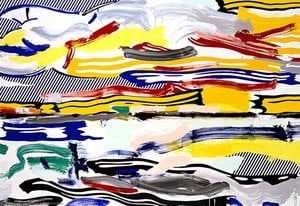
Experience Roy Lichtenstein’s ‘Bull (2)’ (1973) – a dynamic Pop Art screenprint bursting with bold yellow and red hues. A captivating study of form, color, and iconic imagery by a modern art master.

Roy Lichtenstein (1923-1997) è stato una figura di spicco dell'arte Pop americana, noto per le sue iconiche dipinti in stile fumetto che esplorano il consumismo e l'arte fine. Scopri 'Whaam!', 'Drowning Girl' e molto altro.

Acquista un'immagine digitale ad alta risoluzione e ottimizzata, di qualità nettamente superiore all'anteprima online.

Ogni file è meticolosamente preparato dai nostri specialisti interni attraverso l'uso di strumenti avanzati e un sapiente ritocco manuale. Garantiamo che ogni immagine presenti una chiarezza eccezionale, una precisione cromatica impeccabile e dettagli raffinati.

Il file finale viene consegnato via e-mail entro 72 ore, ottimizzato per un uso immediato in contesti professionali, editoriali e di stampa. Si tratta della stessa qualità affidata ai più prestigiosi studi di design, editori e gallerie d'arte.

Immagine Digitale

Scarica un file ad alta risoluzione per uso personale, per la stampa e per progetti creativi. ( Passa alle stampe Ordina la riproduzione dipinta a mano)

Prezzo finale

$ 24,90

Incluso in ogni acquisto di immagini digitali

Consegna digitale professionale e garantita

Quando scegli WahooArt.com, non riceverai solo un'immagine: riceverai un'opera d'arte digitale professionalmente ottimizzata, realizzata con la massima precisione e accompagnata da una garanzia di soddisfazione. Ecco tutto ciò che include il tuo ordine, automaticamente:

shipping_icon
Consegna rapida via email

Riceverai il file dell'immagine digitale ad alta risoluzione via email entro 72 ore dall'ordine, pronto per un uso immediato.

canvas_icon
File digitale potenziato dall'IA

La tua opera d'arte viene ottimizzata professionalmente attraverso l'uso di strumenti avanzati di intelligenza artificiale e una revisione manuale, garantendo il massimo livello di dettaglio, nitidezza e accuratezza cromatica.

insurance_icon
Riconsegna gratuita a vita

Hai eliminato o perso accidentalmente il tuo file? Non preoccuparti: te lo invieremo di nuovo in qualsiasi momento, gratuitamente.

tax_icon
Nessun costo di importazione, mai

Goditi la tua opera d'arte istantaneamente senza costi doganali, dazi o spese di spedizione: i download digitali sono sempre esenti da tasse.

color_icon
Garanzia di fedeltà cromatica

Garantiamo che la tua immagine digitale rifletta i colori originali con la massima fedeltà, grazie all'uso di strumenti professionali e a una gestione accurata del colore.

return_icon
Garanzia soddisfatti o rimborsati 100 giorni

Se non sei soddisfatto della tua immagine digitale, la revisioneremo o ti rimborseremo il 100% entro 100 giorni, senza domande.

guarantee_icon
Garanzia di rimborso al 100%

Non sei soddisfatto? Ricevi un rimborso completo entro 100 giorni dal ricevimento del tuo file digitale, senza dover fornire spiegazioni.

discount_icon
Sconti per ordini multipli

Acquista 3 immagini, risparmia il 10% - Acquista 5, risparmia il 15% - Acquista 10+, risparmia il 20%. Ideale per progetti creativi, gallerie e agenzie.

Dettagli rapidi

  • Notable elements: Bold colors
  • Title: Bull (2)
  • Artistic style: Pop Style
  • Year: 1973
  • Subject or theme: Bull Image
  • Movement: Pop Art

Quiz d'arte

Per ogni domanda è presente una sola risposta corretta.

Domanda 1:
What artistic movement is Roy Lichtenstein most closely associated with?
Domanda 2:
The dominant colors in 'Bull (2)' are primarily:
Domanda 3:
Based on the image description, what is the subject of the painting?
Domanda 4:
Which of the following best describes the style evident in 'Bull (2)'?
Domanda 5:
Roy Lichtenstein often drew inspiration from which of the following sources?

Roy Lichtenstein’s ‘Bull (2)’ – A Pop Art Icon of Boldness and Contemplation

Roy Lichtenstein's “Bull (2),” created in 1973, is more than just a depiction of an animal; it’s a potent distillation of the artist’s signature Pop Art style—a vibrant explosion of color, simplified forms, and a deliberate engagement with the visual language of advertising and comic books. This particular iteration, part of a series exploring the motif of the bull, stands as a testament to Lichtenstein's ability to imbue seemingly mundane subjects with layers of meaning and emotional resonance. The painting immediately commands attention through its striking use of yellow and red – colors traditionally associated with energy, passion, and even danger – creating a dynamic visual tension that draws the viewer in.

The composition itself is deceptively simple. A stylized bull dominates the canvas, rendered in broad, flat areas of color rather than meticulously detailed brushstrokes. This technique, borrowed directly from Ben-Day dots used extensively in commercial printing, gives the image a graphic, almost mechanical quality. The repetition of these small squares creates an illusion of depth and texture, mimicking the effect of printed images. It’s a deliberate move away from traditional representational painting, signaling Lichtenstein's rejection of academic art conventions and his embrace of the visual culture surrounding him.

The Genesis of a Pop Visionary: Context and Influences

To fully appreciate “Bull (2),” it’s crucial to understand the context in which it was created. The 1970s were a period of significant social and cultural change, marked by consumerism, mass media saturation, and a growing skepticism towards established institutions. Pop Art emerged as a direct response to this environment, challenging traditional notions of artistic value and exploring the relationship between art and everyday life. Roy Lichtenstein’s work was deeply influenced by artists like Andy Warhol, who similarly appropriated imagery from advertising and popular culture. However, Lichtenstein's approach differed in its deliberate use of Ben-Day dots and his exploration of themes beyond mere replication – he sought to imbue these borrowed images with a sense of narrative and psychological depth.

Born in Manhattan in 1923, Roy Fox Lichtenstein’s artistic journey began with an interest in realistic drawing and painting. His early training at the Art Students League and subsequent studies at Ohio State University provided him with foundational skills, but it was his encounter with Reginald Marsh, a pioneering realist painter, that truly shaped his approach. Marsh's emphasis on direct observation and capturing the essence of subjects through simplified forms proved to be a key influence on Lichtenstein’s later work. His marriage to Dorothy Herzka (née Lichtenstein), also an artist and art historian, further enriched his intellectual and artistic life.

Decoding the Symbolism: Beyond the Surface

While superficially resembling a commercial print, “Bull (2)” invites deeper interpretation. The bull itself is a potent symbol – often associated with strength, virility, and aggression, but also with fertility and protection. In this context, it can be seen as representing primal forces or perhaps even the anxieties of a rapidly changing society. The vibrant yellow and red colors intensify these associations, creating a sense of urgency and dynamism. The simplified form, devoid of intricate detail, suggests an emotional state rather than a literal representation.

Interestingly, Lichtenstein’s exploration of the bull motif coincided with his interest in mythology and folklore. He frequently referenced ancient stories and symbols in his work, adding layers of historical and cultural significance to his Pop Art images. The series as a whole can be viewed as an investigation into the enduring power of archetypal imagery – how these fundamental symbols continue to resonate across time and cultures.

A Timeless Masterpiece: Reproduction and Interior Design

WahooArt offers meticulously crafted, hand-painted reproductions of “Bull (2)” that capture the essence of Lichtenstein’s original work with remarkable fidelity. Our artists utilize traditional oil painting techniques to faithfully recreate the bold colors, graphic textures, and dynamic composition of this iconic piece. Whether you're a seasoned art collector or seeking to add a touch of Pop Art flair to your interior design scheme, our reproductions provide an authentic and affordable way to bring Lichtenstein’s vision into your home or office.

The scale and color palette of “Bull (2)” make it exceptionally versatile for various settings. Consider pairing it with complementary neutrals to allow the artwork's vibrancy to truly shine, or juxtapose it with more muted tones for a sophisticated contrast. Explore our range of sizes and framing options to find the perfect fit for your space – and experience the enduring appeal of this Pop Art masterpiece.


Biografia dell'artista

vitae e istruzione

Roy Fox Lichtenstein, un illustre artista pop americano, è nato il 27 ottobre 1923 a New York City. È cresciuto in una famiglia ebraica della classe media alta, con suo padre agente immobiliare e sua madre casalinga. L'interesse di Lichtenstein per l'arte e il design è iniziato come hobby durante i suoi anni scolastici.

Carriera artistica

Dopo aver completato la sua istruzione superiore alla Dwight School nel 1940, Lichtenstein ha frequentato l'Art Students League of New York sotto la guida di Reginald Marsh. Ha poi conseguito una laurea in belle arti presso l'Ohio State University, che è stata interrotta da un periodo di tre anni nell'esercito durante la Seconda Guerra Mondiale.
  • Look Mickey (1961, National Gallery of Art, Washington, D.C.), una delle prime opere pop art di Lichtenstein, ha segnato l'inizio della sua influente carriera.
  • Il suo lavoro è stato fortemente influenzato dagli stili pubblicitari e dei fumetti popolari, con opere notevoli tra cui Wham!, Drowning Girl e Oh, Jeff...I Love You Too...But...
  • Il pezzo più costoso di Lichtenstein, Masterpiece, è stato venduto per 165 milioni di dollari nel gennaio 2017.

Insegnamento e influenze

Lichtenstein ha insegnato presso varie istituzioni, tra cui l'Università dello Stato di New York a Oswego e l'Università Rutgers. Il suo lavoro è stato influenzato da Allan Kaprow, un collega docente all'Università Rutgers, che ha riacceso il suo interesse per le immagini proto-pop. Mostre degne di nota:
  • The Museum Chambre de Commerce (Tolosa, Francia), che presenta varie opere d'arte, tra cui quelle del movimento pop art.
  • Il lavoro di Lichtenstein è stato esposto alla Leo Castelli Gallery a New York City, con il suo primo singolo in 1962 acquistato interamente da collezionisti influenti prima dell'apertura.

Eredità e impatto

Roy Lichtenstein è morto il 29 settembre 1997, lasciando dietro di sé un'eredità come figura di spicco nel movimento pop art. Il suo lavoro continua ad essere celebrato per la sua innovativa fusione tra arte alta e bassa, rendendola accessibile a un pubblico più ampio. Riferimenti:
Roy Lichtenstein

Roy Lichtenstein

1923 - 1997 , Stati Uniti d'America

In breve

  • Artisti Che Hanno Influenzato Questo Artista:
    • Reginald Marsh
    • Allan Kaprow
  • Data Di Morte: 29 settembre 1997
  • Data Di Nascita: 27 ottobre 1923
  • Luogo Di Nascita: Manhattan, Stati Uniti
  • Movimento Artistico: Pop Art
  • Nazionalità: Americano
  • Nome Completo: Roy Lichtenstein
  • Opere Notevoli:
    • Look Mickey
    • Whaam!
    • Drowning Girl
    • Masterpiece