A Symphony of Nature: Robert Seldon Duncanson’s ‘Landscape Mural’
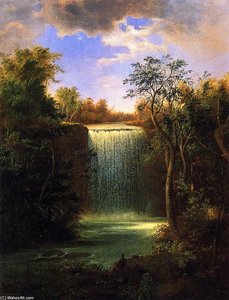
Robert Seldon Duncanson's “Landscape Mural,” completed in 1852, is more than just a depiction of a picturesque scene; it’s a testament to the burgeoning Romantic movement within American art and a poignant reflection of its creator’s extraordinary journey. Measuring an impressive 280 x 217 cm, this large-scale mural immediately commands attention with its vibrant portrayal of a cascading waterfall nestled amidst towering mountains and verdant woodlands. The artist's meticulous rendering captures the essence of the natural world with remarkable detail, inviting the viewer into a tranquil realm where time seems to slow.
- Subject Matter: A quintessential landscape featuring a dramatic waterfall, mature trees, and distant mountain ranges – elements frequently employed by Romantic artists to evoke feelings of awe and reverence for nature.
- Artist’s Vision: Duncanson's work exemplifies the shift in artistic focus from purely representational art towards capturing emotional responses and philosophical ideas through landscape imagery.
The Pioneer’s Palette: Technique and Style
Duncanson was a master of tonal painting, employing subtle gradations of color to create a sense of depth and atmosphere. His brushwork is remarkably delicate, particularly in the rendering of the water's movement and the foliage's texture. The use of cool blues and greens dominates the composition, reflecting the serenity of the scene while simultaneously highlighting the dramatic contrast between light and shadow. The artist’s training in carpentry likely informed his precise attention to detail and structural elements within the landscape – a characteristic evident in the carefully constructed perspective and the realistic depiction of geological forms. This meticulous approach aligns him with the Hudson River School, though Duncanson's unique vision transcends simple imitation.
A Legacy Forged in Resilience
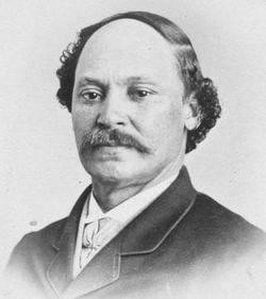
Born in Fayetteville, New York, in 1821, Robert Seldon Duncanson’s life story is inextricably linked to the complexities of race and artistic recognition in mid-19th century America. His father, John Dean Duncanson, was a free Black tradesman who fostered his son's intellectual curiosity and instilled a strong work ethic. Despite facing significant racial prejudice, Duncanson persevered, developing his skills through self-study and apprenticeship, ultimately becoming the first African American artist to achieve widespread international acclaim. This mural stands as a powerful symbol of his determination and artistic triumph against adversity – a narrative woven into every brushstroke.
Symbolism and Emotional Resonance
The inclusion of birds scattered throughout the scene adds another layer of meaning, often interpreted as symbols of freedom, spirituality, or connection to the divine. The waterfall itself represents renewal, purification, and the relentless flow of time – themes frequently explored in Romantic art. “Landscape Mural” evokes a profound sense of peace and tranquility, inviting contemplation on the beauty and power of nature while simultaneously acknowledging Duncanson’s remarkable story as a trailblazing artist. This piece is an investment not just in a beautiful artwork but in a significant chapter of American art history.
Domande e risposte
Verso quale tonalità tende "Landscape Mural"?
Una tonalità Green to Violet Spectrum attraversa l'opera "Landscape Mural" di Robert Seldon Duncanson.
"Landscape Mural" è rimasta nel paese d'origine dell'artista?
Sì - l'opera è conservata nel paese d'origine dell'artista. Il paese di nascita di Robert Seldon Duncanson è Stati Uniti d'America, mentre il museo che custodisce l'originale di "Landscape Mural" si trova in Stati Uniti d'America.
A quale periodo della carriera di Robert Seldon Duncanson appartiene "Landscape Mural"?
"Landscape Mural" rappresenta il Mature Period di Robert Seldon Duncanson.



 Anteprima in scala reale
 Ordina la riproduzione dipinta a mano
 Condividi
 Condividi
 Dettagli
 Guida stampabile

 Scarica
 Articoli simili
 Radiografia
 Slideshow
 Statistiche


 Leggi tutto






































 L'opzione vetro è disponibile solo per dimensioni inferiori a 110 cm