The Digital Zen: The Visionary World of Rho Jae Oon
In the heart of Seoul, a city where ancient traditions pulse beneath a neon-lit, hyper-connected skyline, Rho Jae Oon (born 1971) has forged an artistic language that speaks to the very soul of our modern era. His practice is not merely an exploration of new media, but a profound philosophical inquiry into how we perceive reality in an age of infinite digital reproduction. By weaving together the contemplative stillness of Buddhist thought with the frenetic energy of the internet, Oon creates a space where the viewer can pause and reflect on the shifting boundaries between the physical self and the virtual shadow.
Oon’s artistic evolution is deeply rooted in his academic foundations at Seoul National University. There, immersed in the rigorous study of fine arts—ranging from the tactile weight of sculpture to the layered depth of painting—he developed a mastery over form and composition. However, it was his early fascination with experimental cinema and performance art that truly ignited his creative spirit. This cinematic lens would later become his most potent tool, allowing him to approach the canvas and the screen not as static surfaces, but as dynamic stages for montage. Through this technique, he learned to synthesize disparate fragments—web images, textual narratives, and sonic textures—into a cohesive, thought-provoking whole.
Synthesizing Tradition and Technology
At the core of Oon’s work lies a striking duality: the ancient wisdom of Zen Buddhism and the relentless velocity of contemporary digital platforms. He finds a spiritual resonance between the Buddhist concepts of mindfulness and emptiness and the way the digital realm can dissolve established narratives, exposing the hidden biases within our collective consciousness. His breakthrough work, Mulian Sutron, serves as a poignant example of this synthesis. In this filmic meditation, he utilizes the legendary tale of Buddha’s disciple, Mulian, to explore themes of liberation and the struggle to rescue the soul from darkness, using cinematic projections to bridge the gap between mythic past and digital present.
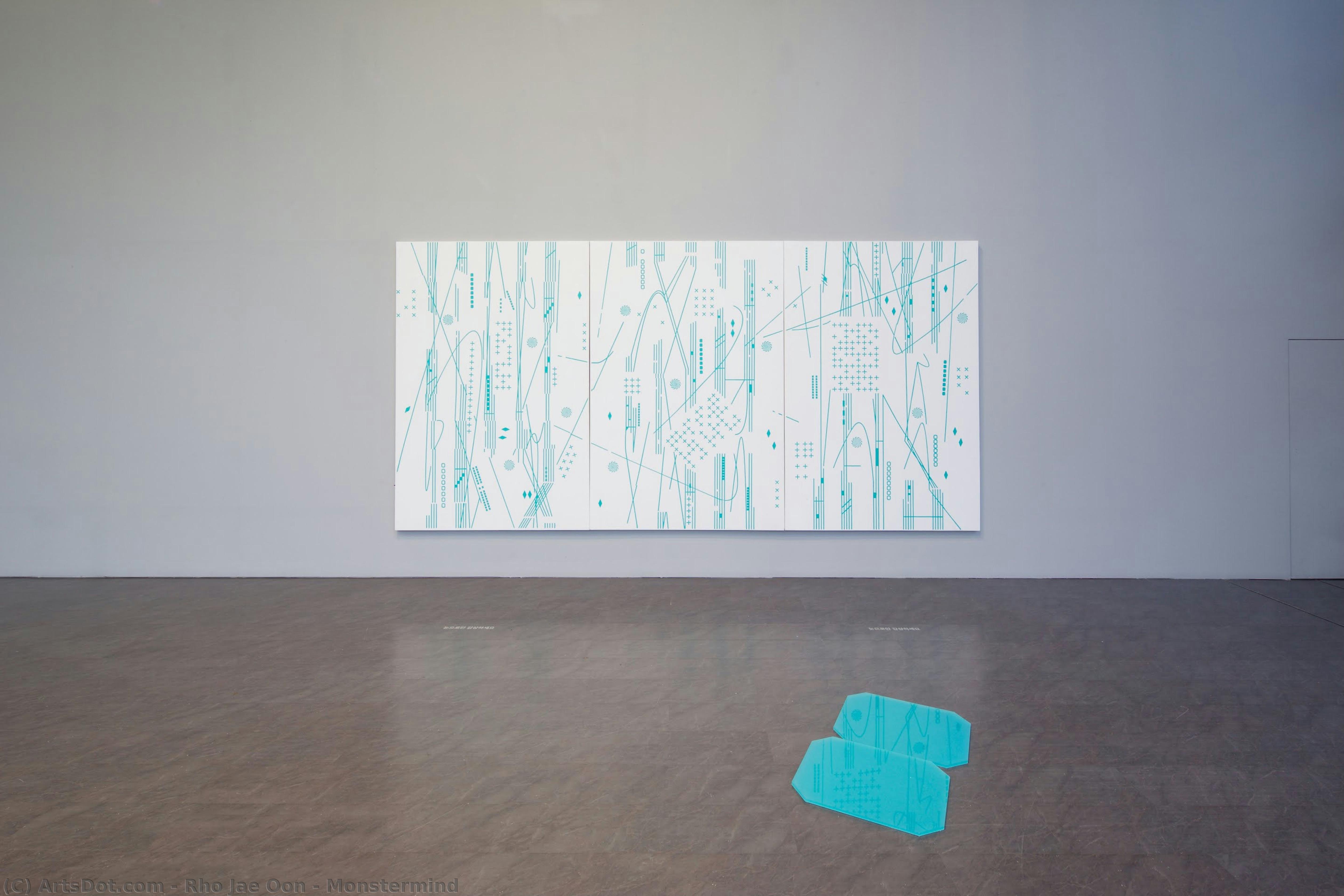
This intersection is perhaps most vividly realized in his explorations of Monstermind. In this conceptual framework, Oon acts as an architect of interfaces, creating platforms that challenge the viewer to recognize the dangers of "transcendent speed." He observes how the rapid-fire delivery of information through social networks can induce a state of unconscious conformity to the myths created by modern establishments. His work serves as a vital warning and a call to enlightenment, urging us to look past the superficial gloss of technology to find the deeper truths buried within the data stream.
A Legacy of Cognitive Shift
The significance of Rho Jae Oon’s contribution to contemporary art lies in his ability to provoke genuine cognitive shifts. He does not simply use technology for its novelty; rather, he appropriates the very tools of our digital existence to critique them. His mastery of the montage technique allows him to recontextualize the debris of the internet—the discarded images and fleeting sounds—giving them new, profound meanings that resonate far beyond their original digital context.
As we navigate an increasingly complex global landscape, Oon’s work remains a crucial touchstone for understanding our place within the machine. His achievements can be summarized through several key artistic pillars:
- The Art of Montage: Utilizing film editing techniques to create conceptually rich, multi-sensory experiences from digital fragments.
- Philosophical Integration: Successfully bridging the gap between ancient Buddhist cosmology and the complexities of 21st-century visual culture.
- Critical Digital Engagement: Moving beyond simple optimism or hostility toward technology to investigate how digital velocity shapes human identity and social recognition.
- Interface Creation: Developing artistic "interfaces" that function as platforms for re-evaluating the temporality and information flow of our current era.
Through his evocative compositions, Rho Jae Oon continues to challenge us to remain awake in a world of digital distraction, reminding us that even within the most complex technological webs, there is a profound opportunity for spiritual and intellectual liberation.


 Anteprima in scala reale
 Passa alle stampe
 Condividi
 Condividi
 Dettagli
 Guida stampabile

 Scarica
 Articoli simili
 Radiografia
 Slideshow
 Statistiche

 Leggi tutto






































 L'opzione vetro è disponibile solo per dimensioni inferiori a 110 cm


![Abstract Composition [triptych] — Vaclav Vytlacil, Abstract Expressionism](/media/artworks/images-thumb/08/3c/083c0675045645fd42d4e6c6d63f1ced.jpg)