Anteprima in scala realeAnteprima in scala reale Anteprima ARAnteprima AR Acquista il dipinto realizzato a mano Acquista il dipinto realizzato a manoPassa all'immagine digitale Passa all'immagine digitale InviaInvia
Dettagli operaDettagli opera Aggiungi ai preferiti Aggiungi ai preferiti Scarica immagineScarica immagine SimiliSimili RadiografiaRadiografia SlideshowSlideshow StatisticheStatistiche

Woman bathing

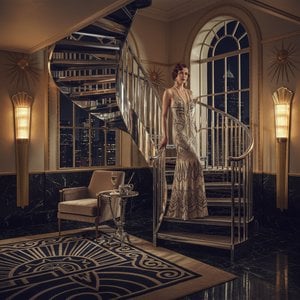
Experience René Magritte’s ‘Woman Bathing.’ This iconic Surrealist painting captures a moment of quiet intimacy, rendered in black and white with a striking art deco style. Own a museum-quality reproduction today!

René Magritte (1898-1967) è stato un artista belga surrealista rinomato per dipinti stimolanti che sfidano la realtà. Esplora opere iconiche come 'Gli Amanti' e il suo uso di oggetti ordinari in contesti inaspettati. Scopri riproduzioni su WahooArt.

Giclée / Stampe d'arte

Stampa giclée o su tela di qualità museale, con produzione rapida e diverse opzioni di finitura. (Acquista il dipinto realizzato a mano Acquista il dipinto realizzato a manoPassa all'immagine digitale Passa all'immagine digitale)

P118B $10
P118H $10
P118W $10
P438Z $10
P508JH $12
P508YH $12
P805H $10
P805Z $10
P919BZ $10
P919G $10
P919XJ $10
P959ZH $10
P968JZ $12
W106C $8
W218G $10
W218JH $8
W218Y $10
W307PJ $10
W316G $10
W316PJ $8
W316Y $10
W398PJ $8
W4111J $10
W500HY $15
W500JH $15
W692G $12
W849H $8
W940BG $15
W953PJ $8

Formato standard
su misura
CM
INCH

Scegli tra le nostre dimensioni predefinite, che rispettano le proporzioni originali dell'opera d'arte.

larghezza
altezza

È possibile inserire dimensioni personalizzate per adattare l'opera a una cornice o a uno spazio specifico. Se la dimensione selezionata non corrisponde alle proporzioni dell'immagine originale, procederemo al ritaglio dell'opera o all'estensione dell'immagine con un bordo specchiato o a tinta unita. Un mockup digitale ti verrà inviato per approvazione prima dell'inizio della produzione.
Si prega di notare che l'anteprima a schermo non riflette il ritaglio o l'estensione effettivi. Solo il mockup mostrerà accuratamente la composizione finale.
Sebbene siano disponibili dimensioni personalizzate, si raccomanda di selezionare una dimensione dall'elenco predefinito per preservare le proporzioni originali.

Consegna in tutto il mondo () in 2 settimane invece delle normali 4/5 settimane. (11 Settembre)

why_choose_icon
Spedizione espressa gratuita in tutto il mondo
why_choose_icon
Tela in lino di alta qualità
why_choose_icon
Assicurazione completa sulla spedizione
why_choose_icon
Garanzia di rimborso dei dazi doganali
why_choose_icon
Garanzia di fedeltà cromatica
why_choose_icon
Politica di reso entro 100 giorni (solo per difetti)
why_choose_icon
Garanzia di rimborso al 100%
why_choose_icon
Offerta per acquisti multipli

Prezzo totale

$ 68

reproduction

Woman bathing

Giclée / Stampe d'arte

Dimensioni riproduzione

-

Prezzo totale calcolato

$ 68

Informazioni rapide

  • Medium: Oil on canvas
  • Movement: Surrealism
  • Influences: Magritte
  • Title: Woman Bathing
  • Notable elements: Nude figure, red dress
  • Artist: René Magritte

Quiz d'arte

Per ogni domanda è presente una sola risposta corretta.

Domanda 1:
What is the primary subject of René Magritte’s ‘Woman Bathing’?
Domanda 2:
The painting ‘Woman Bathing’ is primarily associated with which art movement?
Domanda 3:
What stylistic element is most prominent in ‘Woman Bathing’?
Domanda 4:
Considering René Magritte's broader body of work, what is a recurring theme often explored in his paintings?
Domanda 5:
Based on the image description, what is noticeable about the background figures in ‘Woman Bathing’?

René Magritte’s Enigmatic “Woman Bathing”: A Study in Hidden Realities

Rene Magritte's "Woman Bathing," painted around 1929, is not merely a depiction of a woman enjoying a moment of repose; it’s a carefully constructed puzzle designed to challenge our fundamental assumptions about perception and representation. This deceptively simple black-and-white image, now housed in various collections worldwide, embodies the core tenets of Surrealism – a movement Magritte helped define – by subtly disrupting the familiar relationship between what we see and what truly exists. The painting’s power lies not in overt drama or explicit narrative, but in its quiet insistence on questioning the very nature of reality itself.

The scene unfolds with an almost clinical detachment. A woman, her features partially obscured by a strategically placed red dress, is immersed in a stream. Her posture suggests relaxation and vulnerability, yet there’s an undeniable sense of unease. The background is sparsely populated – two indistinct figures hint at the presence of others, adding to the feeling that we are observing a private, almost staged moment. Magritte masterfully employs a stark monochrome palette, reminiscent of early 20th-century photography and film, further enhancing the painting’s unsettling atmosphere. This deliberate choice strips away any potential distractions, forcing the viewer to confront the image with raw intensity.

The Roots of Surrealism: Trauma and the Unseen

Understanding Magritte's artistic vision requires a glimpse into his personal history. Born René Ghislain Magritte in Lessines, Belgium, in 1898, he experienced a profoundly formative event at the age of thirteen – the suicide of his mother. The image of her body being recovered from the River Sambre, with her dress concealing her face, became a recurring motif throughout his oeuvre. This deeply personal tragedy instilled within him a lifelong fascination with concealment, loss, and the unsettling power of what remains hidden beneath the surface. It’s believed this early trauma fueled his exploration of the subconscious and his deliberate manipulation of visual reality.

Magritte's work is often described as “visual poetry,” prioritizing intellectual engagement over emotional expression. He wasn’t interested in simply replicating the world; he sought to expose its constructed nature, revealing the mechanisms by which we perceive and interpret it. "Woman Bathing" exemplifies this approach perfectly. The red dress, a seemingly minor detail, acts as a powerful symbol of concealment – obscuring the woman's face and suggesting that her true identity is deliberately hidden from view. This echoes his mother’s obscured visage, creating a subtle yet persistent link to his personal history.

Technique and Style: A Masterclass in Illusion

Magritte’s technique is characterized by meticulous detail and an almost photographic realism, despite the painting's surreal subject matter. He employed oil paints on canvas with a precision that belies the dreamlike quality of his work. The smooth gradations of tone, the subtle modeling of form, and the careful rendering of textures create a convincing illusion of depth and space. However, this apparent realism is deliberately undermined by the painting’s overall atmosphere of unease and ambiguity.

The composition itself contributes to the painting's unsettling effect. The woman is positioned slightly off-center, drawing the viewer’s eye across the canvas and creating a sense of imbalance. The lack of clear perspective further enhances this feeling of disorientation. Magritte’s deliberate use of line and form challenges our expectations of how things should look, forcing us to question what we are seeing.

Symbolism and Emotional Resonance: A Question of Perception

"Woman Bathing" is a profoundly ambiguous work, inviting multiple interpretations. The woman herself can be seen as representing vulnerability, innocence, or perhaps even the unknowable depths of the human psyche. The stream symbolizes transition, purification, or simply the flow of time. The red dress, as previously mentioned, represents concealment and the suppression of identity.

Ultimately, Magritte’s masterpiece is not about providing answers but about posing questions. It's a meditation on the nature of perception, the limitations of representation, and the enduring power of the subconscious. A high-quality reproduction of “Woman Bathing” offers a captivating glimpse into the mind of one of the 20th century’s most influential artists – a work that continues to resonate with viewers today, prompting us to reconsider our own understanding of reality.


Biografia dell'artista

primi anni di vita e inizi artistici

René François Ghislain Magritte, un rinomato artista surrealista belga, nacque il 21 novembre 1898 a Lessines, provincia dell'Hainaut, Belgio. La sua giovinezza è rimasta in parte misteriosa, con poco noto sul suo infanzia. Tuttavia, è documentato che iniziò le lezioni di disegno nel 1910.

evoluzione artistica e influenze

Lo stile artistico di Magritte si è evoluto notevolmente negli anni, influenzato da vari movimenti come l'impressionismo, il futurismo e il cubismo. I suoi primi dipinti, datati intorno al 1915, erano nello stile impressionista. Dal 1916 al 1918, studiò all’Académie Royale des Beaux-Arts a Bruxelles, sotto Constant Montald.

periodo surrealista e opere notevoli

Nel 1926, Magritte produsse il suo primo dipinto surrealista, Il Cavaliere Perduto (Le Jockey Perdu), segnando l'inizio della sua associazione con il movimento surrealista. Il suo lavoro è caratterizzato da immagini stimolanti, spesso che raffigurano oggetti ordinari in contesti insoliti, sfidando la percezione della realtà degli osservatori.
  • Les Amants (1927-1928), una serie di dipinti che presentano persone con panni che coprono i loro volti, si presume sia stata ispirata dalla storia della morte della madre.
  • Gli Amanti, un'altra opera iconica, presenta una coppia che si bacia con i volti coperti da panni bianchi, invitando lo spettatore a riflettere sull’amore e l’identità. (disponibile per l'acquisto come riproduzione su olio fatta a mano o stampa su tela presso WahooArt.com)

vita successiva e eredità

Il lavoro di Magritte è stato esposto negli Stati Uniti nel 1936 e nuovamente in due mostre retrospective, una al Museum of Modern Art nel 1965 e l'altra al Metropolitan Museum of Art nel 1992. È rimasto impegnato nella sinistra politica ma ha sostenuto l’autonomia artistica. Musei notevoli che espongono le opere di Magritte:

Conclusione

L'eredità di René Magritte come maestro surrealista è duratura, con le sue immagini stimolanti che continuano a ispirare e affascinare. Il suo lavoro, caratterizzato da un unico blend tra l’ordinario e l’inaspettato, rimane una pietra angolare dell’arte surrealista. Scopri di più su René Magritte
René Magritte

René Magritte

1898 - 1967 , belgio

Dati rapidi

  • Artisti Influenti:
    • Impressionismo
    • Futurismo
    • Cubismo
  • Data Di Nascita: 21 novembre 1898
  • Luogo Di Nascita: Lessines, Belgio
  • Movimento Artistico: Surrealismo
  • Nazionalità: Belga
  • Nome Completo: René François Ghislain Magritte
  • Opere Notevoli:
    • Le Jockey Perdu
    • Gli Amanti
    • La Traduzione delle immagini
    • Tempo trasfixo
    • La condizione umana
Esplora le opere d'arte organizzate per temi, stili e caratteristiche.