x
Anteprima in scala realeAnteprima in scala reale Anteprima ARAnteprima AR Acquista stampa Acquista stampaAcquista immagine Acquista immagine InviaInvia
Dettagli operaDettagli opera Aggiungi ai preferiti Aggiungi ai preferiti Scarica immagineScarica immagine SimiliSimili RadiografiaRadiografia SlideshowSlideshow


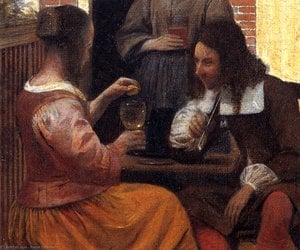
The Visit

A lively Baroque social gathering unfolds in this exquisite 1657 masterpiece by Pieter de Hooch, capturing the intimate warmth of Dutch Golden Age domestic life through a stunning hand-painted reproduction.

Scopri Pieter de Hooch (1629-1694), maestro olandese dell'età d'oro! Scene di vita quotidiana, architetture luminose e realismo che ha ispirato l'Impressionismo.

Riproduzione a olio fatta a mano

Olio su tela dipinto a mano nelle tue dimensioni e con la tua cornice, realizzato su ordinazione dai nostri artisti. (Acquista stampa Acquista stampaAcquista immagine Acquista immagine)

P118B $10
P118H $10
P118W $10
P438Z $10
P508JH $12
P508YH $12
P805H $10
P805Z $10
P919BZ $10
P919G $10
P919XJ $10
P959ZH $10
P968JZ $12
W106C $8
W218G $10
W218JH $8
W218Y $10
W307PJ $10
W316G $10
W316PJ $8
W316Y $10
W398PJ $8
W4111J $10
W500HY $15
W500JH $15
W692G $12
W849H $8
W940BG $15
W953PJ $8

Formato standard
su misura
CM
INCH

Scegli tra le nostre dimensioni predefinite, che rispettano le proporzioni originali dell'opera d'arte.

larghezza
altezza

È possibile inserire dimensioni personalizzate per adattare l'opera a una cornice o a uno spazio specifico. Se la dimensione selezionata non corrisponde alle proporzioni dell'immagine originale, provvederemo a ritagliare l'opera o a estendere il dipinto con elementi aggiuntivi dipinti a mano. Un mockup digitale ti sarà inviato per approvazione prima dell'inizio della produzione.
Si prega di notare che l'anteprima a schermo non riflette il ritaglio o l'estensione effettivi. Solo il mockup mostrerà accuratamente la composizione finale.
Sebbene siano disponibili dimensioni personalizzate, consigliamo di selezionare una dimensione dall'elenco predefinito per preservare le proporzioni originali.

Esempi di ciò che può essere modificato: sostituire il volto con una foto del cliente; aggiungere un animale domestico (ad esempio, sostituire un gatto con un cane); inserire un messaggio nascosto nello sfondo; cambiare il paesaggio o gli elementi dello sfondo.
Dopo l'ordine, il team di WahooArt.com contatterà il cliente via e-mail per le istruzioni e fornirà un'anteprima del mockup

Consegna in tutto il mondo () in 3/4 settimane anziché nelle normali 5 settimane. (30 Agosto). Nessun compromesso sulla qualità.

why_choose_icon
Spedizione espressa gratuita in tutto il mondo
why_choose_icon
Tela in lino di alta qualità
why_choose_icon
Assicurazione completa sulla spedizione
why_choose_icon
Garanzia di rimborso dei dazi doganali
why_choose_icon
Garanzia di fedeltà cromatica
why_choose_icon
Politica di reso entro 60 giorni (solo per difetti di fabbricazione)
why_choose_icon
Garanzia di rimborso al 100%
why_choose_icon
Offerta per acquisti multipli

Prezzo totale

$ 272

reproduction

The Visit

Tecnica di riproduzione

Dimensioni riproduzione

-

Prezzo totale calcolato

$ 272

Informazioni rapide

  • Subject or theme: Domestic life and social gathering
  • Movement: Dutch Golden Age
  • Title: The Visit
  • Artist: Pieter de Hooch
  • Artistic style: Baroque
  • Dimensions: 58 x 68 cm

A Window into the Dutch Golden Age

In the quiet, sun-drenched interiors of the seventeenth century, moments of profound connection were often found in the most mundane settings. Pieter de Hooch, a master of the Dutch Golden Age, captures this essence perfectly in his 1657 masterpiece, The Visit. This evocative piece invites the viewer into a lively social gathering, where the boundaries between the private domestic sphere and the public world seem to blur. As we gaze upon the scene, we are not merely observers of a meal, but guests at a table surrounded by the warmth of companionship. The composition is anchored by a central dining area, where figures are arranged in a naturalistic, unposed manner that suggests a fleeting moment captured in time. A delicate bird perched in the upper corner and the steady presence of a wall clock serve as subtle reminders of the passage of time, adding a layer of contemplative depth to an otherwise bustling domestic tableau.

The artistry of De Hooch is defined by his unparalleled ability to manipulate light and shadow, a technique that breathes life into every corner of the room. Through a masterful application of chiaroscuro and soft, diffused illumination, he creates a sense of atmospheric depth that draws the eye through the layers of the household. The textures of the wooden furniture, the subtle sheen on the ceramic bowls, and the heavy folds of period clothing are rendered with such precision that one can almost feel the stillness of the air. This meticulous attention to detail is not merely decorative; it serves to ground the painting in a tangible reality, making the historical setting feel immediate and intimate for the modern viewer.

Symbolism and the Art of Domesticity

Beyond its surface beauty, The Visit functions as a profound exploration of middle-class values during the Dutch Golden Age. During this era, the home was viewed as a sanctuary of morality and order. De Hooch utilizes elements within the room—the organized placement of chairs, the communal bowl of food, and the structured gathering—to symbolize the stability and prosperity of the burgeoning merchant class. The presence of the clock is particularly poignant, acting as a memento mori that reminds us to cherish the fleeting joys of human connection amidst the inevitable march of time. For the collector or interior designer, this painting offers more than just aesthetic appeal; it provides a narrative of continuity and the enduring importance of home and hearth.

Integrating a high-quality reproduction of such a work into a contemporary space allows for a sophisticated dialogue between history and modernity. The muted, earthy palette of De Hooch’s work complements both classical and minimalist decor, providing a focal point that evokes feelings of nostalgia, warmth, and intellectual curiosity. Whether placed in a grand library or a cozy breakfast nook, The Visit serves as an emotional anchor, transforming a room into a space of storytelling and quiet reflection. It is an invitation to slow down, to observe the light, and to find beauty in the shared moments of our own lives.


Biografia dell'artista

Early Life and Artistic Beginnings

Pieter de Hooch, a name synonymous with the quiet intimacy of Dutch domestic life, was born in Rotterdam on December 20, 1629. His origins were humble; his father, Hendrick Hendricksz de Hooch, was a skilled bricklayer – an artisan whose craft instilled a keen eye for detail and structure within his son. Pieter’s mother, Annetge Pieters, contributed her expertise as a midwife, shaping his understanding of human experience and the rhythms of daily existence. Little is definitively known about his formative years, but it's believed he received his initial artistic training in Haarlem under the tutelage of Nicolaes Berchem, a landscape painter whose influence subtly shaped de Hooch’s early style. This period laid the groundwork for his future success, introducing him to the principles of composition and color that would become hallmarks of his work. The connection with Jacob Ochtervelt, another prominent Haarlem artist, further broadened his artistic horizons. De Hooch's upbringing in a working-class environment instilled a deep appreciation for the realities of everyday life – a perspective he would later translate into his captivating paintings.

A Delft Master: Style and Themes

De Hooch’s career truly blossomed in Delft, where he established himself as a leading figure within the city’s thriving artistic community. His style is instantly recognizable—a masterful blend of realism and subtle lyricism that captured the essence of Dutch bourgeois life. He specialized in “kamergezichten,” or room views, depicting scenes of women engaged in domestic activities: preparing meals, sewing, receiving visitors, or simply enjoying quiet moments with their children. These weren’t grand historical narratives; instead, they offered intimate glimpses into the lives of ordinary people—a remarkable departure from the heroic subjects favored by many of his contemporaries. His use of light is particularly noteworthy – a delicate interplay of shadows and highlights that creates a sense of atmosphere and depth within each scene. De Hooch skillfully employed muted colors and subtle details to evoke a feeling of tranquility and realism, drawing inspiration from both Jan Vermeer’s meticulous observation of light and shadow and the atmospheric techniques of Rembrandt van Rijn. The influence of Emanuel de Witte, another Delft painter, is also evident in his later works, particularly in the use of architectural settings.

Notable Works and Artistic Evolution

Among de Hooch's most celebrated paintings are “The Empty Glass” (circa 1650), a deceptively simple scene that reveals an extraordinary sensitivity to light and form; "Woman Nursing" (1658) and "Woman with a Baby on Her Lap" (1658), which capture the tenderness of maternal love; and “Cardplayers in a Sunlit Room” (1658), a vibrant depiction of social interaction within a domestic setting. His work from the mid-1660s, particularly “A Woman Preparing Bread and Butter for a Boy” (1661) and "The Merry Drinker" (c. 1650), showcases his ability to create compelling narratives through subtle gestures and expressions. Later in his career, influenced by the trends of the time, de Hooch began incorporating more elaborate settings—marble rooms from the new Amsterdam Town Hall—offering a grander stage for his subjects. Despite these shifts, he retained his signature style and attention to detail, producing works like “The Clothes Cupboard” (1667) and "The Minuet" (1680), which demonstrate his continued mastery of light, composition, and human emotion.

Legacy and Influence

Pieter de Hooch’s impact on the course of Dutch painting is undeniable. He stands as one of the most important figures in the Delft School, a movement characterized by its focus on domestic scenes and realistic depictions of everyday life. His work profoundly influenced subsequent generations of artists, particularly those who followed in the footsteps of Vermeer—artists like Jacob van Ruisdael and Frans Hals. De Hooch’s legacy extends beyond his individual paintings; he helped to establish a new genre of painting that celebrated the beauty and dignity of ordinary people. His meticulous observation, subtle use of light, and intimate portrayal of domestic life continue to resonate with viewers today, cementing his place as a master of Dutch Golden Age art. His works are now housed in prestigious museums around the world, including the Koninklijk Museum voor Schone Kunsten in Antwerpen, Belgium, where a vast collection of European art from the 15th to the 20th centuries offers a comprehensive view of his artistic journey.
Pieter de Hooch

Pieter de Hooch

1629 - 1694 , Paesi Bassi

Dati rapidi

  • Artistic Movement Or Style: Realismo, Età dell'Oro
  • Artists Or Movements Influenced By This Artist: ['Impressionismo']
  • Artists Who Influenced This Artist: ['Nicolaes Berchem']
  • Date Of Birth: 1629
  • Date Of Death: 1694
  • Full Name: Pieter de Hooch
  • Nationality: Olandese
  • Notable Artworks:
    • Donna che legge una lettera
    • Il cortile di una casa a Delft
  • Place Of Birth (City And Country): Rotterdam, Paesi Bassi
Esplora le opere d'arte organizzate per temi, stili e caratteristiche.