Anteprima in scala reale Prova in AR Passa alle stampe Passa all'immagine digitale Condividi
Dettagli Guida stampabile Aggiungi ai preferiti Scarica Articoli simili Radiografia Slideshow Statistiche

The attachment

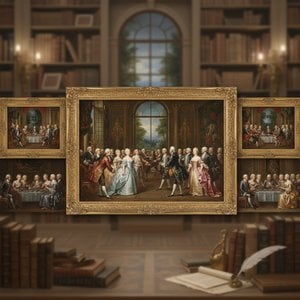
A lively Biedermeier group portrait by Peter Fendi capturing a social gathering filled with warmth and interaction, offering a timeless piece of Viennese history for your collection.

Peter Fendi (1796-1842): pittore viennese chiave di Biedermeier, celebre per scene di genere, ritratti e innovativa litografia. Ispirato dai maestri olandesi e dal Rinascimento italiano, cattura la vita quotidiana dell'epoca.

Riproduzione a olio fatta a mano

Olio su tela dipinto a mano nelle tue dimensioni e con la tua cornice, realizzato su ordinazione dai nostri artisti. ( Passa alle stampe Passa all'immagine digitale)

Corner sample of the P118B picture frame: polistirene stampato, 5 cm wide and 3 cm thick
P118B €10
Corner sample of the P118H picture frame: polistirene stampato, 5 cm wide and 3 cm thick
P118H €10
Corner sample of the P118W picture frame: polistirene stampato, 5 cm wide and 3 cm thick
P118W €10
Corner sample of the P438Z picture frame: polistirene stampato, 5.5 cm wide and 3.5 cm thick
P438Z €10
Corner sample of the P508JH picture frame: polistirene stampato, 7 cm wide and 3.5 cm thick
P508JH €12
Corner sample of the P508YH picture frame: polistirene stampato, 7 cm wide and 3.5 cm thick
P508YH €12
Corner sample of the P805H picture frame: polistirene stampato, 5 cm wide and 3.5 cm thick
P805H €10
Corner sample of the P805Z picture frame: polistirene stampato, 5 cm wide and 3.5 cm thick
P805Z €10
Corner sample of the P919BZ picture frame: polistirene stampato, 7 cm wide and 3.5 cm thick
P919BZ €10
Corner sample of the P919G picture frame: polistirene stampato, 7 cm wide and 3.5 cm thick
P919G €10
Corner sample of the P919XJ picture frame: polistirene stampato, 7 cm wide and 3.5 cm thick
P919XJ €10
Corner sample of the P959ZH picture frame: polistirene stampato, 5 cm wide and 3 cm thick
P959ZH €10
Corner sample of the P968JZ picture frame: polistirene stampato, 6 cm wide and 4 cm thick
P968JZ €12
Corner sample of the W106C picture frame: legno massello, 5 cm wide and 3 cm thick
W106C €8
Corner sample of the W218G picture frame: legno massello, 5 cm wide and 3 cm thick
W218G €10
Corner sample of the W218JH picture frame: legno massello, 5 cm wide and 3 cm thick
W218JH €8
Corner sample of the W218Y picture frame: legno massello, 5 cm wide and 3 cm thick
W218Y €10
Corner sample of the W307PJ picture frame: legno massello, 6 cm wide and 3 cm thick
W307PJ €10
Corner sample of the W316G picture frame: legno massello, 6 cm wide and 3 cm thick
W316G €10
Corner sample of the W316PJ picture frame: legno massello, 6 cm wide and 3 cm thick
W316PJ €8
Corner sample of the W316Y picture frame: legno massello, 6 cm wide and 3 cm thick
W316Y €10
Corner sample of the W398PJ picture frame: legno massello, 5 cm wide and 3 cm thick
W398PJ €8
Corner sample of the W4111J picture frame: legno massello, 6.5 cm wide and 3.5 cm thick
W4111J €10
Corner sample of the W500HY picture frame: legno massello, 7 cm wide and 5 cm thick
W500HY €15
Corner sample of the W500JH picture frame: legno massello, 7 cm wide and 5 cm thick
W500JH €15
Corner sample of the W692G picture frame: legno massello, 8 cm wide and 4 cm thick
W692G €12
Corner sample of the W849H picture frame: legno massello, 5 cm wide and 3 cm thick
W849H €8
Corner sample of the W940BG picture frame: legno massello, 7.5 cm wide and 4.5 cm thick
W940BG €15
Corner sample of the W953PJ picture frame: legno massello, 6 cm wide and 3.5 cm thick
W953PJ €8

Standard
personalizzato
CM
INCH

Scegli tra le nostre dimensioni predefinite, che rispettano le proporzioni originali dell'opera d'arte.

larghezza
altezza

Inserisci la larghezza e l'altezza di cui hai bisogno, per adattarle alla tua cornice o alla tua parete. Trattandosi di un'opera dipinta a mano, in caso di dimensioni con una forma differente, l'artista può dipingere un po' più oltre i bordi dell'immagine o ritagliare leggermente — la scelta spetta a te. Ti invieremo un mockup digitale da approvare prima che la pittura abbia inizio. L'immagine mostrata in questa pagina non rappresenta il risultato reale — solo il mockup lo fa.

Esempi di personalizzazione: sostituire il volto con una foto del cliente; aggiungere un animale domestico (ad esempio, sostituire un gatto con un cane); inserire un messaggio nascosto nello sfondo; cambiare il paesaggio o gli elementi dello sfondo.
Dopo l'ordine, il team di WahooArt.com contatterà il cliente via e-mail per ricevere le istruzioni e fornirà un'anteprima del mockup

Consegna in tutto il mondo () in 3/4 settimane anziché nelle normali 5 settimane. (23 Ottobre). Nessun compromesso sulla qualità.

Spedizione espressa gratuita in tutto il mondo

Tela in lino di alta qualità
Assicurazione completa sulla spedizione
Garanzia di rimborso dei dazi doganali
Garanzia di perfetta fedeltà cromatica
Politica di reso entro 100 giorni (solo per difetti di fabbricazione)
Garanzia di rimborso al 100%
Sconto per acquisti multipli

Prezzo totale

€ 239

The attachment

Tecnica di riproduzione

Dimensioni della riproduzione

-

Prezzo totale

€ 239

Dettagli rapidi

  • Year: 1840
  • Subject or theme: Social gathering and group portrait
  • Dimensions: 36 x 45 cm

Quiz d'arte

Per ogni domanda è presente una sola risposta corretta.

Domanda 1:
What artistic movement is ‘The attachment’ attributed to?
Domanda 2:
Who was Peter Fendi's influential teacher at St. Anna’s Academy of Fine Art?
Domanda 3:
What material did Peter Fendi primarily utilize in his artistic creations?
Domanda 4:
The painting depicts a scene of what type?
Domanda 5:
What is the approximate size of ‘The attachment’?

A Window into Biedermeier Intimacy

In the quiet, flickering light of an era defined by domestic grace, Peter Fendi’s 1840 masterpiece, The Attachment, invites the viewer to step into a world of refined social connection. This large-scale group portrait serves as more than just a depiction of a gathering; it is a profound window into the heart of the Viennese Biedermeier period. The scene unfolds within a richly detailed room where at least twelve individuals are woven into a tapestry of human interaction. Some figures stand in poised conversation, while others sit or kneel, creating a rhythmic flow of movement that guides the eye across the canvas. Through Fendi’s masterful hand, we witness a moment frozen in time—a social ritual where the boundaries between the private home and public etiquette blur into a singular, harmonious event.

The composition is a triumph of narrative complexity, utilizing a variety of objects to ground the human drama in a tangible reality. A dining table sits toward the left, suggesting the shared sustenance that binds these souls together, while a clock hangs prominently on the wall, acting as a silent witness to the passing hours and the fleeting nature of such intimate gatherings. Small, evocative details—a bowl resting on a table, a bottle tucked into the upper corner—add layers of domestic texture that resonate with anyone who appreciates the beauty of everyday life. For the collector or interior designer, these elements provide a sense of lived-in luxury, making the piece an ideal focal point for spaces that celebrate warmth, heritage, and the art of conversation.

Technique and the Spirit of the Era

Fendi’s technique reflects his rigorous training at the prestigious St. Anna’s Academy of Fine Art, where he mastered the ability to balance meticulous detail with emotional depth. In The Attachment, the artist employs a delicate touch to render the textures of fabric, the sheen of glassware, and the subtle expressions on each face. The painting captures the essence of the Biedermeier style—a movement that prioritized simplicity, comfort, and the celebration of middle-class values. There is no grand, sweeping heroism here; instead, there is a profound dignity found in the quiet exchange of glances and the gentle leaning of a shoulder. This focus on the "small" moments allows the artwork to radiate an approachable elegance.

The emotional impact of the work lies in its ability to evoke nostalgia for a lost sense of community. As one contemplates the figures engaged in their shared feast, there is a palpable sense of belonging and peace. For those looking to adorn a home with a high-quality reproduction, this painting offers an unparalleled opportunity to introduce a sense of historical weight and soulful tranquility. It is not merely a decoration but an atmospheric anchor, capable of transforming a modern room into a sanctuary of classical charm and timeless human connection.

Domande e risposte

Quale origine nazionale si cela dietro il Biedermeier di "The attachment"?

"The attachment" connette il movimento Biedermeier con Austria attraverso il luogo di nascita del suo creatore.

In quale stanza si consiglia di esporre "The attachment" di Peter Fendi?

Lo spazio consigliato per "The attachment" di Peter Fendi è un Living Room. Il suggerimento può naturalmente essere adattato ai vostri interni.

Quanto è satura la tavolozza di "The attachment"?

"The attachment" di Peter Fendi è registrato con una saturazione Balanced Soft.


Biografia dell'artista

Peter Fendi: Un Pioniero della Biedermeier Viennese

Peter Fendi, nato nel cuore di Vienna il 4 settembre 1796, fu molto più che un semplice pittore; si rivelò una figura chiave nello sviluppo dell'arte austriaca durante il periodo del Biedermeier. La sua vita, segnata da una precoce sfida fisica – una caduta da neonato da un fasciatoio che lo lasciò con problemi alla colonna vertebrale permanenti – alimentò paradossalmente un talento straordinario per il disegno e plasmò la sua visione artistica. Suo padre, insegnante, riconobbe questa innata capacità, iscrivendo giovane Peter all'illustre Accademia di Belle Arti di Vienna nel 1810. Lì, sotto la guida di artisti stimati come Johann Martin Fischer, Hubert Maurer e Johann Baptist von Lampi il Vecchio, Fendi affinò le sue abilità, ponendo le basi per una carriera prolifica che abbracciava dipinti a olio, acquerelli, stampe, incisioni, litografie e persino la scultura in legno.

Influenze Olandesi e Ispirazione Veneziana

Lo stile artistico di Fendi fu profondamente influenzato da due fonti distinte ma complementari: i maestri olandesi e il Rinascimento italiano. Il realismo e le scene di genere prevalenti nelle opere di artisti come Adriaen Brouwer, Adriaen van Ostade e Rembrandt risuonarono profondamente con Fendi, plasmando la sua rappresentazione della vita quotidiana – vivaci mercati, scene di taverna e intimi momenti domestici. Questi dipinti sono caratterizzati da un'attenta osservazione del comportamento umano, spesso infusi da un sottile senso dell'umorismo o di commento sociale. Allo stesso tempo, il viaggio di Fendi a Venezia nel 1821 si rivelò trasformativo. Immerso nelle opulente collezioni d’arte di Giovanni Bellini, Tintoretto, Titian e Paolo Veronese, assorbì la loro drammaticità compositiva, i ricchi colori e l'abile uso della luce – elementi che avrebbero successivamente infuso anche il suo lavoro con un senso di grandezza e teatralità.

Innovazione Litografica e Pittura di Ritratti

Oltre alle tecniche pittoriche tradizionali, Fendi fu un vero innovatore nel campo della litografia. Le sue stampe policromatiche, in particolare quelle prodotte negli anni '30 e '40, furono rivoluzionarie per il loro tempo, dimostrando una notevole abilità tecnica e sensibilità artistica. Queste stampe non erano semplici riproduzioni; erano opere d’arte indipendenti, spesso raffiguranti scene della vita viennese con una tavolozza vibrante e una composizione dinamica. Inoltre, Fendi era un pittore di ritratti molto richiesto, catturando la somiglianza di nobili e persone comuni allo stesso modo. I suoi ritratti sono notevoli per la loro profondità psicologica e la capacità di esprimere la personalità dei suoi soggetti – una testimonianza della sua acuta visione e comprensione del carattere umano. In particolare, incise una serie di cinque banconote austriache emesse nel 1841, dimostrando la sua versatilità come incisore.

Un Ruolo Chiave nella Biedermeier

Peter Fendi svolse un ruolo cruciale nello sviluppo dell'estetica del Biedermeier – caratterizzata dalla sua scala intima, dalla rappresentazione realistica della vita quotidiana e dal sottile commento sociale. La sua influenza può essere vista nelle opere di generazioni successive di artisti austriaci. La sua meticolosa attenzione ai dettagli, combinata con il suo approccio innovativo alla litografia, ha cementato il suo posto come una delle figure più importanti del periodo Biedermeier. Oggi, i dipinti di Fendi sono conservati in collezioni prestigiose come il Museo Albertina, la Galleria Belvedere e la collezione del Principe di Liechtenstein a Vaduz, assicurando che i suoi contributi artistici siano apprezzati e studiati da generazioni future. Il suo lavoro offre uno sguardo prezioso sulla società austriaca del XIX secolo, catturando sia la sua bellezza che le sue complessità con notevole abilità e sensibilità.

Fatti Chiave

  • Nascita: 4 settembre 1796, Vienna, Austria
  • Morte: 28 agosto 1842, Vienna, Austria
  • Professione: Pittore, incisore, litografo
  • Periodo Artistico: Biedermeier
  • Influenze Principali: Maestri olandesi (Brouwer, van Ostade, Rembrandt), Rinascimento italiano (Bellini, Titian)

Opere Significative

  • Vilenica (1821) – Dipinto a olio
  • Serie di banconote austriache (1841) – Incisioni litografici
  • Numerosi ritratti di nobili e persone comuni

Luoghi Importanti

  • Accademia di Belle Arti di Vienna
  • Vienna, Austria
Peter Fendi

Peter Fendi

1796 - 1842 , Austria

Informazioni rapide

  • Artistic Movement Or Style: Biedermeier
  • Artists Or Movements Influenced By This Artist: ['Pittura olandese']
  • Artists Who Influenced This Artist:
    • Rembrandt
    • Adriaen Brouwer
  • Date Of Birth: 4 settembre 1796
  • Date Of Death: 28 agosto 1842
  • Full Name: Peter Fendi
  • Nationality: Austriaca
  • Notable Artworks:
    • Vilenica
    • Il riso
  • Place Of Birth: Vienna, Austria