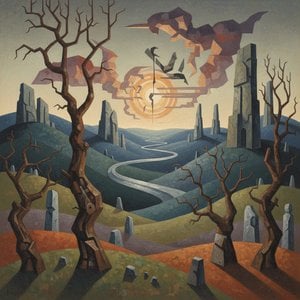
Druid Landscape (1938) by Paul Nash, hand-painted oil painting reproduction by a master artist
Anteprima in scala reale Anteprima in AR Passa alle stampe Passa all'immagine digitale Invia
Dettagli opera Guida Aggiungi ai preferiti Scarica Simili Radiografia Slideshow Q&A Statistiche

Druid Landscape Hand-painted oil painting reproduction

Dimensioni
59.0 x 41.0 cm

Discover 'Druid Landscape' by Paul Nash (1938). A surrealist masterpiece blending mythology, British landscapes & modernism. Explore its mystical symbolism and artistic inspiration.

Scopri Paul Nash (1889-1946), figura chiave del Modernismo e Surrealismo britannico! Paesaggi evocativi e potenti opere d'arte sulla guerra, un artista unico da WahooArt.

Riproduzione a olio fatta a mano

Olio su tela dipinto a mano nelle tue dimensioni e con la tua cornice, realizzato su ordinazione dai nostri artisti. ( Passa alle stampe Passa all'immagine digitale)

Corner sample of the P118B picture frame: polistirene stampato, 5 cm wide and 3 cm thick
P118B €10
Corner sample of the P118H picture frame: polistirene stampato, 5 cm wide and 3 cm thick
P118H €10
Corner sample of the P118W picture frame: polistirene stampato, 5 cm wide and 3 cm thick
P118W €10
Corner sample of the P438Z picture frame: polistirene stampato, 5.5 cm wide and 3.5 cm thick
P438Z €10
Corner sample of the P508JH picture frame: polistirene stampato, 7 cm wide and 3.5 cm thick
P508JH €12
Corner sample of the P508YH picture frame: polistirene stampato, 7 cm wide and 3.5 cm thick
P508YH €12
Corner sample of the P805H picture frame: polistirene stampato, 5 cm wide and 3.5 cm thick
P805H €10
Corner sample of the P805Z picture frame: polistirene stampato, 5 cm wide and 3.5 cm thick
P805Z €10
Corner sample of the P919BZ picture frame: polistirene stampato, 7 cm wide and 3.5 cm thick
P919BZ €10
Corner sample of the P919G picture frame: polistirene stampato, 7 cm wide and 3.5 cm thick
P919G €10
Corner sample of the P919XJ picture frame: polistirene stampato, 7 cm wide and 3.5 cm thick
P919XJ €10
Corner sample of the P959ZH picture frame: polistirene stampato, 5 cm wide and 3 cm thick
P959ZH €10
Corner sample of the P968JZ picture frame: polistirene stampato, 6 cm wide and 4 cm thick
P968JZ €12
Corner sample of the W106C picture frame: legno massello, 5 cm wide and 3 cm thick
W106C €8
Corner sample of the W218G picture frame: legno massello, 5 cm wide and 3 cm thick
W218G €10
Corner sample of the W218JH picture frame: legno massello, 5 cm wide and 3 cm thick
W218JH €8
Corner sample of the W218Y picture frame: legno massello, 5 cm wide and 3 cm thick
W218Y €10
Corner sample of the W307PJ picture frame: legno massello, 6 cm wide and 3 cm thick
W307PJ €10
Corner sample of the W316G picture frame: legno massello, 6 cm wide and 3 cm thick
W316G €10
Corner sample of the W316PJ picture frame: legno massello, 6 cm wide and 3 cm thick
W316PJ €8
Corner sample of the W316Y picture frame: legno massello, 6 cm wide and 3 cm thick
W316Y €10
Corner sample of the W398PJ picture frame: legno massello, 5 cm wide and 3 cm thick
W398PJ €8
Corner sample of the W4111J picture frame: legno massello, 6.5 cm wide and 3.5 cm thick
W4111J €10
Corner sample of the W500HY picture frame: legno massello, 7 cm wide and 5 cm thick
W500HY €15
Corner sample of the W500JH picture frame: legno massello, 7 cm wide and 5 cm thick
W500JH €15
Corner sample of the W692G picture frame: legno massello, 8 cm wide and 4 cm thick
W692G €12
Corner sample of the W849H picture frame: legno massello, 5 cm wide and 3 cm thick
W849H €8
Corner sample of the W940BG picture frame: legno massello, 7.5 cm wide and 4.5 cm thick
W940BG €15
Corner sample of the W953PJ picture frame: legno massello, 6 cm wide and 3.5 cm thick
W953PJ €8

Formato standard
su misura
CM
INCH

Scegli tra le nostre dimensioni predefinite, che rispettano le proporzioni originali dell'opera d'arte.

larghezza
altezza

Inserisci la larghezza e l'altezza desiderate, per adattarle alla tua cornice o alla tua parete. Trattandosi di un'opera dipinta a mano, in caso di dimensioni con un formato differente, l'artista può estendere leggermente il dipinto oltre i bordi dell'immagine o ritagliare una piccola parte — la scelta spetta a te. Ti invieremo un mockup digitale da approvare prima che la realizzazione abbia inizio. L'immagine mostrata in questa pagina non rappresenta il risultato finale — solo il mockup lo fa.

Esempi di ciò che può essere modificato: sostituire il volto con una foto del cliente; aggiungere un animale domestico (ad esempio, sostituire un gatto con un cane); inserire un messaggio nascosto nello sfondo; cambiare il paesaggio o gli elementi dello sfondo.
Dopo l'ordine, il team di WahooArt.com contatterà il cliente via e-mail per ricevere le istruzioni e fornirà un'anteprima del mockup

Consegna in tutto il mondo () in 3/4 settimane anziché nelle normali 5 settimane. (2 Novembre). Nessun compromesso sulla qualità.

Spedizione espressa gratuita in tutto il mondo
Tela in lino di alta qualità
Assicurazione completa sulla spedizione
Garanzia di rimborso dei dazi doganali
Garanzia di fedeltà cromatica assoluta
Politica di reso entro 100 giorni (solo per difetti di fabbricazione)
Garanzia di rimborso al 100%
Offerta per acquisti multipli

Prezzo totale

€ 242

Druid Landscape

Tecnica di riproduzione

Dimensioni riproduzione

-

Prezzo finale calcolato

€ 242

Informazioni rapide

  • Artistic style: Surrealism, Abstract
  • Title: Druid Landscape
  • Influences:
    • Blake
    • Turner
  • Year: 1938
  • Dimensions: 59 x 41 cm
  • Medium: Oil on canvas

Quiz d'arte

Per ogni domanda è presente una sola risposta corretta.

Domanda 1:
What is the primary artistic movement associated with Paul Nash’s ‘Druid Landscape’?
Domanda 2:
In ‘Druid Landscape’, what prominent historical element is depicted, drawing inspiration from Nash’s childhood?
Domanda 3:
What year was ‘Druid Landscape’ painted by Paul Nash?
Domanda 4:
The painting utilizes bold colors and geometric shapes. What effect does this create?
Domanda 5:
‘Druid Landscape’ is part of which prestigious collection?

A Vision of the British Soul

Paul Nash’s Druid Landscape, painted in 1938, isn't merely a depiction of a landscape; it’s an immersion into a carefully constructed dreamscape. Created during a period of profound social and political upheaval – just before the outbreak of World War II – the painting offers a poignant reflection on Britain’s past, its relationship with nature, and the anxieties of a rapidly changing world. Nash, deeply influenced by the Romantic movement and particularly by the visionary works of William Blake, sought to capture not simply what he saw, but what he *felt* about the land itself. The canvas pulsates with an almost unsettling stillness, drawing the viewer into a realm where ancient symbols and modern anxieties intertwine.

  • Subject Matter: The painting presents a stylized landscape dominated by a monumental stone circle, reminiscent of Stonehenge, set within a brooding, atmospheric valley. A solitary figure, seemingly lost in contemplation, stands before the stones, adding an element of human presence to this primordial scene.
  • Style & Technique: Nash employs a distinctive blend of Surrealism and abstraction. Geometric shapes – circles, triangles, and angular lines – are layered over a subtly textured surface, creating a sense of depth and disorientation. The color palette is deliberately muted, dominated by blues, greens, and browns, evoking a mood of melancholy and mystery.

Echoes of the Past: Myth and Ritual

The title itself – Druid Landscape – immediately connects the painting to the ancient Celtic tradition of Druidism. While Nash wasn’t a practicing Druid, he was fascinated by the mythology and symbolism associated with these enigmatic figures. The stone circle, a recurring motif in his work, represents a connection to the past, a gateway to the spiritual realm, and a locus of power. It's easy to imagine the Druids performing rituals within this very space, seeking guidance from the spirits of nature. The solitary figure before the stones can be interpreted as an individual searching for meaning or confronting their own mortality – a timeless theme explored throughout art history.

Historical Context:

Painted in 1938, the work reflects the growing anxieties surrounding impending war and the loss of traditional values. Nash’s use of ancient symbols served as a way to grapple with these uncertainties, suggesting that Britain's strength lay not in its military might, but in its connection to its roots.

Decoding the Symbols: Geometry and Emotion

Beyond the obvious references to Stonehenge, Druid Landscape is rich in symbolic detail. The geometric shapes – particularly the circles – are not merely decorative; they represent cycles of time, the interconnectedness of all things, and the underlying order of the universe. The muted color palette contributes to the painting’s overall sense of unease and introspection. Notice how the blues evoke a feeling of melancholy and distance, while the browns ground the scene in the earth. The placement of the figure is crucial; positioned slightly off-center, he seems both lost and strangely at peace within this otherworldly landscape.

  • Circles: Represent cycles, unity, and spiritual connection.
  • Angular Lines: Suggest tension, disruption, and the anxieties of the modern world.
  • Color Palette: Evokes a mood of melancholy, mystery, and introspection.

A Timeless Masterpiece

Druid Landscape is more than just a painting; it’s an experience. It invites the viewer to step into a world where myth and reality blur, where ancient symbols resonate with contemporary concerns. Paul Nash's ability to capture both the beauty and the unsettling aspects of the British landscape—and the human condition—makes this work a truly remarkable achievement. Today, reproductions of Druid Landscape continue to captivate audiences, offering a glimpse into the mind of one of Britain’s most visionary artists.

Domande e risposte

L'immagine di "Druid Landscape" di Paul Nash può essere riprodotta liberamente?

"Druid Landscape" di Paul Nash è di pubblico dominio - il copyright è scaduto. Questo stato determina le modalità con cui l'immagine dell'opera può essere riprodotta.

Qual è il colore dominante di "Druid Landscape" di Paul Nash?

Il colore che risalta maggiormente in "Druid Landscape" è Driftwood (#b0915b). Il colore dominante è utile per abbinare un'opera d'arte a un ambiente interno.

Chi è l'autore e in che anno è stata realizzata "Druid Landscape"?

Paul Nash ha realizzato "Druid Landscape" nel 1938.


Biografia dell'artista

Primi Anni e Influenze

  • Nato: Kensington, Regno Unito (1889)
  • Morto: 1946
  • Paul Nash nacque l'11 maggio 1889 a Londra. Suo padre, William Harry Nash, era un avvocato e sua madre, Caroline Maude, mostrava segni di malattia mentale fin dalla giovane età. La famiglia si trasferì a Iver Heath, Buckinghamshire, quando Paul era ancora bambino, una mossa intesa a beneficio della salute di sua madre.
  • Formazione: Frequentò la Parsons School of Art e successivamente la Slade School of Fine Art. Sebbene fosse abile nella pittura paesaggistica, faticava con il disegno di figure.
  • Prime Influenze: Nash fu pesantemente influenzato da William Blake e J.M.W. Turner, come si evince dai suoi primi lavori. Trasse anche ispirazione da paesaggi che presentavano elementi storici antichi come tumuli funerari e fortezze collinari dell'età del bronzo.

Stile Artistico e Sviluppo

  • Stile: Lo stile di Paul Nash fondeva il modernismo con tecniche tradizionali. Utilizzava colori audaci, forme geometriche e forme astratte, distinguendosi dai suoi contemporanei.
  • Influenze Surrealiste: Sebbene non fosse strettamente un surrealista, Nash fu influenzato dal movimento, in particolare dopo aver visto una mostra di Giorgio de Chirico nel 1928. Il suo lavoro incorporava paesaggi simbolici con oggetti quotidiani.
  • Arte Bellica: Durante la prima e la seconda guerra mondiale, Nash servì come artista bellico ufficiale. Le sue rappresentazioni dei campi di battaglia erano notevoli per la loro bellezza inquietante ed esploravano l'impatto del conflitto sul paesaggio. Opere degne di nota includono "The Menin Road".
  • "Creature Aeree": Una serie prodotta durante la seconda guerra mondiale che presentava raffigurazioni antropomorfe di aeroplani schiantati in paesaggi, dimostrando il suo stile e simbolismo in evoluzione.

Realizzazioni Importanti e Riconoscimenti

  • Pioniere del Modernismo Britannico: Nash ha svolto un ruolo cruciale nel plasmare l'arte moderna britannica, colmando il divario tra la pittura paesaggistica tradizionale e l'estetica modernista.
  • Eredità dell'Arte Bellica: I suoi dipinti di guerra sono considerati rappresentazioni iconiche dell'impatto del conflitto sia sui soldati che sull'ambiente.
  • Gruppo Unit One: Co-fondò Unit One nel 1933 insieme a Ben Nicholson e Barbara Hepworth, un gruppo significativo nella scena artistica britannica.
  • Scrittore e Designer: Oltre alla pittura, Nash era anche uno scrittore rispettato sull'arte e progettava arti applicate come scenografie teatrali, tessuti e poster.

Influenze e Eredità

  • Influenza su Artisti Successivi: Lo stile unico di Nash e il suo uso del colore hanno influenzato generazioni di artisti che lo hanno seguito.
  • Connessione con il Romanticismo: Il suo lavoro è spesso collegato alla tradizione romantica inglese, in particolare attraverso la sua connessione con William Blake e J.M.W. Turner.
  • Esplorazione dell'Uomo contro la Natura: Un tema ricorrente nei lavori successivi di Nash era il rapporto tra l'umanità e la natura, esplorato attraverso immagini simboliche.
  • Rilevanza Continua: I suoi dipinti continuano a essere celebrati per la loro bellezza, il loro simbolismo e la loro importanza storica, rimanendo rilevanti per il pubblico contemporaneo.

Mostre ed Esposizioni

  • Ruskin Gallery: Le opere di Nash sono state esposte alla Ruskin Gallery nel Regno Unito.
  • Tate Britain: I suoi pezzi possono essere trovati nella collezione della Tate Britain.
  • Imperial War Museum: Diversi dei suoi dipinti d'arte bellica sono ospitati nell'Imperial War Museum.
  • York Art Gallery: Il suo lavoro fa anche parte della collezione di York Art Gallery.
  • Government Art Collection: Una selezione delle opere d'arte di Nash è esposta nella Government Art Collection.
Paul Nash

Paul Nash

1889 - 1946 , Regno Unito

Dettagli rapidi

  • Artistic Movement Or Style: Modernismo, Surrealismo
  • Artists Or Movements Influenced By This Artist: ['Artisti moderni']
  • Artists Who Influenced This Artist:
    • William Blake
    • J.M.W. Turner
  • Date Of Birth: 11 maggio 1889
  • Date Of Death: 11 luglio 1946
  • Full Name: Paul Nash
  • Nationality: Britannico
  • Notable Artworks: ['The Menin Road']
  • Place Of Birth: Kensington, Regno Unito
Esplora le opere d'arte organizzate per temi, stili e caratteristiche.