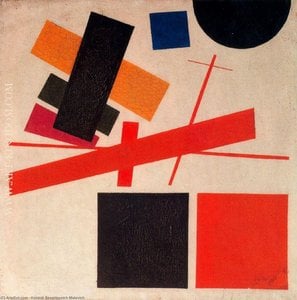
Paul Klee’s “The Great Bear” – A Symphony of Color and Geometric Harmony
“The Great Bear,” painted in 1938 during Klee’s prolific period at Bauhaus Dessau, stands as a cornerstone of his artistic legacy. More than just a depiction of an animal—a stylized bear dominating the canvas—it embodies Klee's unwavering commitment to exploring the intersection between geometry and organic form, resulting in a visual experience that transcends mere representation.
Style and Composition: Embracing Geometric Abstraction
Klee’s style is undeniably abstract, prioritizing suggestion over literal accuracy. However, it isn’t devoid of structure; rather, he employs meticulous geometric patterns—circles, squares, triangles—to create a dynamic equilibrium. These shapes aren't simply decorative elements; they actively contribute to the overall composition, guiding the viewer’s eye and establishing relationships between disparate visual components. The bear itself is rendered as a series of interlocking circles and angular lines, conveying both solidity and movement simultaneously.
Technique: Watercolor Washes and Precise Line Drawings
Klee favored watercolor washes as his primary medium, layering translucent pigments to achieve luminous color gradations that imbue the painting with an ethereal quality. Beneath this washy surface lie precise line drawings—often executed in black ink—that delineate key contours and define structural elements. This dual technique—watercolor for color and ink for form—allowed Klee to capture both the vibrancy of his imagination and the meticulous control demanded by his artistic vision.
Historical Context: Bauhaus Dessau and Artistic Experimentation
“The Great Bear” emerged from the Bauhaus Dessau workshop, a revolutionary institution founded in 1925 that championed experimental design principles. Klee’s involvement at Bauhaus reflected the broader ethos of the time—a fervent desire to liberate art from traditional conventions and embrace new approaches to visual expression. The painting served as a testament to Bauhaus's belief in exploring unconventional materials and techniques, pushing boundaries of artistic innovation.
Symbolism: Bear as Protector and Embodiment of Instinct
The bear itself carries significant symbolic weight within Klee’s oeuvre and broader European folklore. Traditionally associated with strength, courage, and protection—particularly over winter—the bear represents primal instincts and resilience. In “The Great Bear,” Klee utilizes geometric abstraction to convey these concepts indirectly, suggesting a deeper understanding of the animal's essence beyond its physical appearance.
Emotional Impact: Tranquility Amidst Complexity
Despite its intricate geometric patterns, “The Great Bear” exudes an unexpected sense of tranquility. The harmonious interplay of color and form creates a visual rhythm that invites contemplation—a quiet invitation to immerse oneself in the painting’s contemplative atmosphere. Ultimately, Klee's masterpiece speaks to the enduring power of art to evoke emotion and inspire wonder, reminding us that beauty can be found even within the most complex structures.
Domande e risposte
Come posso scoprire opere d'arte simili a "El conquistador" di Paul Klee?
La pagina Opere simili di "El conquistador" di Paul Klee presenta opere correlate.
In quale periodo della carriera di Paul Klee si colloca "El conquistador"?
"El conquistador" rappresenta il Periodo maturo di Paul Klee.
Quale posto occupa "El conquistador" tra i soggetti ricorrenti di Paul Klee?
I temi ricorrenti di Paul Klee includono espressionismo, idee surrealiste, ricerca filosofica, evoluzione artistica, visione simbolica; "El conquistador" si concentra su astratto, geometrico, surrealismo, tavolozza colori, composizione, simbolismo, esplorazione.



 Anteprima in scala reale
 Passa alle stampe
 Condividi
 Condividi
 Dettagli
 Guida stampabile

 Scarica
 Articoli simili
 Radiografia
 Slideshow
 Statistiche

 Leggi tutto






































 L'opzione vetro è disponibile solo per dimensioni inferiori a 110 cm