Anteprima in scala reale Anteprima in AR Passa alle stampe Passa all'immagine digitale Invia
Dettagli opera Guida Aggiungi ai preferiti Scarica Simili Radiografia Slideshow Statistiche

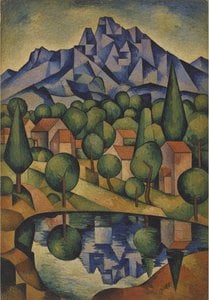
La Casa e l'Albero

La Casa e l'Albero di Paul Cézanne è un capolavoro dell'impressionismo post-impressionista che esplora nuove forme espressive e influisce sull'arte moderna.

Esplora l'arte rivoluzionaria di Paul Cézanne (1839-1906), un maestro del Post-Impressionismo che ha colmato il divario tra Impressionismo e Cubismo. Scopri le sue forme geometriche, pennellate uniche, dipinti di natura morta e il suo impatto duraturo sull'arte moderna. #Cézanne #PostImpresionismo

Riproduzione a olio fatta a mano

Olio su tela dipinto a mano nelle tue dimensioni e con la tua cornice, realizzato su ordinazione dai nostri artisti. ( Passa alle stampe Passa all'immagine digitale)

Corner sample of the P118B picture frame: polistirene stampato, 5 cm wide and 3 cm thick
P118B €10
Corner sample of the P118H picture frame: polistirene stampato, 5 cm wide and 3 cm thick
P118H €10
Corner sample of the P118W picture frame: polistirene stampato, 5 cm wide and 3 cm thick
P118W €10
Corner sample of the P438Z picture frame: polistirene stampato, 5.5 cm wide and 3.5 cm thick
P438Z €10
Corner sample of the P508JH picture frame: polistirene stampato, 7 cm wide and 3.5 cm thick
P508JH €12
Corner sample of the P508YH picture frame: polistirene stampato, 7 cm wide and 3.5 cm thick
P508YH €12
Corner sample of the P805H picture frame: polistirene stampato, 5 cm wide and 3.5 cm thick
P805H €10
Corner sample of the P805Z picture frame: polistirene stampato, 5 cm wide and 3.5 cm thick
P805Z €10
Corner sample of the P919BZ picture frame: polistirene stampato, 7 cm wide and 3.5 cm thick
P919BZ €10
Corner sample of the P919G picture frame: polistirene stampato, 7 cm wide and 3.5 cm thick
P919G €10
Corner sample of the P919XJ picture frame: polistirene stampato, 7 cm wide and 3.5 cm thick
P919XJ €10
Corner sample of the P959ZH picture frame: polistirene stampato, 5 cm wide and 3 cm thick
P959ZH €10
Corner sample of the P968JZ picture frame: polistirene stampato, 6 cm wide and 4 cm thick
P968JZ €12
Corner sample of the W106C picture frame: legno massello, 5 cm wide and 3 cm thick
W106C €8
Corner sample of the W218G picture frame: legno massello, 5 cm wide and 3 cm thick
W218G €10
Corner sample of the W218JH picture frame: legno massello, 5 cm wide and 3 cm thick
W218JH €8
Corner sample of the W218Y picture frame: legno massello, 5 cm wide and 3 cm thick
W218Y €10
Corner sample of the W307PJ picture frame: legno massello, 6 cm wide and 3 cm thick
W307PJ €10
Corner sample of the W316G picture frame: legno massello, 6 cm wide and 3 cm thick
W316G €10
Corner sample of the W316PJ picture frame: legno massello, 6 cm wide and 3 cm thick
W316PJ €8
Corner sample of the W316Y picture frame: legno massello, 6 cm wide and 3 cm thick
W316Y €10
Corner sample of the W398PJ picture frame: legno massello, 5 cm wide and 3 cm thick
W398PJ €8
Corner sample of the W4111J picture frame: legno massello, 6.5 cm wide and 3.5 cm thick
W4111J €10
Corner sample of the W500HY picture frame: legno massello, 7 cm wide and 5 cm thick
W500HY €15
Corner sample of the W500JH picture frame: legno massello, 7 cm wide and 5 cm thick
W500JH €15
Corner sample of the W692G picture frame: legno massello, 8 cm wide and 4 cm thick
W692G €12
Corner sample of the W849H picture frame: legno massello, 5 cm wide and 3 cm thick
W849H €8
Corner sample of the W940BG picture frame: legno massello, 7.5 cm wide and 4.5 cm thick
W940BG €15
Corner sample of the W953PJ picture frame: legno massello, 6 cm wide and 3.5 cm thick
W953PJ €8

Formato standard
su misura
CM
INCH

Scegli tra le nostre dimensioni predefinite, che rispettano le proporzioni originali dell'opera d'arte.

larghezza
altezza

Inserisci la larghezza e l'altezza desiderate, per adattarle alla tua cornice o alla tua parete. Trattandosi di un'opera dipinta a mano, in caso di dimensioni con un formato differente, l'artista può estendere leggermente il dipinto oltre i bordi dell'immagine o ritagliare una piccola parte — la scelta spetta a te. Ti invieremo un mockup digitale da approvare prima che la realizzazione abbia inizio. L'immagine mostrata in questa pagina non rappresenta il risultato finale — solo il mockup lo fa.

Esempi di ciò che può essere modificato: sostituire il volto con una foto del cliente; aggiungere un animale domestico (ad esempio, sostituire un gatto con un cane); inserire un messaggio nascosto nello sfondo; cambiare il paesaggio o gli elementi dello sfondo.
Dopo l'ordine, il team di WahooArt.com contatterà il cliente via e-mail per ricevere le istruzioni e fornirà un'anteprima del mockup

Consegna in tutto il mondo () in 3/4 settimane anziché nelle normali 5 settimane. (26 Ottobre). Nessun compromesso sulla qualità.

Spedizione espressa gratuita in tutto il mondo
Tela in lino di alta qualità
Assicurazione completa sulla spedizione
Garanzia di rimborso dei dazi doganali
Garanzia di fedeltà cromatica assoluta
Politica di reso entro 100 giorni (solo per difetti di fabbricazione)
Garanzia di rimborso al 100%
Offerta per acquisti multipli

Prezzo totale

€ 239

La Casa e l'Albero

Tecnica di riproduzione

Dimensioni riproduzione

-

Prezzo finale calcolato

€ 239

Informazioni rapide

  • Notable elements or techniques: Forme geometriche; pennellate piccole
  • Artist: Paul Cézanne
  • Location: MoMA
  • Title: La Casa e l'Albero
  • Artistic style: Studio strutturale
  • Year: 1874

Quiz d'arte

Per ogni domanda è presente una sola risposta corretta.

Domanda 1:
Qual è lo stile artistico principale della pittura "La Casa e l’Albero", realizzata da Paul Cézanne nel 1874?
Domanda 2:
Dove è stata dipinta "La Casa e l’Albero"?
Domanda 3:
Quale elemento architettonico spicca nella composizione della tela?
Domanda 4:
Come Cézanne utilizza i colori nella pittura "La Casa e l’Albero"?
Domanda 5:
In che contesto storico è nata "La Casa e l’Albero", come reazione all'Impressionismo?

Paul Cézanne: A Revolutionary Vision

Paul Cézanne remains one of the most influential figures in modern art, a painter whose groundbreaking approach fundamentally altered the course of artistic expression and continues to inspire artists today. Born on January 19, 1839, in Aix-en-Provence, France, Cézanne’s formative years were marked by exposure to Romanticism and Realism—influences that would initially shape his artistic vision before he embarked upon a radical transformation of traditional painting methods. His father, Louis-Auguste Cézanne, was a successful hatmaker who later became a banker, providing Paul with the financial stability necessary to pursue his passion for art without immediate economic pressures. This privileged upbringing fostered an inquisitive spirit and instilled in him a lifelong fascination with observation—a cornerstone of Cézanne’s artistic process. Early influences included Romanticism and the Barbizon school of landscape painting. He studied briefly at the Académie Suisse in Paris but largely developed his style independently, rejecting the prevailing Impressionist preoccupation with capturing fleeting moments of light and color. Instead, Cézanne sought to represent objects as they truly appeared—not as perceived by the eye but as understood by the mind—a concept that would become central to his artistic philosophy. Artists like Camille Pissarro and Vincent van Gogh, who were also experimenting with new techniques during this period, served as important points of reference for Cézanne’s evolving style.
  • Key Characteristics: Geometric Forms & Simplified Perspective
  • Technique: Cézanne employed a distinctive method known as “alla prima,” applying paint directly onto the canvas without preliminary sketches or underdrawings—a bold departure from academic conventions.
  • Color Palette: Cézanne favored muted tones and earthy hues, prioritizing tonal harmony over vibrant color contrasts.

The House and the Tree: A Symbol of Stability Amidst Change

“The House and the Tree,” painted in 1874, exemplifies Cézanne’s revolutionary vision—a masterful distillation of Impressionist principles combined with a profound engagement with underlying structure. This oil on canvas piece measures 66 x 55 cm and depicts a simple yet evocative scene: a house nestled amongst trees in front of it. The composition immediately draws attention to the interplay between solidity and fluidity, reflecting Cézanne’s desire to capture not just what is seen but also what is felt—a characteristic that distinguishes his work from its Impressionist counterparts. The artist's meticulous attention to detail—evident in the textured surfaces of the brickwork and the delicate branches of the tree—underscores Cézanne’s commitment to representing objects with uncompromising accuracy. However, he achieved this goal not through slavish imitation but rather by reconstructing the visual world according to his own internal logic—a process that anticipates the formal innovations of Cubism. The painting conveys a sense of tranquility and contemplation, inviting viewers to consider the enduring presence of nature amidst the uncertainties of life.

Historical Context: Bridging Impressionism and Cubism

Cézanne’s artistic trajectory coincided with the emergence of Post-Impressionism—a movement that reacted against Impressionist concerns for naturalistic depiction while simultaneously embracing new modes of representation. Artists like Cézanne, Pissarro and van Gogh pushed beyond the limitations of Impressionism by exploring more complex visual vocabularies and experimenting with unconventional techniques—a pivotal step toward the development of Cubism. Cézanne’s influence can be seen in the works of Picasso and Georges Braque, who adopted his geometric approach to form and color as they pioneered a new artistic language that would revolutionize painting in the early 20th century.

Relevance to Other Artists: An Inspiration for Generations

Cézanne’s legacy extends far beyond his own lifetime—inspiring artists across generations with his unwavering dedication to observation and his willingness to challenge established conventions. His pioneering use of geometric forms and simplified perspective paved the way for subsequent artistic movements, establishing him as a foundational figure in modern art history. Artists such as Picasso and Matisse acknowledged Cézanne’s profound impact on their own creative endeavors—a testament to his enduring influence on the visual arts."

Domande e risposte

Quale collocazione si adatta meglio al formato di "La Casa e l'Albero" di Paul Cézanne?

Il formato Verticale di "La Casa e l'Albero" di Paul Cézanne è ideale per un/una Zona giorno. Il formato e lo spazio sono elementi chiave per scegliere il posizionamento perfetto della riproduzione.

In quale ambiente della casa si adatterebbe bene una riproduzione di "La Casa e l'Albero"?

Lo spazio consigliato per "La Casa e l'Albero" di Paul Cézanne è un Zona giorno. Il suggerimento può naturalmente essere adattato ai vostri interni.

L'opera "La Casa e l'Albero" di Paul Cézanne trasmette una sensazione di luminosità o di oscurità?

Nel complesso, "La Casa e l'Albero" è classificata come luminosi. La luminosità percepita indica quanto l'opera appaia chiara o scura.


Biografia dell'artista

vitae e influenze

paul cézanne, pittore post-impressionista francese, nacque il 19 gennaio 1839 ad Aix-en-Provence, Francia. La sua giovinezza fu segnata da un forte legame con la famiglia e la sua attività bancaria, che gli fornirono sicurezza finanziaria. Ciò gli permise di concentrarsi sulle sue aspirazioni artistiche senza il peso dello stress finanziario. les nabis, neo-impressionismo e simbolismo influenzarono le prime opere di Cézanne, caratterizzate dall'enfasi sulle forme geometriche e su una tavolozza cromatica limitata. Il suo interesse per le opere di paul gauguin e georges seurat ha ulteriormente consolidato il suo stile post-impressionista.

stile artistico e tecniche

L'uso innovativo di Cézanne dei piani cromatici e delle piccole pennellate ripetitive creava campi complessi che esprimevano il suo intenso studio dei soggetti. Il suo approccio spesso esploratorio all’arte portò allo sviluppo di una nuova lingua pittorica, che enfatizzava la struttura sottostante degli oggetti in una composizione.

eredità e impatto

L'opera pionieristica di Cézanne nel post-impressionismo ha aperto la strada a vari movimenti d’avanguardia, tra cui il cubismo, il fauvismo e il surrealismo. La sua influenza può essere vista nelle opere di pablo picasso, henri matisse e georges braque. L'eredità di Cézanne continua a ispirare artisti ed appassionati d’arte, consolidando il suo posto come figura fondamentale nella storia dell’arte moderna.
Paul Cézanne

Paul Cézanne

1839 - 1906 , Francia

Dettagli rapidi

  • Artisti Che Hanno Influenzato:
    • Paul Gauguin
    • Georges Seurat
  • Artisti Influenzati:
    • Pablo Picasso
    • Henri Matisse
    • Georges Braque
  • Data Di Nascita: 19 gennaio 1839
  • Luogo Di Nascita: Aix-en-Provence, Francia
  • Movimento Artistico: Post-Impressionismo
  • Nazionalità: Francese
  • Nome Completo: Paul Cézanne
  • Opere Notevoli:
    • Lo stagno a Jas de Bouffan
    • Ritratto di Émile Zola
    • Bosco
    • Grandi Bagnanti
Esplora le opere d'arte organizzate per temi, stili e caratteristiche.