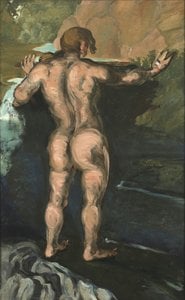
Olio su telaArte da paretePost-Impressionism
 1880XIX Secolo
 Galleria d'Arte e Museo di Kelvingrove
Stampa giclée o su tela di qualità museale, con produzione rapida e diverse opzioni di finitura. ( Acquista il dipinto realizzato a mano Acquista immagine)





























Scegli tra le nostre dimensioni predefinite, che rispettano le proporzioni originali dell'opera d'arte.

È possibile inserire dimensioni personalizzate per adattare l'opera a una cornice o a uno spazio specifico. Se la dimensione selezionata non corrisponde alle proporzioni dell'immagine originale, procederemo al ritaglio dell'opera o all'estensione dell'immagine con un bordo specchiato o a tinta unita. Un mockup digitale ti verrà inviato per approvazione prima dell'inizio della produzione.
Si prega di notare che l'anteprima a schermo non riflette il ritaglio o l'estensione effettivi. Solo il mockup mostrerà accuratamente la composizione finale.
Sebbene siano disponibili dimensioni personalizzate, si raccomanda di selezionare una dimensione dall'elenco predefinito per preservare le proporzioni originali.
Consegna in tutto il mondo () in 2 settimane invece delle normali 4/5 settimane. (7 Settembre)


Château du Medan
Dimensioni riproduzione
Paul Cézanne’s “Château de Médan,” created in 1880, offers a serene depiction of rural life in France. The painting showcases a picturesque village scene with houses nestled on a hillside, enveloped by lush trees that provide shade and a sense of tranquility. The composition is carefully balanced; the buildings and foliage are harmoniously arranged to capture the essence of the countryside. Cézanne’s masterful use of color and light adds depth and dimensionality to the artwork, drawing the viewer into the scene.
Paul Cézanne's "Château de Médan," created in 1880, exemplifies Cézanne’s unique Post-Impressionist style, a pivotal movement that bridged Impressionism and Cubism. Cézanne was renowned for his innovative approach to art, characterized by a focus on geometric forms and a reduction of naturalistic details. In this painting, the simplified shapes of the houses and trees demonstrate this characteristic simplification. His technique involved applying paint in visible brushstrokes, creating texture and movement while subtly building form. The composition is dominated by towering poplar trees that frame the chateau, establishing a visual hierarchy that guides the eye across the canvas. Cézanne skillfully utilizes horizontal and diagonal lines to convey stability and dynamism simultaneously, reflecting the interplay between stillness and motion inherent in the natural landscape.
“Château de Médan” embodies Cézanne’s distinctive Post-Impressionist aesthetic—a departure from Impressionism's fleeting impressions of light and color toward a more structured exploration of form. Cézanne’s method involved layering paint in thick impasto strokes, creating palpable texture and emphasizing the underlying structure of objects. This technique is particularly evident in the depiction of the trees and the chateau walls, where Cézanne builds up surfaces with textured brushstrokes that capture the materiality of the scene. The color palette—primarily greens, blues, and reds—is carefully considered to evoke a sense of harmony and warmth, mirroring the colors of autumn foliage and creating an inviting atmosphere.
The painting was conceived during Cézanne’s stay at Émile Zola’s summer house in Médan. This period proved crucial for Cézanne as it provided him artistic freedom and abundant opportunity for plein air (outdoor) painting—a practice championed by Impressionists like Monet and Sisley. Cézanne sought to capture the immediacy of nature, reflecting a broader trend toward realism and observation within late nineteenth-century art. Influenced by Cézanne’s fascination with Japanese prints—particularly those featuring flattened perspectives and simplified compositions—the artwork reflects a desire to transcend traditional representational conventions.
“Château de Médan” transcends mere visual representation, conveying subtle symbolic significance. The chateau itself symbolizes permanence and tradition, anchoring the scene in time while simultaneously suggesting an idealized vision of rural life. Surrounding it are trees—representing resilience and connection to the earth—that contribute to the painting’s tranquil mood. Cézanne's deliberate use of color and form generates a profound emotional resonance, inviting viewers to contemplate the beauty and serenity of the countryside. The artwork evokes nostalgia for simpler times and encourages contemplation on themes of harmony between humanity and nature—a sentiment that continues to resonate with audiences today.


1839 - 1906 , Francia

Explore the transformative era of Post-Impressionism. Discover how masters like Cézanne and Matisse revolutionized color and form, moving beyond Impressionism to shape modern art history through structural innovation and expressive emotion.

Master the nuances of Impressionism vs. Post-Impressionism with our expert guide. Explore the revolutionary shift from Monet’s fleeting light to Van Gogh’s emotional depth. Discover how these iconic movements continue to inspire fine art collectors and modern interiors today.

Unveil the profound revolution of Post-Impressionism. Explore how masters like Van Gogh and Cézanne utilized bold colors and emotional depth to transcend mere representation, laying the foundation for modern art. A sophisticated journey through history's most emotive brushstrokes.

Explore the vibrant evolution of Post-Impressionism. From Seurat's revolutionary Pointillism to the emotional depth of masters, discover how this movement redefined modern art history through color, structure, and unparalleled creative expression.
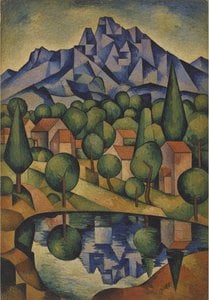
Explore the profound legacy of Paul Cézanne. Discover how his mastery of geometric forms and vibrant color bridged Impressionism and Cubism, offering timeless inspiration for fine art collectors and enthusiasts seeking to understand the foundations of modern art.

 Anteprima in scala reale
 Invia
Invia Condividi
 Dettagli opera

 Scarica immagine
 Simili
 Radiografia
 Slideshow
 Espandi i dettagli







 L'opzione vetro è disponibile solo per dimensioni inferiori a 110 cm