The Embrace: A Study in Pastel Realism
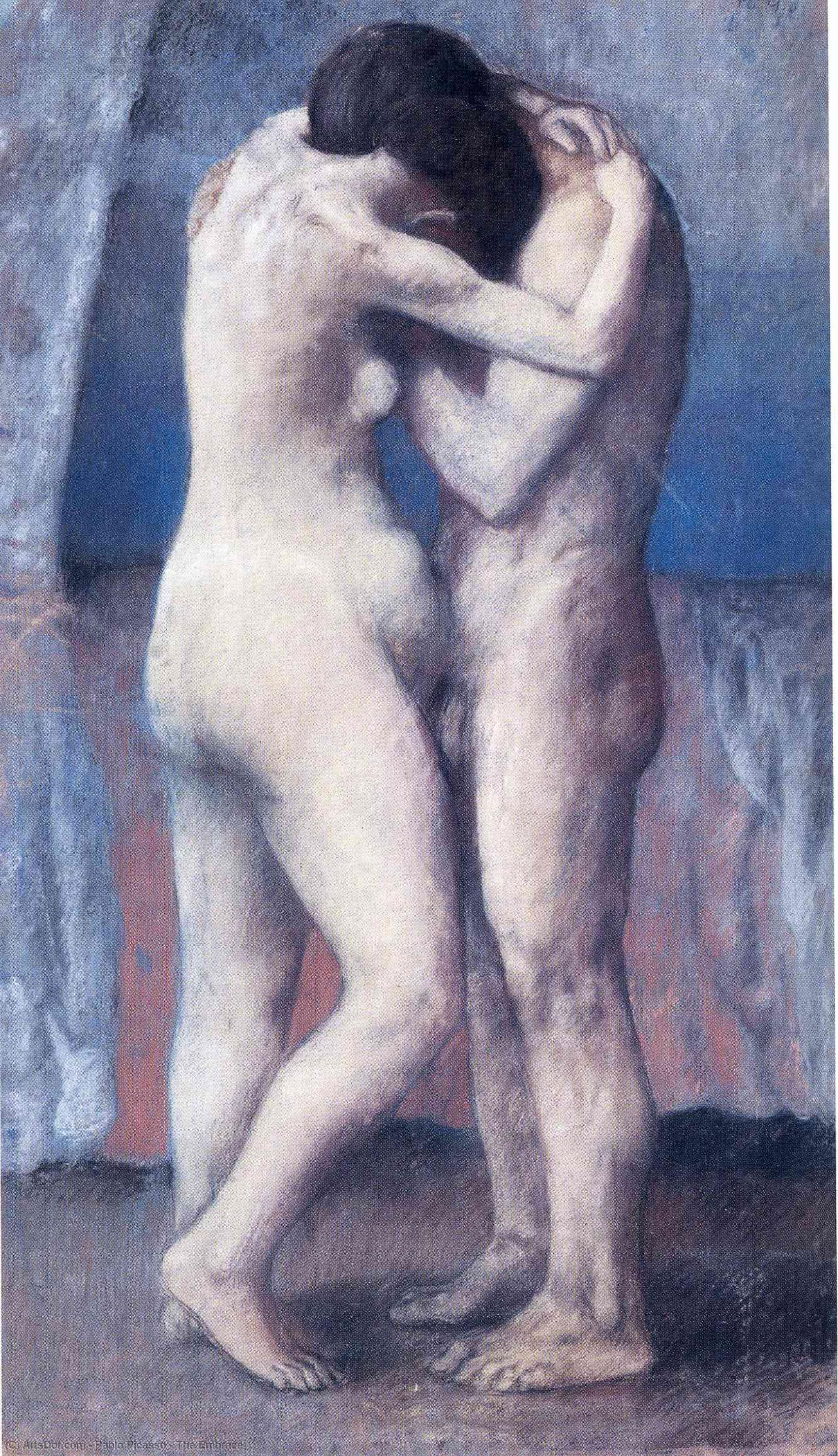
Pablo Picasso’s “The Embrace,” created in 1903, stands as a cornerstone of Proto-Cubism and an enduring testament to the artist's profound exploration of human emotion. Measuring 98 x 57 cm, this pastel masterpiece transcends mere representation; it embodies a revolutionary approach to visual art that foreshadowed the monumental shifts occurring within the artistic landscape of the early 20th century.
Composition and Visual Narrative
The painting depicts two nude figures intertwined in an intimate embrace—a man gently kissing the woman’s neck as their arms wrap around each other, conveying a palpable sense of tenderness and vulnerability. Picasso skillfully utilizes a muted blue background to heighten the drama of the scene, directing the viewer's gaze towards the central subjects and amplifying the emotional resonance of their connection. The inclusion of a chair in the lower left corner subtly suggests a domestic setting—a space for quiet contemplation and heartfelt moments—further enriching the narrative tapestry woven by Picasso’s brushstrokes.
Realism Infused with Geometric Hints
“The Embrace” exemplifies Picasso's commitment to Realism, albeit tempered by nascent Cubist influences. While maintaining an accurate depiction of human anatomy and posture, Picasso subtly disrupts traditional perspective through fragmented planes and geometric distortions—a technique characteristic of Proto-Cubism. This stylistic duality underscores Picasso’s desire to capture not only the outward appearance but also the underlying essence of his subjects, reflecting a burgeoning interest in dissecting visual reality into its constituent parts. The pastel medium lends itself beautifully to this endeavor, producing soft hues and delicate textures that contribute to the painting's ethereal quality.
The Influence of Cubism and Artistic Movements
Picasso’s artistic journey was marked by constant experimentation and engagement with influential movements like Cubism, spearheaded alongside Georges Braque. This groundbreaking approach challenged conventional notions of representation, advocating for a fractured viewpoint that simultaneously presents multiple perspectives—a radical departure from the single-point perspective dominant in Western art prior to Picasso's time. The reverberations of Cubist principles extended far beyond painting, impacting music, ballet, literature, and architecture, signaling a seismic shift in artistic sensibilities. “The Embrace” serves as an exemplary illustration of this transformative period, demonstrating how artists wrestled with new conceptual frameworks while retaining a grounding in observational realism.
A Legacy of Emotional Depth
Ultimately, "The Embrace" transcends its formal innovations to deliver a powerful statement about human connection and intimacy. Picasso’s masterful use of pastel color—particularly the calming blue—creates an atmosphere of serenity and vulnerability, inviting viewers to contemplate the complexities of desire and affection. As part of Proto-Cubism's pioneering spirit, this artwork remains a captivating emblem of modern art’s quest for expressive truth—a timeless masterpiece that continues to inspire admiration and provoke contemplation decades after its creation.
Domande e risposte
Come posso acquistare una versione digitale di "L'abbraccio" di Pablo Picasso?
"L'abbraccio" è disponibile come download di un'immagine digitale ad alta risoluzione, acquistabile direttamente nella sua pagina Immagine digitale ad alta risoluzione.
Quale colore domina la composizione di "L'abbraccio" di Pablo Picasso?
Il colore dominante di "L'abbraccio" di Pablo Picasso è Violetto di cobalto (#8f8da2).
Chi ha realizzato "L'abbraccio" e in che anno?
"L'abbraccio" è stata creata da Pablo Picasso nel 1903.


 Anteprima in scala reale
 Acquista il dipinto realizzato a mano
 Invia
Invia Condividi
 Dettagli opera
 Guida
Guida

 Scarica
 Simili
 Radiografia
 Slideshow
 Statistiche


 Espandi i dettagli






































 L'opzione vetro è disponibile solo per dimensioni inferiori a 110 cm





