Anteprima in scala reale Prova in AR Ordina la riproduzione dipinta a mano Passa all'immagine digitale Condividi
Dettagli Guida stampabile Aggiungi ai preferiti Scarica Articoli simili Radiografia Slideshow Statistiche

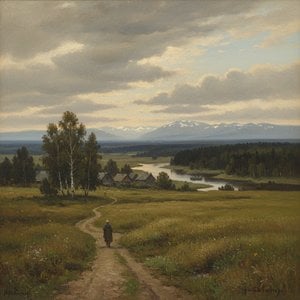
Forest

Nicholas Roerich’s "Forest" (1921) – A mesmerizing Symbolist landscape of dark trees & emerging figures. Explore this evocative artwork's rich detail & mystical atmosphere.

Esplora l'affascinante arte di Nicholas Roerich (1874-1947): Simbolismo, paesaggi himalayani e dipinti mistici. Progettazioni per i Balletti Russi e sostenitore della preservazione culturale.

Giclée / Stampe d'arte

Stampa giclée o su tela di qualità museale, con produzione rapida e diverse opzioni di finitura. ( Ordina la riproduzione dipinta a mano Passa all'immagine digitale)

Corner sample of the P118B picture frame: polistirene stampato, 5 cm wide and 3 cm thick
P118B €10
Corner sample of the P118H picture frame: polistirene stampato, 5 cm wide and 3 cm thick
P118H €10
Corner sample of the P118W picture frame: polistirene stampato, 5 cm wide and 3 cm thick
P118W €10
Corner sample of the P438Z picture frame: polistirene stampato, 5.5 cm wide and 3.5 cm thick
P438Z €10
Corner sample of the P508JH picture frame: polistirene stampato, 7 cm wide and 3.5 cm thick
P508JH €12
Corner sample of the P508YH picture frame: polistirene stampato, 7 cm wide and 3.5 cm thick
P508YH €12
Corner sample of the P805H picture frame: polistirene stampato, 5 cm wide and 3.5 cm thick
P805H €10
Corner sample of the P805Z picture frame: polistirene stampato, 5 cm wide and 3.5 cm thick
P805Z €10
Corner sample of the P919BZ picture frame: polistirene stampato, 7 cm wide and 3.5 cm thick
P919BZ €10
Corner sample of the P919G picture frame: polistirene stampato, 7 cm wide and 3.5 cm thick
P919G €10
Corner sample of the P919XJ picture frame: polistirene stampato, 7 cm wide and 3.5 cm thick
P919XJ €10
Corner sample of the P959ZH picture frame: polistirene stampato, 5 cm wide and 3 cm thick
P959ZH €10
Corner sample of the P968JZ picture frame: polistirene stampato, 6 cm wide and 4 cm thick
P968JZ €12
Corner sample of the W106C picture frame: legno massello, 5 cm wide and 3 cm thick
W106C €8
Corner sample of the W218G picture frame: legno massello, 5 cm wide and 3 cm thick
W218G €10
Corner sample of the W218JH picture frame: legno massello, 5 cm wide and 3 cm thick
W218JH €8
Corner sample of the W218Y picture frame: legno massello, 5 cm wide and 3 cm thick
W218Y €10
Corner sample of the W307PJ picture frame: legno massello, 6 cm wide and 3 cm thick
W307PJ €10
Corner sample of the W316G picture frame: legno massello, 6 cm wide and 3 cm thick
W316G €10
Corner sample of the W316PJ picture frame: legno massello, 6 cm wide and 3 cm thick
W316PJ €8
Corner sample of the W316Y picture frame: legno massello, 6 cm wide and 3 cm thick
W316Y €10
Corner sample of the W398PJ picture frame: legno massello, 5 cm wide and 3 cm thick
W398PJ €8
Corner sample of the W4111J picture frame: legno massello, 6.5 cm wide and 3.5 cm thick
W4111J €10
Corner sample of the W500HY picture frame: legno massello, 7 cm wide and 5 cm thick
W500HY €15
Corner sample of the W500JH picture frame: legno massello, 7 cm wide and 5 cm thick
W500JH €15
Corner sample of the W692G picture frame: legno massello, 8 cm wide and 4 cm thick
W692G €12
Corner sample of the W849H picture frame: legno massello, 5 cm wide and 3 cm thick
W849H €8
Corner sample of the W940BG picture frame: legno massello, 7.5 cm wide and 4.5 cm thick
W940BG €15
Corner sample of the W953PJ picture frame: legno massello, 6 cm wide and 3.5 cm thick
W953PJ €8

Standard
personalizzato
CM
INCH

Scegli tra le nostre dimensioni predefinite, che rispettano le proporzioni originali dell'opera d'arte.

larghezza
altezza

Inserisci la larghezza e l'altezza desiderate, per adattarle alla tua cornice o alla tua parete. Una stampa può essere solo ritagliata, mai resa più grande dell'immagine originale; pertanto, un formato con una forma differente comporterà la perdita di una parte dell'opera. Ti invieremo un mockup digitale da approvare prima di procedere con la stampa. L'immagine mostrata in questa pagina non rappresenta il ritaglio reale — solo il mockup lo mostra.

Consegna in tutto il mondo () in 2 settimane invece delle normali 4/5 settimane. (22 Ottobre)

Spedizione espressa gratuita in tutto il mondo
Tela in lino di alta qualità
Assicurazione completa sulla spedizione
Garanzia di rimborso dei dazi doganali
Garanzia di perfetta fedeltà cromatica
Politica di reso entro 100 giorni (solo per difetti di fabbricazione)
Garanzia di rimborso al 100%
Sconto per acquisti multipli

Prezzo totale

€ 60

Forest

Giclée / Stampe d'arte

Dimensioni della riproduzione

-

Prezzo totale

€ 60

Dettagli rapidi

  • Artistic style: Symbolist
  • Year: 1921
  • Subject or theme: Dark forest scene
  • Medium: Hand-painted reproduction
  • Influences:
    • Roerich's spiritism
    • Russian landscape painting

Nicholas Roerich’s “Forest”: A Journey Into the Depths of the Psyche

This meticulously crafted hand-painted reproduction captures the essence of Nicholas Roemerich's 1921 artwork, "Forest," a piece that resonates with an unsettling beauty and profound psychological depth. The image depicts a group of figures emerging from a dark, imposing forest – a scene immediately evocative of classic Romanticism yet imbued with Roerich’s unique spiritual vision. Measuring 57 x 77 cm, this work invites the viewer into its shadowed depths, prompting contemplation on themes of isolation, mystery, and the human condition.

The Artist's Vision: Roerich and the Spirit Within

Nicholas Roemerich (1874-1947), born in Saint Petersburg, was far more than a painter; he was a polymath deeply invested in exploring the intersection of art, archaeology, philosophy, and spirituality. His work, particularly during this period, reflects his fascination with Eastern mysticism and shamanistic traditions, seeking to represent not just what is seen but what *feels* within. Roerich believed that art could be a conduit for accessing higher consciousness, and “Forest” exemplifies this belief through its dramatic use of light and shadow, and the ambiguous figures within.

Technique and Composition: Verticality and Unease

The artwork’s composition is dominated by strong vertical lines representing the towering trees, creating a sense of oppressive height and confinement. This deliberate emphasis on verticals contributes to the unsettling atmosphere, drawing the eye upwards into the darkness while simultaneously suggesting an inescapable presence. Roerich's technique involved layering thin washes of color – predominantly deep greens, browns, and blacks – building up texture through meticulous brushwork. The use of glazing creates a luminous quality within the shadows, enhancing the dramatic effect. The figures themselves are rendered with a degree of abstraction, their forms partially obscured by the dense foliage, further contributing to the feeling of mystery and unease.

Symbolism and Emotional Impact

"Forest" is rich in symbolic meaning, reflecting Roerich’s broader philosophical concerns. The forest itself represents the unconscious mind – a place of both danger and potential transformation. The figures emerging from its depths could be interpreted as humanity's struggle to confront its inner demons or to seek enlightenment. The darkness isn't simply an absence of light; it is actively charged with symbolic weight, suggesting hidden truths and forgotten memories. This reproduction offers more than just a beautiful image; it provides a window into Roerich’s complex worldview and invites the viewer to engage in their own personal interpretation of this powerful and evocative artwork.

Domande e risposte

È disponibile un download per "Forest"?

L'immagine di "Forest" di Nikolaj Roerich può essere scaricata dalla pagina Scarica dell'opera: download di un'immagine digitale ad alta risoluzione.

Quali sono la data e lo stile di "Forest" di Nikolaj Roerich?

"Forest" è stata realizzata nel 1921, all'interno del movimento Symbolism.

Posso visualizzare "Forest" come una presentazione a schermo intero?

Puoi visualizzare "Forest" di Nikolaj Roerich in un formato slideshow nella pagina Slideshow dell'opera.


Biografia dell'artista

Nicholas Roerich: Vita, Arte e Eredità

Primi Anni di Vita ed Educazione

  • Nicholas Konstantinovich Roerich nacque il 9 ottobre 1874 a San Pietroburgo, Russia.
  • Suo padre, notaio tedesco baltico, e sua madre, una donna russa, coltivarono in lui fin da giovane un apprezzamento per le arti.
  • Roerich perseguì sia il diritto che l'arte contemporaneamente, iscrivendosi all'Università di San Pietroburgo e all'Accademia d'Arti Imperiali nel 1893.
  • Ricevette il titolo di “Artista” nel 1897 e una laurea in legge l'anno successivo.

Iniziative Artistiche e Influenze

  • Lo sviluppo artistico di Roerich fu significativamente influenzato da Simbolismo Russo, un movimento che enfatizzava la spiritualità e la profondità emotiva.
  • Diventò coinvolto nella società “World of Art” di Sergei Diaghilev, diventando presidente dal 1910 al 1916.
  • Il suo lavoro iniziale mostrava un fascino per l'archeologia e il design teatrale, portando a collaborazioni su produzioni per i Ballets Russes.
  • Fu anche influenzato da apocrifi e scritti settari medievali come il Libro dell’Oca.

Collaborazione con i Ballets Russes

  • I progetti di Roerich per i Ballets Russes furono molto apprezzati, in particolare il suo lavoro su Alexander Borodin's Principe Igor (1909) e Igor Stravinsky’s Il Rituale della Primavera (1913).
  • I suoi progetti di scenografia combinavano ricerca storica con arte immaginativa, creando produzioni visivamente sbalorditive.
  • Questa collaborazione lo affermò come figura di spicco nel design teatrale nei primi anni del XX secolo.

Sviluppo Artistico e Temi

  • I dipinti di Roerich si evolsero per incorporare temi sempre più mistici e spirituali, riflettendo il suo crescente interesse per la Teosofia e le religioni orientali.
  • La sua serie Studi Architettonici (1904–1905) dimostrò la sua abilità architettonica e il suo impegno nella preservazione del patrimonio culturale.
  • Motivi ricorrenti nelle sue opere includono paesaggi maestosi, antiche città e figure religiose come San Pantelemon e Kuan Yin.
  • Spesso raffigurava l'Himalaya, una regione che per lui aveva un profondo significato spirituale.

Realizzazioni Principali e Riconoscimenti

  • Roerich fu un fervente sostenitore della protezione dell’arte e dell’architettura durante i tempi di guerra.
  • I suoi sforzi portarono alla creazione del Patto Roerich (1935), un trattato internazionale per la conservazione degli oggetti culturali, guadagnandogli numerose nomine per il Premio Nobel per la Pace.
  • Viaggiò ampiamente in Asia Centrale, conducendo ricerche archeologiche e documentando culture antiche.
  • Le sue opere sono esposte in importanti collezioni museali in tutto il mondo, tra cui la Galleria d'Arte di Astrakhan.

Significato Storico ed Eredità

  • L’impatto di Nicholas Roerich sull’arte e sulla cultura russa è immensurabile.
  • Ha colmato il divario tra l'espressione artistica e l'esplorazione spirituale, influenzando generazioni di artisti e pensatori.
  • Il suo impegno nella conservazione del patrimonio culturale rimane rilevante oggi, evidenziando l’importanza di proteggere la nostra eredità condivisa.
  • L’eredità di Roerich si estende oltre i suoi dipinti; è ricordato come un artista visionario, studioso e umanitario.
Nikolaj Roerich

Nikolaj Roerich

1874 - 1947 , Russia

Informazioni rapide

  • Artisti Influenti:
    • Gauguin
    • Van Gogh
  • Data Di Nascita: 9 ottobre 1874
  • Luogo Di Nascita: San Pietroburgo, Russia
  • Movimento Artistico: Simbolismo russo
  • Nazionalità: Russo
  • Nome Completo: Nikolaj Konstantinovič Rerich
  • Opere Notevoli:
    • Monte dei cinque tesori
    • Percorso verso Kailas 4
    • Ponte di Gloria
    • Lago dei Naga
Esplora le opere d'arte organizzate per temi, stili e caratteristiche.