Anteprima in scala reale Anteprima in AR Acquista il dipinto realizzato a mano Passa all'immagine digitale Invia
Dettagli opera Guida Aggiungi ai preferiti Scarica Simili Radiografia Slideshow Statistiche

Brangena

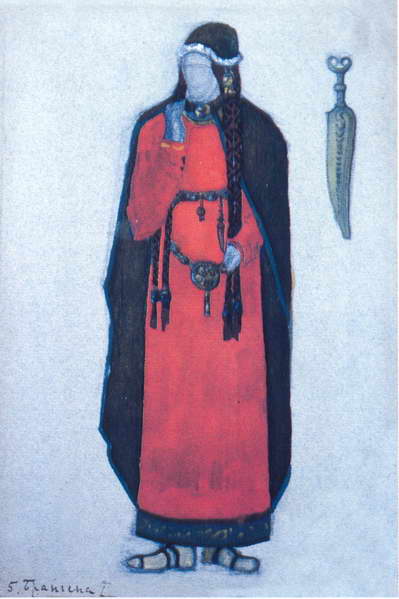
Nicholas Roerich’s "Brangena" presents a striking Art Nouveau woman in red with a knife, juxtaposed against a vintage clock – an enigmatic scene steeped in symbolism and spirit. Explore this captivating artwork by the renowned Russian artist and bring its timeless beauty into your space.

Esplora l'affascinante arte di Nicholas Roerich (1874-1947): Simbolismo, paesaggi himalayani e dipinti mistici. Progettazioni per i Balletti Russi e sostenitore della preservazione culturale.

Giclée / Stampe d'arte

Stampa giclée o su tela di qualità museale, con produzione rapida e diverse opzioni di finitura. ( Acquista il dipinto realizzato a mano Passa all'immagine digitale)

Corner sample of the P118B picture frame: polistirene stampato, 5 cm wide and 3 cm thick
P118B €10
Corner sample of the P118H picture frame: polistirene stampato, 5 cm wide and 3 cm thick
P118H €10
Corner sample of the P118W picture frame: polistirene stampato, 5 cm wide and 3 cm thick
P118W €10
Corner sample of the P438Z picture frame: polistirene stampato, 5.5 cm wide and 3.5 cm thick
P438Z €10
Corner sample of the P508JH picture frame: polistirene stampato, 7 cm wide and 3.5 cm thick
P508JH €12
Corner sample of the P508YH picture frame: polistirene stampato, 7 cm wide and 3.5 cm thick
P508YH €12
Corner sample of the P805H picture frame: polistirene stampato, 5 cm wide and 3.5 cm thick
P805H €10
Corner sample of the P805Z picture frame: polistirene stampato, 5 cm wide and 3.5 cm thick
P805Z €10
Corner sample of the P919BZ picture frame: polistirene stampato, 7 cm wide and 3.5 cm thick
P919BZ €10
Corner sample of the P919G picture frame: polistirene stampato, 7 cm wide and 3.5 cm thick
P919G €10
Corner sample of the P919XJ picture frame: polistirene stampato, 7 cm wide and 3.5 cm thick
P919XJ €10
Corner sample of the P959ZH picture frame: polistirene stampato, 5 cm wide and 3 cm thick
P959ZH €10
Corner sample of the P968JZ picture frame: polistirene stampato, 6 cm wide and 4 cm thick
P968JZ €12
Corner sample of the W106C picture frame: legno massello, 5 cm wide and 3 cm thick
W106C €8
Corner sample of the W218G picture frame: legno massello, 5 cm wide and 3 cm thick
W218G €10
Corner sample of the W218JH picture frame: legno massello, 5 cm wide and 3 cm thick
W218JH €8
Corner sample of the W218Y picture frame: legno massello, 5 cm wide and 3 cm thick
W218Y €10
Corner sample of the W307PJ picture frame: legno massello, 6 cm wide and 3 cm thick
W307PJ €10
Corner sample of the W316G picture frame: legno massello, 6 cm wide and 3 cm thick
W316G €10
Corner sample of the W316PJ picture frame: legno massello, 6 cm wide and 3 cm thick
W316PJ €8
Corner sample of the W316Y picture frame: legno massello, 6 cm wide and 3 cm thick
W316Y €10
Corner sample of the W398PJ picture frame: legno massello, 5 cm wide and 3 cm thick
W398PJ €8
Corner sample of the W4111J picture frame: legno massello, 6.5 cm wide and 3.5 cm thick
W4111J €10
Corner sample of the W500HY picture frame: legno massello, 7 cm wide and 5 cm thick
W500HY €15
Corner sample of the W500JH picture frame: legno massello, 7 cm wide and 5 cm thick
W500JH €15
Corner sample of the W692G picture frame: legno massello, 8 cm wide and 4 cm thick
W692G €12
Corner sample of the W849H picture frame: legno massello, 5 cm wide and 3 cm thick
W849H €8
Corner sample of the W940BG picture frame: legno massello, 7.5 cm wide and 4.5 cm thick
W940BG €15
Corner sample of the W953PJ picture frame: legno massello, 6 cm wide and 3.5 cm thick
W953PJ €8

Formato standard
su misura
CM
INCH

Scegli tra le nostre dimensioni predefinite, che rispettano le proporzioni originali dell'opera d'arte.

larghezza
altezza

Inserisci la larghezza e l'altezza desiderate, per adattarle alla tua cornice o alla tua parete. Una stampa può essere solo ritagliata, mai resa più grande dell'immagine originale; pertanto, un formato con una forma differente comporterà la perdita di una parte dell'opera. Ti invieremo un mockup digitale da approvare prima di procedere con la stampa. L'immagine mostrata in questa pagina non rappresenta il ritaglio reale — solo il mockup lo mostra.

Consegna in tutto il mondo () in 2 settimane invece delle normali 4/5 settimane. (27 Ottobre)

Spedizione espressa gratuita in tutto il mondo
Tela in lino di alta qualità
Assicurazione completa sulla spedizione
Garanzia di rimborso dei dazi doganali
Garanzia di fedeltà cromatica assoluta
Politica di reso entro 100 giorni (solo per difetti di fabbricazione)
Garanzia di rimborso al 100%
Offerta per acquisti multipli

Prezzo totale

€ 60

Brangena

Giclée / Stampe d'arte

Dimensioni riproduzione

-

Prezzo finale calcolato

€ 60

Nicholas Roerich's "Brangena": A Portrait of Mystery and Spiritual Seeking

Nicholas Roemerich’s “Brangena,” painted in 1912, is more than just a portrait; it’s an immersive experience, a visual echo of the artist’s lifelong fascination with symbolism, spirituality, and the profound connection between art and human consciousness. This striking image, depicting a woman adorned in crimson and holding a knife, immediately draws the viewer into a realm of enigmatic beauty and quiet contemplation. The painting's vintage aesthetic, firmly rooted in the Art Nouveau movement, lends it an air of timelessness, suggesting that its themes – power, vulnerability, and perhaps even sacrifice – resonate across generations.

Subject and Composition: A Woman at the Crossroads

The central figure is a woman presented with a striking combination of strength and fragility. Her red attire, a color historically associated with passion, royalty, and danger, immediately commands attention. The presence of a knife in her hands – a potent symbol throughout art history – introduces an element of ambiguity. Is she wielding power? Is she defending herself? Or is the knife a tool for transformation, representing a deliberate act of creation or destruction? The addition of a clock on the right side of the canvas adds another layer of complexity. Clocks are universally recognized as symbols of time, mortality, and the relentless march forward. Its placement suggests a confrontation with these concepts, perhaps reflecting the woman’s own contemplation of her role within them.

Artistic Technique and Style: Echoes of Art Nouveau

Roerich's masterful technique is evident in the meticulous rendering of textures – the flowing fabric of the dress, the polished surface of the knife, and the intricate details of the clock. His brushwork is characterized by a smooth, almost ethereal quality, typical of the Art Nouveau style that was gaining prominence at the time. This movement emphasized organic forms, decorative patterns, and a sense of harmony between nature and human design. Roerich’s use of color is particularly noteworthy; the deep reds and muted tones create a dramatic contrast, intensifying the emotional impact of the scene. The overall composition adheres to Art Nouveau principles, prioritizing flowing lines and an elegant, almost dreamlike quality.

Historical Context and Symbolism: Roerich’s Spiritual Journey

"Brangena" was created during a pivotal period in Roerich's life – a time when he was deeply engaged with esoteric philosophies and the search for universal symbols. His work frequently incorporated elements of ancient mythology, religious iconography, and his own personal spiritual beliefs. The title "Brangena," derived from an ancient Siberian legend, suggests a connection to shamanistic traditions and the exploration of altered states of consciousness. This painting can be interpreted as a visual representation of this journey – a quest for knowledge, a confrontation with mortality, and ultimately, a striving towards enlightenment. Roerich believed that art possessed the power to unlock hidden dimensions of reality, and “Brangena” exemplifies this conviction.

Emotional Impact and Collector’s Appeal

“Brangena” possesses an undeniable emotional resonance. Its enigmatic subject matter invites viewers to engage in a personal dialogue with the painting, prompting questions about identity, purpose, and the nature of existence. This work's enduring appeal lies not only in its aesthetic beauty but also in its profound symbolism and Roerich’s deeply held spiritual beliefs. A hand-painted reproduction offers an exceptional opportunity to bring this captivating artwork into your home or office, adding a touch of mystery, sophistication, and intellectual depth to any space. It is a piece that will undoubtedly spark conversation and inspire contemplation for years to come.

Domande e risposte

Nikolaj Roerich, autore di "Brangena", è conosciuto con altri nomi?

Nikolaj Roerich è noto anche con i nomi N. Roerich, Nicholas Konstantinovich Roerich.

Per quale uso è consigliata una riproduzione di "Brangena" di Nikolaj Roerich?

Una riproduzione di "Brangena" di Nikolaj Roerich è consigliata per Opera d'impatto. Questo suggerimento deriva dal soggetto, dall'atmosfera e dai colori dell'opera.

I colori di "Brangena" appaiono intensi o delicati?

L'intensità cromatica di "Brangena" è Equilibrato. L'intensità indica quanto i colori appaiano vividi.


Biografia dell'artista

Nicholas Roerich: Vita, Arte e Eredità

Primi Anni di Vita ed Educazione

  • Nicholas Konstantinovich Roerich nacque il 9 ottobre 1874 a San Pietroburgo, Russia.
  • Suo padre, notaio tedesco baltico, e sua madre, una donna russa, coltivarono in lui fin da giovane un apprezzamento per le arti.
  • Roerich perseguì sia il diritto che l'arte contemporaneamente, iscrivendosi all'Università di San Pietroburgo e all'Accademia d'Arti Imperiali nel 1893.
  • Ricevette il titolo di “Artista” nel 1897 e una laurea in legge l'anno successivo.

Iniziative Artistiche e Influenze

  • Lo sviluppo artistico di Roerich fu significativamente influenzato da Simbolismo Russo, un movimento che enfatizzava la spiritualità e la profondità emotiva.
  • Diventò coinvolto nella società “World of Art” di Sergei Diaghilev, diventando presidente dal 1910 al 1916.
  • Il suo lavoro iniziale mostrava un fascino per l'archeologia e il design teatrale, portando a collaborazioni su produzioni per i Ballets Russes.
  • Fu anche influenzato da apocrifi e scritti settari medievali come il Libro dell’Oca.

Collaborazione con i Ballets Russes

  • I progetti di Roerich per i Ballets Russes furono molto apprezzati, in particolare il suo lavoro su Alexander Borodin's Principe Igor (1909) e Igor Stravinsky’s Il Rituale della Primavera (1913).
  • I suoi progetti di scenografia combinavano ricerca storica con arte immaginativa, creando produzioni visivamente sbalorditive.
  • Questa collaborazione lo affermò come figura di spicco nel design teatrale nei primi anni del XX secolo.

Sviluppo Artistico e Temi

  • I dipinti di Roerich si evolsero per incorporare temi sempre più mistici e spirituali, riflettendo il suo crescente interesse per la Teosofia e le religioni orientali.
  • La sua serie Studi Architettonici (1904–1905) dimostrò la sua abilità architettonica e il suo impegno nella preservazione del patrimonio culturale.
  • Motivi ricorrenti nelle sue opere includono paesaggi maestosi, antiche città e figure religiose come San Pantelemon e Kuan Yin.
  • Spesso raffigurava l'Himalaya, una regione che per lui aveva un profondo significato spirituale.

Realizzazioni Principali e Riconoscimenti

  • Roerich fu un fervente sostenitore della protezione dell’arte e dell’architettura durante i tempi di guerra.
  • I suoi sforzi portarono alla creazione del Patto Roerich (1935), un trattato internazionale per la conservazione degli oggetti culturali, guadagnandogli numerose nomine per il Premio Nobel per la Pace.
  • Viaggiò ampiamente in Asia Centrale, conducendo ricerche archeologiche e documentando culture antiche.
  • Le sue opere sono esposte in importanti collezioni museali in tutto il mondo, tra cui la Galleria d'Arte di Astrakhan.

Significato Storico ed Eredità

  • L’impatto di Nicholas Roerich sull’arte e sulla cultura russa è immensurabile.
  • Ha colmato il divario tra l'espressione artistica e l'esplorazione spirituale, influenzando generazioni di artisti e pensatori.
  • Il suo impegno nella conservazione del patrimonio culturale rimane rilevante oggi, evidenziando l’importanza di proteggere la nostra eredità condivisa.
  • L’eredità di Roerich si estende oltre i suoi dipinti; è ricordato come un artista visionario, studioso e umanitario.
Nikolaj Roerich

Nikolaj Roerich

1874 - 1947 , Russia

Dettagli rapidi

  • Artisti Influenti:
    • Gauguin
    • Van Gogh
  • Data Di Nascita: 9 ottobre 1874
  • Luogo Di Nascita: San Pietroburgo, Russia
  • Movimento Artistico: Simbolismo russo
  • Nazionalità: Russo
  • Nome Completo: Nikolaj Konstantinovič Rerich
  • Opere Notevoli:
    • Monte dei cinque tesori
    • Percorso verso Kailas 4
    • Ponte di Gloria
    • Lago dei Naga
Esplora le opere d'arte organizzate per temi, stili e caratteristiche.


































