A Surreal Echo of Maternal Instinct
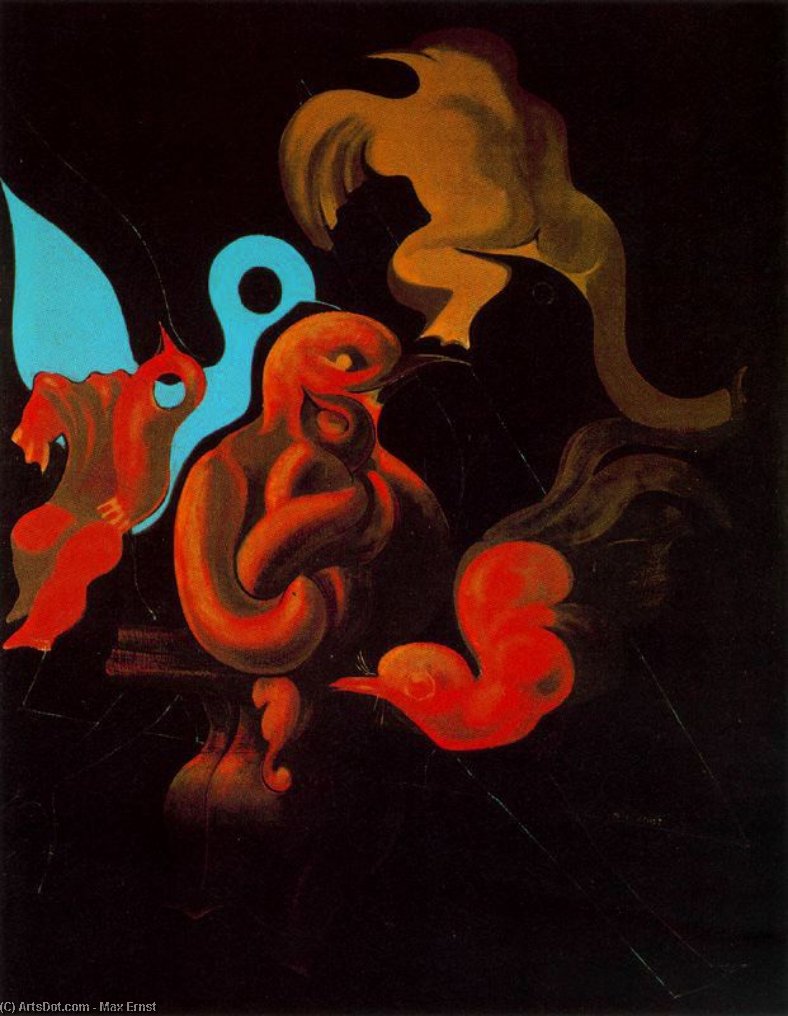
Max Ernst’s “Tras Nosotros, La Materinidad” (After Us Motherhood), completed in 1927, stands as a cornerstone of Dadaism and a testament to the artist's unwavering commitment to challenging conventional artistic boundaries. More than just a visual spectacle, it’s an exploration of subconscious anxieties and desires rendered with meticulous detail—a dreamscape solidified onto paper.
- Style: Surrealism – Ernst seamlessly blends realism with fantastical elements, creating an unsettling juxtaposition that disrupts the viewer's perception of reality.
- Technique: Executed in pencil and chalk on colored paper, the artwork demonstrates Ernst’s mastery of tonal shading and textural manipulation. The delicate lines convey a sense of vulnerability alongside assertive confidence.
- Composition: At its core is a striking image—a baby face bathed in blue, perched atop a table amidst scattered figures including a bird. Two individuals flank the scene, adding to the enigmatic atmosphere. This deliberate arrangement isn’t accidental; it reflects Dada's rejection of rational order and embraces illogical connections.
The Dadaist Manifesto: Rejecting Tradition
Dadaism emerged in Zurich and Berlin during World War I as a furious reaction against the perceived hypocrisy and brutality of the era. Artists like Ernst sought to dismantle established artistic conventions, prioritizing spontaneity and emotional expression over technical skill or intellectual coherence. They aimed to provoke audiences into questioning societal values and confronting uncomfortable truths—a mission “Tras Nosotros, La Materinidad” powerfully embodies.
Ernst’s philosophical grounding in psychology – particularly Freud’s theories on the unconscious – profoundly influenced his artistic process. He deliberately tapped into primal instincts and repressed desires, translating them onto canvas with unsettling precision. The painting isn't merely depicting a scene; it’s excavating the hidden depths of human experience.
Symbolism Beneath the Surface
The blue face of the infant is particularly significant. Often interpreted as representing innocence and vulnerability, it simultaneously evokes associations with melancholy and introspection—themes prevalent throughout Ernst’s oeuvre. The bird figure symbolizes freedom and aspiration, yet its placement within the tableau introduces an element of instability and uncertainty.
"Tras Nosotros, La Materinidad" compels viewers to confront questions about motherhood, identity, and the anxieties inherent in confronting mortality. It's a haunting reminder that art can serve as a conduit for exploring the darkest recesses of the human psyche—a legacy cemented by Ernst’s enduring influence on subsequent generations of artists.
- Further Exploration: Discover more about Max Ernst and Dadaism at WikiArt.org.
- Museum Inspiration: Visit the Museum of Modern Art (MoMA) to immerse yourself in Ernst’s artistic vision and its contribution to modern art history.
- Reproductions Available: Explore exquisite handmade oil painting reproductions on WahooArt.com.


 Anteprima in scala reale
 Passa alle stampe
 Condividi
 Condividi
 Dettagli
 Guida
Guida

 Scarica
 Articoli simili
 Radiografia
 Slideshow
 Statistiche

 Leggi tutto






































 L'opzione vetro è disponibile solo per dimensioni inferiori a 110 cm


