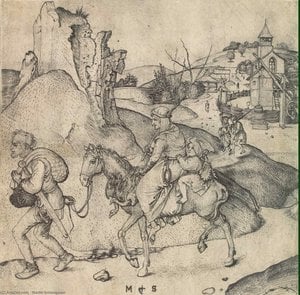
Martin Schongauer: Vita e Eredità
Primi Anni di Vita e Formazione
Martin Schongauer, nato intorno al 1450 a Colmar, Alsazia (ora Francia), è stato una figura chiave nello sviluppo della stampa durante il Rinascimento del Nord. Proveniva da una famiglia di artigiani; suo padre, Caspar Schongauer, era un orefiere che si era trasferito a Colmar dall'Augsburg, Germania, intorno al 1440. Questo background familiare ha influenzato significativamente la sua formazione artistica iniziale, poiché l'orefiere forniva una solida base in precisione e tecniche di lavorazione dei metalli – competenze direttamente trasferibili all'incisione.
Istruzione e Sviluppo Artistico
Nel 1465, Schongauer ha frequentato brevemente l'Università di Lipsia, ma presto abbandonò gli studi accademici per dedicarsi interamente all'arte. Inizialmente si formò come pittore sotto Caspar Isenmann, un maestro locale influenzato dalla pittura olandese del nord, in particolare dal lavoro di Rogier van der Weyden. Questa precoce esposizione alla realtà olandese e all'attenzione ai dettagli sarebbero diventate caratteristiche dello stile di Schongauer.
Stile Artistico e Influenze
Lo stile artistico di Schongauer è caratterizzato da un chiaro, organizzato estetismo gotico mescolato con le emergenti influenze del Rinascimento del Nord. Non ha ricevuto influenza diretta dall'Italia, ma ha tratto ispirazione dalle tradizioni tedesche e olandesi del nord. Il suo lavoro dimostra un meticoloso dettaglio, figure espressive e una sofisticata comprensione della composizione.
- Caratteristiche Chiave: Incisione precisa, rappresentazioni realistiche, narrazioni drammatiche, struttura gotica
- Influenze: Rogier van der Weyden, Caspar Isenmann, tradizioni gotiche tedesche
Realizzazioni Principali e Opere
Schongauer è più noto per le sue 116 incisioni, ognuna identificata dal suo monogramma. Queste stampe sono state ampiamente diffuse in tutta Europa, influenzando significativamente lo sviluppo delle tecniche di stampa e degli stili artistici. Le sue incisioni raffiguravano spesso scene religiose, ritratti e soggetti allegorici.
- Madonna della Pergola (1473): Un'opera significativa che mostra la sua abilità nel rappresentare dettagli delicati e profondità emotiva.
- Incisioni: Tra cui *La Tentazione di Sant’Antonio*, *L’Adorazione dei Pastori* e numerose altre, dimostrando la sua maestria nella tecnica dell'incisione.
Significato Storico ed Eredità
L'impatto di Martin Schongauer sul mondo dell'arte è stato considerevole. È stato uno dei primi artisti tedeschi a raggiungere il riconoscimento internazionale come incisore. Le sue stampe erano molto richieste e ampiamente imitate, diffondendo il suo stile artistico in tutta Europa. È documentato che Michelangelo stesso ha studiato e copiato una delle incisioni di Schongauer – *Il Giudizio di Sant’Antonio* – dimostrando l'alto rispetto in cui Schongauer era tenuto dai maestri successivi.
L'opera di Schongauer ha colmato il divario tra l'arte gotica e il Rinascimento, aprendo la strada ad artisti come Albrecht Dürer. Il suo uso innovativo delle tecniche di incisione e il suo impegno per il dettaglio artistico hanno lasciato un'eredità duratura nella storia della stampa e dell'arte nord europea.
Morte
Martin Schongauer è morto a Breisach il 2 febbraio 1491, lasciando dietro di sé una straordinaria produzione artistica che continua ad essere celebrata per il suo valore artistico e la sua importanza storica.



 Anteprima in scala reale
 Passa alle stampe
 Condividi
 Condividi
 Dettagli
 Guida
Guida

 Scarica
 Articoli simili
 Radiografia
 Slideshow
 Statistiche


 Leggi tutto






































 L'opzione vetro è disponibile solo per dimensioni inferiori a 110 cm