Head of Woman (Sonia Rothkowitz): An Exploration of Quiet Intensity
Mark Rothko’s “Head of Woman (Sonia Rothkowitz)” stands as a testament to the profound power of abstraction and its ability to convey complex emotions. Painted in 1932, this striking portrait embodies the spirit of early 20th-century Expressionism while simultaneously delving into themes of vulnerability and contemplation—a characteristic found throughout Rothko’s oeuvre.
A Palette of Earthy Melancholy
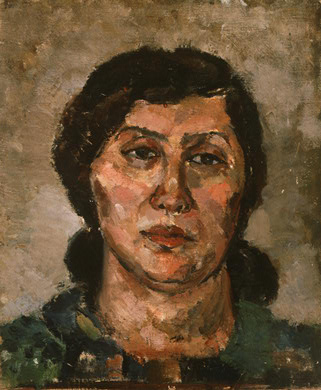
The artwork immediately captivates with its muted color palette. Dominating the canvas are shades of brown, ochre, and dusky greens, creating an atmosphere of solemnity and introspection. These earthy tones aren't merely decorative; they serve as a conduit for conveying Rothko’s preoccupation with existential concerns—the quiet sorrow inherent in human experience.
Technique and Texture: Impasto Speaks Volumes
Rothko’s masterful technique is evident in the visible brushstrokes that define the composition. Thick impasto application lends textural richness to the surface, emphasizing the physicality of paint itself. This deliberate disregard for illusionistic representation aligns with Rothko's broader artistic philosophy—a rejection of traditional realism in favor of conveying emotion directly through color and form. The artist’s hand is palpable; each stroke contributes to a sense of immediacy and spontaneity.
Form and Gesture: Simplifying the Human Figure
The woman’s head and shoulders are rendered with remarkable simplification, prioritizing gesture over precise anatomical detail. Rothko eschews meticulous representation, opting instead for flattened perspective—a stylistic choice that isolates the subject and amplifies her gaze. This gaze is imbued with a palpable melancholy, hinting at inner turmoil and reflecting the artist's own explorations of grief and loss.
Historical Context: Expressionism’s Embrace of Emotion
“Head of Woman (Sonia Rothkowitz)” resides firmly within the context of Expressionist painting—a movement that prioritized emotional intensity over objective observation. Influenced by artists like Edvard Munch and Oskar Kokoschka, Expressionists sought to depict inner psychological states rather than external appearances. Rothko’s work aligns with this tradition, mirroring the broader artistic preoccupation of the period with confronting difficult truths about human existence.
Symbolic Resonance: Beyond Representation
Ultimately, “Head of Woman (Sonia Rothkowitz)” transcends mere visual depiction; it operates on a symbolic level. The muted colors and flattened perspective serve as metaphors for emotional repression and vulnerability—themes that resonate deeply within the artist’s personal history and artistic vision. Like many of Rothko's paintings, this portrait invites viewers to engage in a meditative contemplation of sorrow and remembrance.



 Acquista stampa
 Invia
Invia Condividi
 Dettagli

 Scarica
 Simili
 Radiografia
 Slideshow
 Scopri di più






































 L'opzione vetro è disponibile solo per dimensioni inferiori a 110 cm