Ottieni un file pronto per la stampa che supera di gran lunga l'anteprima web. Ogni immagine digitale in vendita proviene da un master ad alta risoluzione del nostro archivio — con una larghezza solitamente compresa tra 5.000 e 15.000 pixel — permettendoti di stampare in grande formato, ritagliare con precisione o riprodurre dettagli minuziosi in totale sicurezza.
Nessun file lascia il nostro studio senza essere stato elaborato. Un esperto digitale verifica la corrispondenza dei colori con il dipinto originale e li corregge se necessario, per poi migliorarne la nitidezza e i dettagli attraverso strumenti di fotoritocco professionale — mantenendo sempre fedeltà alla pennellata e allo stile dell'artista. Il risultato è un'immagine che appare come il dipinto stesso, e non come una scansione filtrata.
L'approvazione avviene prima della conclusione dell'ordine: il nostro esperto invierà l'immagine via e-mail entro 72 ore per la tua revisione. Non sei soddisfatto? Puoi richiedere modifiche o correzioni, oppure un rimborso qualora la qualità non dovesse soddisfare le tue aspettative.
Questa è la qualità su cui fanno affidamento editori, studi di design, gallerie e stamperie.
Scarica un file ad alta risoluzione per uso personale, per la stampa e per progetti creativi. ( Passa alle stampe Acquista il dipinto realizzato a mano)
Quando scegli WahooArt.com, non riceverai solo un'immagine: riceverai un'opera d'arte digitale professionalmente ottimizzata, realizzata con la massima precisione e accompagnata da una garanzia di soddisfazione. Ecco tutto ciò che include il tuo ordine, automaticamente:
Riceverai il file dell'immagine digitale ad alta risoluzione via email entro 72 ore dall'ordine, pronto per un uso immediato.
La tua opera d'arte viene ottimizzata professionalmente attraverso l'uso di strumenti avanzati di intelligenza artificiale e una revisione manuale, garantendo il massimo livello di dettaglio, nitidezza e accuratezza cromatica.
Hai eliminato o perso accidentalmente il tuo file? Non preoccuparti: te lo invieremo di nuovo in qualsiasi momento, gratuitamente.
Goditi la tua opera d'arte istantaneamente senza costi doganali, dazi o spese di spedizione: i download digitali sono sempre esenti da tasse.
Garantiamo che la tua immagine digitale rifletta i colori originali con la massima fedeltà, grazie all'uso di strumenti professionali e a una gestione accurata del colore.
Se non sei soddisfatto della tua immagine digitale, la revisioneremo o ti rimborseremo il 100% entro 100 giorni, senza domande.
Non sei soddisfatto? Ricevi un rimborso completo entro 100 giorni dal ricevimento del tuo file digitale, senza dover fornire spiegazioni.
Acquista 3 immagini, risparmia il 10% - Acquista 5, risparmia il 15% - Acquista 10+, risparmia il 20%. Ideale per progetti creativi, gallerie e agenzie.
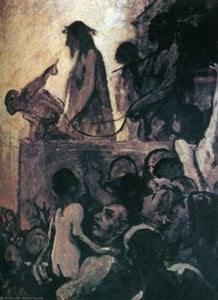
In the profound depths of 1925, a year that marked both a creative zenith and the final chapter for the German master Lovis Corinth, there emerged a work of staggering emotional intensity: Ecce Homo. This oil on canvas masterpiece, currently housed within the prestigious Kunstmuseum Basel, serves as a visceral window into one of history's most poignant moments. The painting captures the biblical moment of "Behold the Man," presenting a scene that transcends mere religious iconography to touch upon the universal essence of human vulnerability and resilience. Through his masterful command of the medium, Corinth invites the viewer into a space where the divine and the mortal collide under a heavy, atmospheric sky.
The composition is a masterclass in dramatic tension, centered around the figure of Jesus Christ, whose presence dominates the canvas with a quiet yet overwhelming gravity. Adorned with the crown of thorns, he stands flanked by two other figures, creating a triangular stability that is paradoxically disrupted by the raw, expressive energy of the brushwork. Corinth utilizes chiaroscuro—the dramatic interplay of light and shadow—to sculpt the forms of the men, lending them a sculptural weight that feels almost tangible. This technique does more than create depth; it directs the eye through a landscape of sorrow, where the stark highlights on the central figure’s face contrast sharply with the encroaching darkness, mirroring the spiritual struggle at the heart of the narrative.
Beyond the human drama, Corinth weaves subtle layers of symbolism into the periphery of the scene to enhance its dynamic movement. In the background, the presence of two horses and the delicate silhouettes of three birds drifting in the sky introduce a sense of life continuing amidst the tragedy. These elements provide a breath of naturalism that prevents the painting from becoming purely a study of grief, instead grounding the crucifixion in a living, breathing world. The artist’s ability to synthesize the structured traditions of Impressionism with the raw, emotive power of Expressionism allows the background to pulse with an almost restless energy, ensuring that every inch of the 190 x 150 cm canvas vibrates with life.
For the discerning collector or interior designer, a reproduction of Ecce Homo offers more than just a decorative element; it provides a profound focal point for any curated space. The painting’s rich textures and somber palette make it an ideal centerpiece for rooms designed to evoke contemplation, sophistication, and depth. Whether placed in a quiet study or a grand gallery-style living area, the work commands attention through its historical significance and its ability to stir the soul. Owning a high-quality hand-painted reproduction allows one to bring the heavy, transformative atmosphere of Corinth’s late period into the modern home, serving as a timeless reminder of the beauty found within the most profound human struggles.
"Ecce Homo" raffigura crucifixion, jesus christ, crown of thorns, religious art, biblical scene, chiaroscuro, mentre i temi ricorrenti di Lovis Corinth sono impressionism and expressionism, crucifixion of jesus christ, religious themes, late expressive style, synthesis of styles. Il confronto tra i due evidenzia come l'opera si relazioni con i soggetti abituali dell'artista.
"Ecce Homo", realizzata nel 1925, appartiene al Late Period della carriera di Lovis Corinth.
"Ecce Homo" connette il movimento Expressionism con Paesi Bassi attraverso il luogo di nascita del suo autore.


1858 - 1925 , Paesi Bassi
 Anteprima in scala reale
 Invia
Invia Condividi
 Dettagli opera
 Guida
Guida

 Scarica
 Simili
 Radiografia
 Slideshow
 Domande e risposte
 Statistiche

 Espandi i dettagli