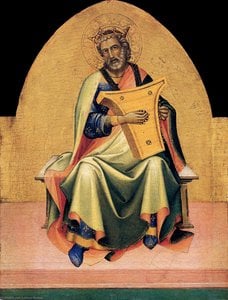
A Vision of Sacred Wonder: Lorenzo Monaco’s Nativity
In the quiet transition between the medieval world and the dawn of the Renaissance, few artists captured the intersection of divine mystery and human tenderness as poignantly as Lorenzo Monaco. His Nativity, a masterpiece conceived around 1390, serves as a luminous window into the soul of early Florentine devotion. As a monk of the Camaldolese order, Monaco did not merely paint a scene; he channeled a spiritual vision intended to anchor the faithful in the profound reality of Christ's birth. The artwork presents a sacred tableau where the ruggedness of the earth meets the ethereal light of heaven, inviting the viewer into a moment of eternal stillness.
The composition is a masterclass in balanced storytelling, utilizing a pyramidal structure that guides the eye with rhythmic grace toward the central figures of Mary and the infant Jesus. Set against a backdrop of rocky, Tuscan-inspired landscapes, the scene feels both grounded in the natural world and elevated by spiritual significance. The artist employs a sophisticated use of chiaroscuro, where dramatic contrasts between light and shadow breathe life into the folds of drapery and the weathered textures of the landscape. This interplay of light does more than define form; it creates an atmosphere of solemnity and awe, highlighting the miraculous nature of the event unfolding within the humble manger.
The Alchemy of Tempera and Symbolism
To behold this work is to witness the delicate alchemy of the tempera technique. Monaco utilized thin, meticulous layers of pigment mixed with egg yolk, a process that allows light to penetrate the surface and reflect back from within the wood panel. This creates a characteristic luminosity, making the warm earth tones—ochres, deep browns, and burnished golds—glow with an inner warmth. The subtle infusion of blue in Mary’s robes provides a celestial counterpoint to the terrestrial palette, symbolizing her purity and her unique role as the vessel of the divine. Every brushstroke is a testament to the patience of the monastic tradition, where art was an extension of prayer.
Beyond its technical brilliance, the painting is rich with symbolic resonance that speaks to the heart of any collector or admirer of sacred art. The presence of the animals, such as the donkey, serves as a quiet reminder of humility and the innocence of creation, while the geometric precision of the landscape reflects the burgeoning humanist interest in order and natural observation. For the interior designer or art enthusiast, this piece offers more than mere decoration; it provides a focal point of profound emotional depth. It evokes a sense of peace, reverence, and timelessness, making it an exquisite addition to spaces designed for contemplation, reflection, and the celebration of classical beauty.



 Anteprima in scala reale
 Passa a Stampe
 Invia
Invia Condividi
 Dettagli opera

 Scarica immagine
 Simili
 Radiografia
 Slideshow
 Statistiche


 Espandi i dettagli






































 L'opzione vetro è disponibile solo per dimensioni inferiori a 110 cm