CONSULENZA D'ARTE GRATUITA

x
Ordina la riproduzione Ordina la riproduzioneAcquista download Acquista download InviaInvia
DettagliDettagli Aggiungi ai preferiti Aggiungi ai preferiti ScaricaScarica SimiliSimili RadiografiaRadiografia SlideshowSlideshow

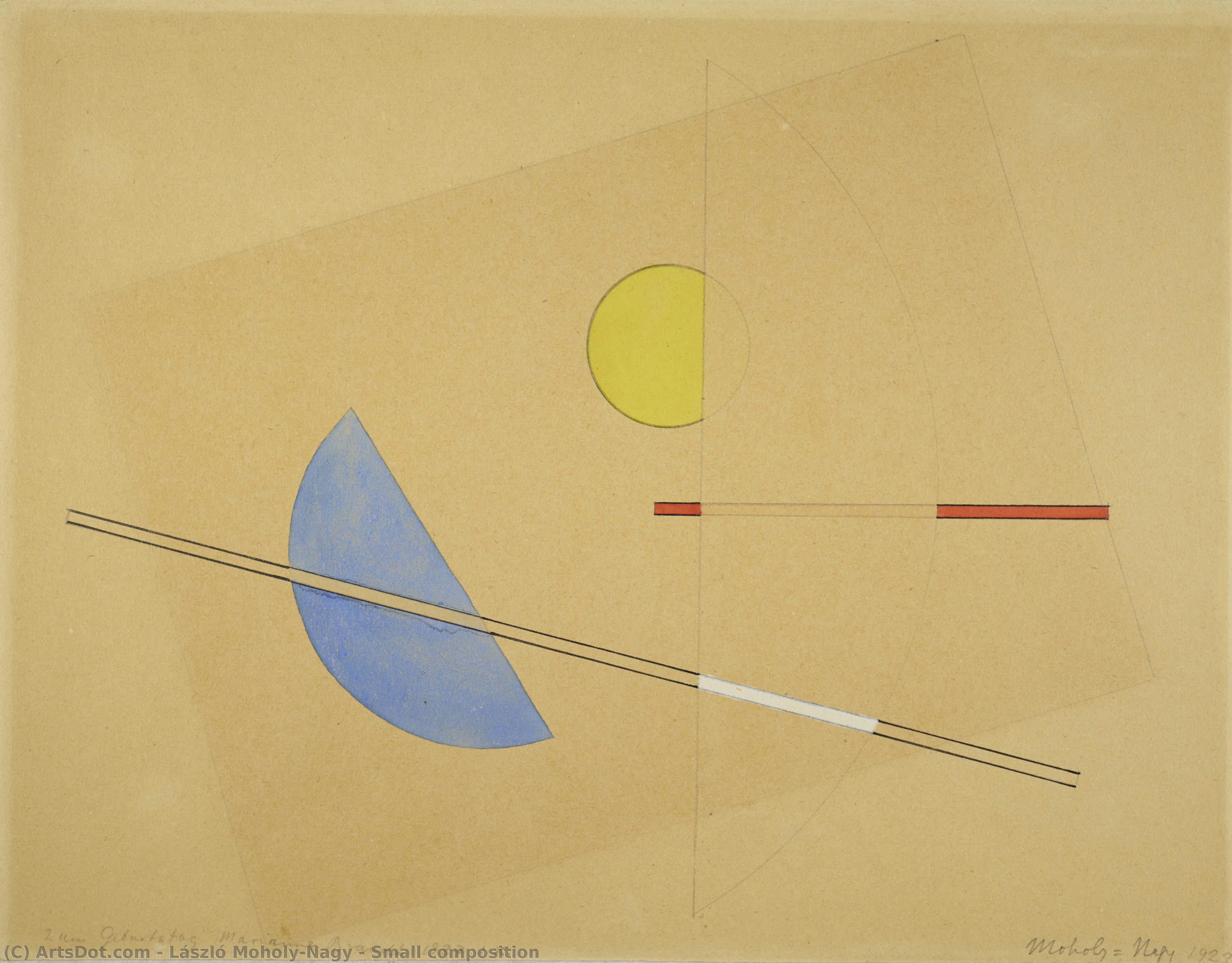
Small composition

Explore Laszlo Moholy Nagy’s ‘Small Composition’ (1923). A dynamic geometric abstraction in watercolor/gouache, influenced by Constructivism & Suprematism. Discover its balanced forms and unique style.

László Moholy-Nagy (1895-1946): pittore ungherese e maestro del Bauhaus, pioniere del costruttivismo, della fotografia e della 'Nuova Visione'. Arte che fonde tecnologia e creatività.

Giclée / Stampa d'arte

Stampa giclée o su tela di qualità museale, con produzione rapida e diverse opzioni di finitura.

P118B $10
P118H $10
P118W $10
P438Z $10
P508JH $12
P508YH $12
P805H $10
P805Z $10
P919BZ $10
P919G $10
P919XJ $10
P959ZH $10
P968JZ $12
W106C $8
W218G $10
W218JH $8
W218Y $10
W307PJ $10
W316G $10
W316PJ $8
W316Y $10
W398PJ $8
W4111J $10
W500HY $15
W500JH $15
W692G $12
W849H $8
W940BG $15
W953PJ $8

Standard
custom
CM
INCH

Scegli tra le nostre dimensioni predefinite, che rispettano le proporzioni originali dell'opera d'arte.

larghezza
altezza

È possibile inserire dimensioni personalizzate per adattare l'opera a una cornice o a uno spazio specifico. Se la dimensione selezionata non corrisponde alle proporzioni dell'immagine originale, procederemo al ritaglio dell'opera o all'estensione dell'immagine con un bordo specchiato o a tinta unita. Un mockup digitale ti verrà inviato per approvazione prima dell'inizio della produzione.
Si prega di notare che l'anteprima a schermo non riflette il ritaglio o l'estensione effettivi. Solo il mockup mostrerà accuratamente la composizione finale.
Sebbene siano disponibili dimensioni personalizzate, si raccomanda di selezionare una dimensione dall'elenco predefinito per preservare le proporzioni originali.

Consegna in tutto il mondo () in 2 settimane invece delle normali 4/5 settimane. (2 Luglio)

why_choose_icon
Spedizione espressa gratuita in tutto il mondo
why_choose_icon
Tela in lino di alta qualità
why_choose_icon
Assicurazione completa sulla spedizione
why_choose_icon
Garanzia di rimborso dei dazi doganali
why_choose_icon
Garanzia di fedeltà cromatica
why_choose_icon
Politica di reso entro 60 giorni (solo per difetti)
why_choose_icon
Garanzia di rimborso al 100%
why_choose_icon
Sconto per acquisti multipli

Prezzo totale

-

reproduction

Small composition

Giclée / Stampa d'arte

Dimensioni riproduzione

-

Prezzo totale finale

-

Informazioni rapide

  • Influences:
    • Bauhaus
    • Modernism
  • Notable elements: Geometric abstraction
  • Artist: László Moholy-Nagy
  • Medium: Watercolor/gouache
  • Subject or theme: Compositional study
  • Dimensions: 24 x 30 cm
  • Year: 1923

Quiz d'arte

Per ogni domanda è presente una sola risposta corretta.

Domanda 1:
What artistic movement is most closely associated with László Moholy-Nagy’s ‘Small Composition’?
Domanda 2:
The color blue in 'Small Composition' represents which element?
Domanda 3:
In what year was ‘Small Composition’ created?
Domanda 4:
What material is most likely used in the creation of ‘Small Composition’?
Domanda 5:
László Moholy-Nagy was a pioneer in which field besides painting?

Descrizione dell'opera

László Moholy-Nagy’s “Small Composition”: A Pioneering Leap into Abstract Form

“Small Composition,” created in 1923 by László Moholy-Nagy, isn't merely a painting; it’s a crystallized moment of artistic revolution. Emerging from the fertile ground of Constructivism and deeply influenced by the radical experimentation of the Bauhaus school, this work represents a pivotal shift in how artists approached representation – moving beyond mimetic accuracy to explore the inherent power of form, line, and color as autonomous elements of visual language. The piece, rendered in watercolor and gouache on paper, immediately captivates with its dynamic geometry, a carefully orchestrated balance between order and chaos that speaks volumes about the artist’s evolving philosophy.

At first glance, “Small Composition” appears strikingly abstract, yet closer inspection reveals a sophisticated system of relationships. A central axis line bisects the canvas, acting as a silent guide to the placement of several key shapes: a vibrant blue crescent moon, a bold yellow circle, and a striking red rectangle. These aren’t simply decorative elements; they are deliberately positioned to create a sense of spatial depth and visual tension. The overlapping forms suggest movement and interaction, inviting the viewer to actively engage with the composition and decipher its underlying structure. The flatness of the medium – watercolor and gouache on paper – further emphasizes this interplay of form, creating an illusion of three-dimensionality through careful layering and line weight.

The Bauhaus Legacy and the Embrace of Technology

To fully appreciate “Small Composition,” it’s crucial to understand its context within the broader artistic landscape of the early 20th century. Moholy-Nagy's time at the Bauhaus in Weimar was transformative, exposing him to a radical new approach to design that sought to integrate art with industry and technology. The Bauhaus championed functionalism, believing that art should serve a purpose beyond mere aesthetics – it should improve people’s lives through innovative design solutions. This ethos is powerfully reflected in “Small Composition,” which can be seen as an exploration of the principles of geometric abstraction, a technique favored by Constructivist artists like Piet Mondrian and Kazimir Malevich.

However, Moholy-Nagy wasn't simply replicating these movements; he was pushing them forward. He recognized the potential of photography – a relatively new medium at the time – to challenge traditional notions of representation. His early experiments with photograms (photographs created without a camera) demonstrated his fascination with chance and accident, suggesting that art could emerge from unexpected combinations of light and shadow. “Small Composition” can be interpreted as an extension of this exploration, utilizing the principles of photography—particularly its ability to capture fleeting moments and manipulate perception—to create a dynamic and visually arresting composition.

Symbolism and Emotional Resonance

While ostensibly abstract, "Small Composition" is rich in subtle symbolism. The dominant blue crescent moon could represent intuition or dreams, while the bold yellow circle might symbolize energy or enlightenment. The red rectangle, often associated with stability and structure, provides a grounding element to the composition. The deliberate use of color—each hue carefully chosen for its emotional impact—further enhances the work’s expressive power. It's not about depicting recognizable objects; it’s about evoking feelings and ideas through pure form and color.

Beyond these specific symbols, “Small Composition” resonates with a sense of dynamism and forward momentum. The intersecting lines and overlapping shapes create a feeling of movement and transformation, suggesting that the artwork is constantly evolving before the viewer's eyes. It’s a testament to Moholy-Nagy’s belief that art should be an active force—capable of stimulating thought, provoking emotion, and ultimately transforming our perception of the world.

A Reproduction Worthy of Display

Reproductions of “Small Composition” offer a remarkable opportunity to bring this pioneering artwork into any interior space. The vibrant colors and dynamic composition will add a touch of modern sophistication while simultaneously evoking the spirit of artistic innovation. Consider framing the reproduction in a minimalist style to allow the artwork’s inherent beauty to shine through, or opt for a bold statement piece that commands attention. “Small Composition” is more than just a print; it's an invitation to engage with the transformative power of abstract art.

Opere simili


Biografia dell'artista

László Moholy-Nagy: Un Pioniere dell'Arte Moderna e del Bauhaus

  • Nato: Bacs-Kajala, Ungheria (1895)
  • Morto: 1946

László Moholy-Nagy è stato un profondamente influente pittore, fotografo, scultore e designer ungherese. È noto soprattutto per i suoi significativi contributi alla scuola del Bauhaus e per il suo lavoro pionieristico nel Costruttivismo, nella tipografia, nella fotografia e nell'arte cinetica. La sua filosofia artistica si concentrava sull'integrazione della tecnologia e dell'industria nelle arti, sostenendo una nuova visione della creatività che abbracciava il mondo moderno.

Primi Anni e Influenze

  • Primi anni e famiglia: Nato László Weisz in una famiglia ebraica a Bacsborsód, Ungheria, successivamente adottò il cognome Moholy-Nagy. Suo cugino era il rinomato direttore d'orchestra Sir Georg Solti.
  • Istruzione e servizio militare: Inizialmente studiò legge a Budapest prima di prestare servizio nella Prima Guerra Mondiale, riportando una grave ferita. Questo periodo lo espose ai movimenti d'avanguardia attraverso riviste come "Jelenkor" e il circolo “attivista” attorno alla rivista "Ma" di Lajos Kassák.
  • Primi studi artistici: Dopo il servizio militare, studiò con l'artista ungherese Fauvista Róbert Berény, dimostrando un interesse precoce per le moderne tendenze artistiche. Sostenne brevemente la Repubblica Sovietica Ungherese.
  • Influenze chiave: Moholy-Nagy fu fortemente influenzato dal Costruttivismo e dal Suprematismo, movimenti che enfatizzavano l'astrazione geometrica e i materiali industriali. Queste influenze sono evidenti nei suoi lavori successivi.

Gli Anni del Bauhaus e il "Nuovo Visto"

  • Ingresso al Bauhaus: Nel 1923, Moholy-Nagy entrò a far parte della scuola del Bauhaus a Weimar, in Germania, inizialmente co-insegnando il corso preliminare con Josef Albers e successivamente sostituendo Johannes Itten come capo dell'officina dei metalli.
  • Spostamento nella direzione del Bauhaus: La sua arrivo segnò un passaggio dall'Espressionismo verso un approccio più costruttivista e orientato al design, in linea con gli obiettivi originali della scuola.

  • "Nuovo Visto" (Neues Sehen): Moholy-Nagy è noto soprattutto per aver coniato il termine "Nuovo Visto", che celebrava la capacità della macchina fotografica di rivelare aspetti della realtà invisibili all'occhio umano. Questo concetto ha sostenuto i suoi esperimenti fotografici e artistici.
  • Fotogrammi: Ha pionierizzato la tecnica del fotogramma – creando immagini posizionando oggetti direttamente sulla carta fotosensibile, senza una macchina fotografica – dimostrando approcci innovativi alla fotografia.
  • Sperimentazione con materiali e tecnologia: Moholy-Nagy abbracciò materiali industriali come metallo, plexiglass e illuminazione elettrica nelle sue sculture e nei suoi progetti, riflettendo la sua convinzione nell'integrazione di arte e tecnologia.

Realizzazioni e Innovazioni Principali

  • "Lichtrequisit einer elektrischen bühne" (Modulatore luce-spazio): Completita nel 1930, questa scultura cinetica utilizzava parti mobili e proiettava la luce per creare schemi dinamici sulle superfici circostanti, considerata un precursore sia dell'arte cinetica che dell'arte luminosa.
  • Fotografia e cinema: Il suo lavoro fotografico esplorava l'astrazione, la texture e il movimento, spesso utilizzando tecniche non convenzionali come il fotomontaggio e l'illuminazione sperimentale. Si è anche avventurato nel filmmaking.
  • Eredità didattica: Come educatore al Bauhaus e successivamente al New Bauhaus a Chicago (che ha fondato), Moholy-Nagy ha profondamente influenzato generazioni di artisti e designer.
  • Scenografia e pubblicità: Oltre alla sua pratica artistica, progettò scenografie per produzioni teatrali e creò campagne pubblicitarie, dimostrando una versatilità che rifletteva la sua filosofia del design.

Significato Storico

  • Pioniere dell'arte moderna: László Moholy-Nagy si pone come una figura fondamentale nell'arte moderna del XX secolo, colmando il divario tra pittura, scultura, fotografia e progettazione industriale.
  • Influenza sul design Bauhaus: I suoi contributi alla scuola del Bauhaus sono stati fondamentali per plasmare il suo curriculum e l'estetica, lasciando un impatto duraturo sull'educazione al design in tutto il mondo.
  • Sostenitore dell'integrazione tecnologica: L'enfasi di Moholy-Nagy sull'integrazione della tecnologia nell'arte ha anticipato molti sviluppi nelle pratiche artistiche contemporanee.
  • Eredità del "Nuovo Visto": Il suo concetto di “Nuovo Visto” continua a ispirare artisti e fotografi ad esplorare le possibilità di percezione e rappresentazione attraverso tecniche innovative.
László Moholy-Nagy

László Moholy-Nagy

1895 - 1946 , Ungheria

Dati rapidi

  • Artistic Movement Or Style: Costruttivismo, Bauhaus
  • Artists Or Movements Influenced By This Artist:
    • Marianne Brandt
    • György Kepes
    • Andor Weininger
  • Artists Who Influenced This Artist: ['Robert Berény']
  • Date Of Birth: 20 luglio 1895
  • Date Of Death: 24 novembre 1946
  • Full Name: László Moholy-Nagy
  • Nationality: Ungherese
  • Notable Artworks:
    • Small Composition
    • Flower
    • Mass Psychosis
    • Untitled
    • The Storm
    • Photogram
  • Place Of Birth: Bacs-Kajala, Ungheria