Anteprima in scala reale Prova in AR Passa alle stampe Passa all'immagine digitale Condividi
Dettagli Guida stampabile Aggiungi ai preferiti Scarica Articoli simili Radiografia Slideshow Statistiche

Untitled

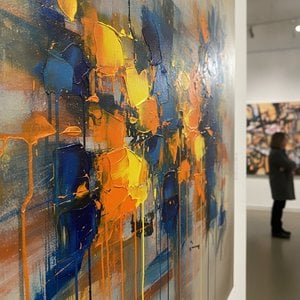
Experience the vibrant energy of Karel Appel's COBRA masterpiece; this abstract burst of color captures raw instinct from 1960—discover your own artistic freedom.

Scopri Karel Appel, pittore e scultore olandese fondatore del CoBrA! Esplora la sua arte audace ed espressiva, un'ode allo spirito poetico e all'innovazione.

L'opera d'arte visualizzata in questa pagina è protetta dalle leggi sul diritto d'autore, il che significa che non possiamo legalmente creare o vendere una riproduzione identica. Tale protezione è garantita da accordi internazionali quali la Convenzione di Berna e dalle leggi nazionali, incluse quelle stabilite da Legge sul copyright degli Stati Uniti - Titolo 17. Tutti i diritti riservati. Le immagini presenti su questo sito sono protette da copyright e non possono essere riprodotte o utilizzate senza l'autorizzazione scritta di WahooArt.com o dei rispettivi proprietari del copyright.

Come alternativa rispettosa e legale, offriamo opere d'arte personalizzate e dipinte a mano, ispirate all'originale. I nostri artisti esperti e professionisti studiano con cura lo stile, l'atmosfera e l'essenza artistica dell'opera originale per creare un pezzo nuovo e unico che evochi la stessa emozione, pur rimanendo una creazione originale a pieno titolo.

Questo metodo è pienamente conforme alle normative sul diritto d'autore poiché non prevede la copia o la duplicazione dell'opera protetta. Si tratta invece di una rielaborazione creativa: un nuovo dipinto che trae ispirazione dall'originale, senza tuttavia esserne identico.

Riproduzione a olio fatta a mano

Olio su tela dipinto a mano nelle tue dimensioni e con la tua cornice, realizzato su ordinazione dai nostri artisti. ( Passa alle stampe Passa all'immagine digitale)

Corner sample of the P118B picture frame: moulded polystyrene, 5 cm wide and 3 cm thick
P118B 10
Corner sample of the P118H picture frame: moulded polystyrene, 5 cm wide and 3 cm thick
P118H 10
Corner sample of the P118W picture frame: moulded polystyrene, 5 cm wide and 3 cm thick
P118W 10
Corner sample of the P438Z picture frame: moulded polystyrene, 5.5 cm wide and 3.5 cm thick
P438Z 10
Corner sample of the P508JH picture frame: moulded polystyrene, 7 cm wide and 3.5 cm thick
P508JH 12
Corner sample of the P508YH picture frame: moulded polystyrene, 7 cm wide and 3.5 cm thick
P508YH 12
Corner sample of the P805H picture frame: moulded polystyrene, 5 cm wide and 3.5 cm thick
P805H 10
Corner sample of the P805Z picture frame: moulded polystyrene, 5 cm wide and 3.5 cm thick
P805Z 10
Corner sample of the P919BZ picture frame: moulded polystyrene, 7 cm wide and 3.5 cm thick
P919BZ 10
Corner sample of the P919G picture frame: moulded polystyrene, 7 cm wide and 3.5 cm thick
P919G 10
Corner sample of the P919XJ picture frame: moulded polystyrene, 7 cm wide and 3.5 cm thick
P919XJ 10
Corner sample of the P959ZH picture frame: moulded polystyrene, 5 cm wide and 3 cm thick
P959ZH 10
Corner sample of the P968JZ picture frame: moulded polystyrene, 6 cm wide and 4 cm thick
P968JZ 12
Corner sample of the W106C picture frame: solid wood, 5 cm wide and 3 cm thick
W106C 8
Corner sample of the W218G picture frame: solid wood, 5 cm wide and 3 cm thick
W218G 10
Corner sample of the W218JH picture frame: solid wood, 5 cm wide and 3 cm thick
W218JH 8
Corner sample of the W218Y picture frame: solid wood, 5 cm wide and 3 cm thick
W218Y 10
Corner sample of the W307PJ picture frame: solid wood, 6 cm wide and 3 cm thick
W307PJ 10
Corner sample of the W316G picture frame: solid wood, 6 cm wide and 3 cm thick
W316G 10
Corner sample of the W316PJ picture frame: solid wood, 6 cm wide and 3 cm thick
W316PJ 8
Corner sample of the W316Y picture frame: solid wood, 6 cm wide and 3 cm thick
W316Y 10
Corner sample of the W398PJ picture frame: solid wood, 5 cm wide and 3 cm thick
W398PJ 8
Corner sample of the W4111J picture frame: solid wood, 6.5 cm wide and 3.5 cm thick
W4111J 10
Corner sample of the W500HY picture frame: solid wood, 7 cm wide and 5 cm thick
W500HY 15
Corner sample of the W500JH picture frame: solid wood, 7 cm wide and 5 cm thick
W500JH 15
Corner sample of the W692G picture frame: solid wood, 8 cm wide and 4 cm thick
W692G 12
Corner sample of the W849H picture frame: solid wood, 5 cm wide and 3 cm thick
W849H 8
Corner sample of the W940BG picture frame: solid wood, 7.5 cm wide and 4.5 cm thick
W940BG 15
Corner sample of the W953PJ picture frame: solid wood, 6 cm wide and 3.5 cm thick
W953PJ 8

Standard
personalizzato
CM
INCH

Scegli tra le nostre dimensioni predefinite, che rispettano le proporzioni originali dell'opera d'arte.

larghezza
altezza

È possibile inserire dimensioni personalizzate per adattare l'opera a una cornice o a uno spazio specifico. Se la dimensione selezionata non corrisponde alle proporzioni dell'immagine originale, provvederemo a ritagliare l'opera o a estendere il dipinto con elementi aggiuntivi dipinti a mano. Un mockup digitale ti sarà inviato per approvazione prima dell'inizio della produzione.
Si prega di notare che l'anteprima a schermo non riflette il ritaglio o l'estensione effettivi. Solo il mockup mostrerà accuratamente la composizione finale.
Sebbene siano disponibili dimensioni personalizzate, consigliamo di selezionare una dimensione dall'elenco predefinito per preservare le proporzioni originali.

Esempi di personalizzazione: sostituire il volto con una foto del cliente; aggiungere un animale domestico (ad esempio, sostituire un gatto con un cane); inserire un messaggio nascosto nello sfondo; cambiare il paesaggio o gli elementi dello sfondo.
Dopo l'ordine, il team di WahooArt.com contatterà il cliente via e-mail per ricevere le istruzioni e fornirà un'anteprima del mockup

Consegna in tutto il mondo () in 3/4 settimane anziché nelle normali 5 settimane. (11 Ottobre). Nessun compromesso sulla qualità.

Spedizione espressa gratuita in tutto il mondo
Tela in lino di alta qualità
Assicurazione completa sulla spedizione
Garanzia di rimborso dei dazi doganali
Garanzia di perfetta fedeltà cromatica
Politica di reso entro 100 giorni (solo per difetti di fabbricazione)
Garanzia di rimborso al 100%
Sconto per acquisti multipli

Prezzo totale

€ 234

Untitled

Tecnica di riproduzione

Dimensioni della riproduzione

-

Prezzo totale

€ 234

Dettagli rapidi

  • Artistic style: Abstract Expressionism
  • Movement: COBRA
  • Artist: Karel Appel
  • Title: Untitled
  • Year: 1960
  • Subject or theme: Organic shapes
  • Medium: Screenprint

Quiz d'arte

Per ogni domanda è presente una sola risposta corretta.

Domanda 1:
What avant-garde movement is Karel Appel strongly associated with for this artwork?
Domanda 2:
Which element of the artwork's composition is described as eschewing traditional perspective?
Domanda 3:
According to the description, what emotion is often symbolized by the color yellow in Appel's work?
Domanda 4:
What type of forms populate the artwork, described as rounded and organic, reminiscent of natural elements?
Domanda 5:
What medium is the artwork most likely to be, given the visible layering and texture?

A Symphony of Spontaneity: The Primal Energy of Karel Appel

In the landscape of post-war European modernism, few voices resonate with as much raw, unbridled vitality as that of Karel Appel. His 1960 work, Untitled, serves as a breathtaking manifesto of the COBRA movement, an avant-garde collective that sought to strip away the suffocating layers of academic tradition in favor of something far more primal. To encounter this piece is to witness a deliberate rebellion; it is not merely a composition of pigment on paper, but an explosion of instinctual expression. The artwork captures a moment where the artist’s hand moves with the freedom of a child, yet carries the profound weight of a man navigating a world recovering from the shadows of conflict. Through its vibrant palette and gestural urgency, the work invites the viewer into a realm where emotion dictates form, and where the boundaries between the creator and the canvas dissolve into pure, rhythmic motion.

The visual language of this masterpiece is defined by its biomorphic forms—organic, rounded shapes that seem to pulse with an internal life force. There is no rigid geometry here, nor any attempt at traditional perspective; instead, Appel utilizes an asymmetrical arrangement where colors and shapes overlap in a dance of beautiful chaos. The palette is nothing short of celebratory, dominated by sun-drenched yellows, deep oceanic blues, and fiery reds, all anchored by bold strokes of black and punctuated by flashes of orange and white. These colors are not merely decorative choices but are deeply symbolic; the yellow radiates an infectious optimism, while the blue offers a moment of contemplative stillness amidst the surrounding energy. This interplay of hues creates a complex textural landscape, where the visible layering of the printmaking process suggests a tactile depth that draws the eye into a continuous, wandering exploration.

Historical Resonance and Interior Inspiration

To understand the soul of this work, one must look to the historical heartbeat of the COBRA movement. Born from a desire to break free from the constraints of Surrealism and Cubism, Appel and his contemporaries looked toward the "primitive"—finding profound inspiration in African masks, tribal art, and the uninhibably honest drawings of children. This 1960 print embodies that search for authenticity, rejecting meticulous representation in favor of intuition and gesture. The technique, likely a screenprint or lithograph, allows for a fascinating tension between the flatness of the medium and the perceived movement of the brushstrokes. Each layer of ink contributes to a sense of immediacy, as if the artist’s energetic movements were captured in mid-motion, frozen forever in a state of becoming.

For the discerning collector or interior designer, this artwork offers more than just visual interest; it provides a transformative emotional atmosphere. Its lack of a singular focal point allows it to integrate seamlessly into sophisticated modern environments, acting as a dynamic anchor in a room. In a minimalist setting, its bold colors can provide a much-needed burst of life and character, while in a more eclectic space, it serves as a testament to the enduring power of the avant-garde. Owning a high-quality reproduction of this piece is an invitation to live alongside a fragment of art history—a piece that celebrates the joy of existence, the beauty of imperfection, and the eternal, restless spirit of human creativity.

Domande e risposte

In che modo "Untitled" bilancia luci e ombre?

"Untitled" ha una luminosità complessiva di bright, con una luminanza pari a Bright Balance.

In che anno è stata realizzata l'opera "Untitled" di Karel Appel?

"Untitled" di Karel Appel è stata creata nel 1960.

Quanti anni aveva Karel Appel quando è stata creata "Untitled"?

Karel Appel aveva 39 anni quando ha creato "Untitled" nel 1960. L'età è calcolata sulla base dell'anno di nascita dell'artista, 1921.

In che modo i colori di "Untitled" di Karel Appel si relazionano alla sua emozione?

In "Untitled", i colori di Neutrals accompagnano una sensazione Joyful.

Quale origine nazionale si cela dietro il COBRA Expressionism di "Untitled"?

"Untitled" è stata creata da Karel Appel, nato in Paesi Bassi, all'interno del movimento COBRA Expressionism. L'origine dell'artista lega l'opera al COBRA Expressionism così come praticato dagli artisti di Paesi Bassi.

Quale artista e quale stile si celano dietro "Untitled"?

Karel Appel ha creato "Untitled" all'interno del movimento COBRA Expressionism.

Chi ha creato "Untitled"?

L'artista che ha creato "Untitled" è Karel Appel. L'opera è catalogata sotto il nome di Karel Appel.


Biografia dell'artista

Primi Anni e Formazione

  • Nato: 25 aprile 1921, Amsterdam, Paesi Bassi
  • Morto: 3 maggio 2006, Zurigo, Svizzera
  • Genitori: Jan Appel (barbiere), Johanna Chevalier (discendente di Ugonotti francesi)
  • Soprannome giovanile: 'Kik'
  • Primo dipinto all’età di quattordici anni: una natura morta con un cesto di frutta.
  • Ricevette un set di colori e un cavalletto come regalo per il suo quindicesimo compleanno da suo zio Karel Chevalier, che gli fornì anche le prime lezioni d'arte.
  • Studiò alla Rijksakademie van Beeldende Kunsten ad Amsterdam (1940-1943) durante l’occupazione tedesca. Conobbe i suoi colleghi artisti Corneille e Constant, formando amicizie durature.
  • Lasciò la casa a causa dell'opposizione dei genitori ai suoi impegni artistici e per sfuggire alla cattura della polizia tedesca per potenziale lavoro forzato.

Il Movimento CoBrA e Sviluppo Artistico

  • Prima mostra ad Groningen (1946).
  • Partecipazione significativa all'esposizione dello Stedelijk Museum di Amsterdam nel 1949, che suscitò controversie e dibattiti pubblici.
  • Influenze: Pablo Picasso, Henri Matisse, Jean Dubuffet.
  • Iniziò a scolpire nel 1947 utilizzando materiali di recupero (tecnica dell'assemblaggio), dipingendoli con colori vivaci come bianco, rosso, giallo, blu e nero.
  • Si unì al Gruppo Sperimentale con Anton Rooskens, Theo Wolvecamp e Jan Nieuwenhuys; successivamente si unì anche Hugo Claus.
  • Co-fondatore di CoBrA (Copenhagen, Bruxelles, Amsterdam) nel 1948 insieme a Corneille, Constant, Jan Nieuwenhuys e Christian Dotremont.
  • Lo stile artistico di CoBrA enfatizzava la spontaneità, le immagini infantili e un rifiuto delle convenzioni artistiche tradizionali. Ispirato dalla mitologia danese e nordica.
  • Creò l'affresco controverso "Bambini che Interrogano" (1949) per il municipio di Amsterdam, che fu successivamente coperto a causa della protesta pubblica.

Riconoscimento Internazionale e Carriera Successiva

  • Si trasferì a Parigi nel 1950 dopo aver affrontato reazioni negative al CoBrA nei Paesi Bassi.
  • Sviluppò una reputazione internazionale attraverso viaggi in Messico, negli Stati Uniti, nella Jugoslavia e in Brasile.
  • Visse e lavorò a New York City e Firenze.
  • Prima mostra americana presso la Martha Jackson Gallery (1954).
  • Il dipinto "Bambino e Bestia II" (1951) è stato esposto nell'influente mostra del Museum of Modern Art “The New Decade” (1955).
  • Conosciuto per il suo lavoro di murales.
  • Ha sperimentato una ripresa della popolarità nei Paesi Bassi dopo il 1990, con importanti mostre ad Amsterdam e Bruxelles organizzate da Rudy Fuchs.
  • La sua opera è stata presentata in modo prominente al Museo CoBrA di Amstelveen.

Eredità e Riconoscimento

  • Ha istituito la Fondazione Karel Appel per preservare le sue opere d'arte e promuovere la consapevolezza pubblica della sua opera.
  • Ha subito una temporanea perdita di opere d'arte nel 2002, che sono state successivamente recuperate nel 2012.
  • La Fondazione Karel Appel funge da patrimonio ufficiale e archivio delle immagini dell’artista.
  • Il rappresentante statunitense per il diritto d'autore della fondazione è The Artists Rights Society.
  • Le opere di Appel continuano a essere esposte a livello internazionale e rimangono un contributo significativo all'arte europea del dopoguerra, in particolare all'interno del movimento CoBrA.
Karel Appel

Karel Appel

1921 - 2006 , Paesi Bassi

Informazioni rapide

  • Artistic Movement Or Style: CoBrA, Espressionismo astratto
  • Artists Who Influenced This Artist:
    • Pablo Picasso
    • Henri Matisse
    • Jean Dubuffet
  • Date Of Birth: 25 aprile 1921
  • Date Of Death: 3 maggio 2006
  • Full Name: Christiaan Karel Appel
  • Nationality: Olandese
  • Notable Artworks:
    • Child and Beast II (1951)
    • 'Questioning Children' (fresco)
  • Place Of Birth: Amsterdam, Paesi Bassi