CONSULENZA D'ARTE GRATUITA

x
Acquista stampa Acquista stampaAcquista download Acquista download InviaInvia
DettagliDettagli Aggiungi ai preferiti Aggiungi ai preferiti ScaricaScarica SimiliSimili RadiografiaRadiografia SlideshowSlideshow

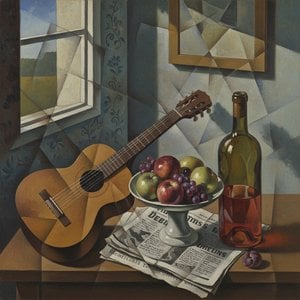
Still Life with Grapes

Juan Gris' 'Still Life with Grapes' (1914) is a vibrant Synthetic Cubist masterpiece, showcasing geometric forms and bold colors. Explore this iconic work of art from the Spanish visionary.

Scopri Juan Gris (1887-1927), maestro spagnolo del Cubismo! Esplora il suo stile geometrico, il Cubismo Sintetico e l'influenza duratura sull'arte moderna. Visualizza le opere ora.

Riproduzione a olio fatta a mano

Olio su tela dipinto a mano nelle tue dimensioni e con la tua cornice, realizzato su ordinazione dai nostri artisti.

P118B $10
P118H $10
P118W $10
P438Z $10
P508JH $12
P508YH $12
P805H $10
P805Z $10
P919BZ $10
P919G $10
P919XJ $10
P959ZH $10
P968JZ $12
W106C $8
W218G $10
W218JH $8
W218Y $10
W307PJ $10
W316G $10
W316PJ $8
W316Y $10
W398PJ $8
W4111J $10
W500HY $15
W500JH $15
W692G $12
W849H $8
W940BG $15
W953PJ $8

Standard
custom
CM
INCH

Scegli tra le nostre dimensioni predefinite, che rispettano le proporzioni originali dell'opera d'arte.

larghezza
altezza

È possibile inserire dimensioni personalizzate per adattare l'opera a una cornice o a uno spazio specifico. Se la dimensione selezionata non corrisponde alle proporzioni dell'immagine originale, provvederemo a ritagliare l'opera o a estendere il dipinto con elementi aggiuntivi dipinti a mano. Un mockup digitale ti sarà inviato per approvazione prima dell'inizio della produzione.
Si prega di notare che l'anteprima a schermo non riflette il ritaglio o l'estensione effettivi. Solo il mockup mostrerà accuratamente la composizione finale.
Sebbene siano disponibili dimensioni personalizzate, consigliamo di selezionare una dimensione dall'elenco predefinito per preservare le proporzioni originali.

Esempi di modifiche possibili: sostituire il volto con una foto del cliente; aggiungere un animale domestico (ad esempio, sostituire un gatto con un cane); inserire un messaggio nascosto sullo sfondo; modificare il paesaggio o gli elementi dello sfondo.
Dopo l'ordine, il team di WahooArt.com invierà un'e-mail al cliente per le istruzioni e fornirà un'anteprima del mockup

Consegna in tutto il mondo () in 3/4 settimane anziché nelle normali 5 settimane. (2 Luglio). Nessun compromesso sulla qualità.

why_choose_icon
Spedizione espressa gratuita in tutto il mondo
why_choose_icon
Tela in lino di alta qualità
why_choose_icon
Assicurazione completa sulla spedizione
why_choose_icon
Garanzia di rimborso dei dazi doganali
why_choose_icon
Garanzia di fedeltà cromatica
why_choose_icon
Politica di reso entro 60 giorni (solo per difetti)
why_choose_icon
Garanzia di rimborso al 100%
why_choose_icon
Sconto per acquisti multipli

Prezzo totale

-

reproduction

Still Life with Grapes

Tecnica di riproduzione

Dimensioni riproduzione

-

Prezzo totale finale

-

Informazioni rapide

  • Medium: Oil on canvas
  • Dimensions: 81 x 60 cm
  • Influences:
    • Picasso
    • Matisse
  • Location: Museum of Modern Art (MoMA)
  • Title: Still Life with Grapes
  • Subject or theme: Still life
  • Notable elements: Geometric forms, collage

Quiz d'arte

Per ogni domanda è presente una sola risposta corretta.

Domanda 1:
What artistic movement is Juan Gris most closely associated with?
Domanda 2:
In 'Still Life with Grapes', what technique is prominently used to create a sense of fragmented space?
Domanda 3:
The painting 'Still Life with Grapes' was created in which year?
Domanda 4:
Juan Gris primarily worked with what medium in his still life paintings?
Domanda 5:
The painting depicts a scene that reflects which of the following artistic trends?

Descrizione dell'opera

Juan Gris’s “Still Life with Grapes” – A Symphony of Cubist Geometry

Juan Gris's "Still Life with Grapes," painted in 1914, isn’t merely a depiction of fruit and bottles; it’s a meticulously constructed exploration of form, space, and the burgeoning possibilities of early 20th-century art. Born José Victoriano González-Pérez in Madrid, Gris embarked on an artistic journey that would ultimately position him as a pivotal figure within Cubism, alongside Picasso and Braque. This particular work exemplifies his unique approach – a synthesis of analytical and synthetic elements, resulting in a dynamic composition brimming with intellectual rigor and visual delight.

The painting immediately captivates with its fractured geometry. The bottles, rendered in sharp angles and overlapping planes, aren’t presented as solid objects but rather as fragmented volumes, simultaneously present and absent. This is characteristic of Gris's embrace of Cubism, a movement he helped define alongside his colleagues. Unlike the purely analytical approach of Picasso and Braque, which sought to deconstruct objects into their basic geometric components, Gris introduced elements of “synthetic” Cubism – incorporating collage-like elements like newspaper fragments and textured surfaces directly onto the canvas. The subtle hints of these materials, barely perceptible beneath the paint, add a layer of tactile complexity to the scene.

A Palette of Precision and Emotion

Gris’s color palette is remarkably restrained yet profoundly effective. He primarily employs muted blues, greens, ochres, and browns – colors that evoke the atmosphere of a late afternoon indoors. However, these somber tones are punctuated by flashes of vibrant red and yellow within the grapes themselves, drawing the eye and injecting a vital energy into the composition. This careful orchestration of color isn’t simply decorative; it serves to heighten the sense of spatial depth and create a subtle tension between solidity and transparency.

The artist's meticulous attention to detail is evident in every brushstroke. The grapes, rendered with an almost photographic precision, appear plump and luscious, while the bottles are depicted with a cool detachment that belies their importance within the overall arrangement. This combination of realism and abstraction reflects Gris’s desire to capture not just the appearance of objects but also their underlying structure and essence.

Historical Context: The Dawn of Modernism

"Still Life with Grapes" was created during a period of immense artistic ferment – the early years of the 20th century, a time when traditional artistic conventions were being challenged and redefined. Cubism, born out of the collaboration between Picasso, Braque, and Gris, represented a radical departure from the representational art that had dominated Western painting for centuries. It sought to depict objects from multiple viewpoints simultaneously, challenging the viewer’s perception of reality and paving the way for abstract art.

Painted in 1914, just as Europe was teetering on the brink of World War I, the work carries a subtle undercurrent of anxiety. The fragmented forms and muted colors evoke a sense of instability and uncertainty – mirroring the turbulent times in which it was created. However, amidst this tension, there’s also a remarkable sense of order and control, reflecting Gris's belief that art could provide a means of understanding and navigating the complexities of modern life.

Symbolism and Interpretation

While seemingly straightforward, “Still Life with Grapes” is rich in symbolic potential. The grapes themselves have long been associated with abundance, fertility, and even mortality – their fleeting beauty serving as a reminder of the transience of life. The bottles, often symbols of luxury and indulgence, could represent the excesses of bourgeois society or the ephemeral pleasures of modern life. The arrangement itself—a carefully constructed tableau—suggests a meditation on form, space, and the relationship between the artist and his subject.

Gris’s “Still Life with Grapes” is more than just a pretty picture; it's a profound statement about the nature of perception, the challenges of modernism, and the enduring power of art to both reflect and shape our understanding of the world. It remains a captivating work that continues to inspire and intrigue viewers today.


Biografia dell'artista

Juan Gris: Un Pioniere del Cubismo

  • Nato: 23 marzo 1887, Madrid, Spagna
  • Morto: 11 maggio 1927

Primi Anni e Sviluppo Artistico

José Victoriano González-Pérez, conosciuto come Juan Gris, nacque a Madrid, in Spagna. La sua prima vita fu dedicata allo studio di ingegneria presso la Scuola di Arti e Scienze dal 1902 al 1904. Durante questo periodo, contribuì con disegni a periodici locali, dimostrando una precoce attitudine alla rappresentazione visiva. Dal 1904 al 1905, Gris studiò pittura con José Moreno Carbonero, sviluppando ulteriormente le sue capacità artistiche. Nel 1905, adottò lo pseudonimo Juan Gris, un nome che sarebbe diventato sinonimo del suo stile distintivo.

Influenze Parigine e l'Ascesa del Cubismo

Un momento cruciale nella carriera di Gris arrivò nel 1906 quando si trasferì a Parigi. Questo trasferimento lo espose a una vivace comunità artistica, dove strinse amicizia con figure influenti come Henri Matisse, Georges Braque e Fernand Léger. Fu profondamente influenzato da Pablo Picasso, inviando inizialmente illustrazioni umoristiche a riviste come *L'Assiette au Beurre*, *Le Rire*, *Le Charivari* e *Le Cri de Paris*. Intorno al 1910, Gris iniziò a dipingere seriamente, dedicandosi allo sviluppo di uno stile cubista personale. Si allontanò dall'illustrazione satirica verso composizioni più astratte.

Opere Chiave e Stile Artistico

La produzione artistica di Juan Gris è caratterizzata da diverse caratteristiche chiave:

  • Chiarezza e Ordine: Il suo lavoro enfatizzava la chiarezza e l'ordine, influenzando lo stile purista promosso da Amédée Ozenfant e Charles Edouard Jeanneret (Le Corbusier).
  • Struttura Geometrica: Il "periodo cristallino" di Gris, esemplificato in opere come *Natura Morta davanti a una Finestra Aperta* e *Place Ravignan* (1915), presentava una forte struttura geometrica.
  • Cubismo Sintetico: Dopo il 1913, Gris abbracciò il Cubismo Sintetico, utilizzando ampiamente tecniche come papier collé o collage. Ciò implicava l'incorporazione di materiali del mondo reale nei suoi dipinti, aggiungendo texture e profondità.

Opere notevoli includono:

  • Chitarra davanti al mare (1925): Dimostra la sua semplicità e l'adesione ai principi cubisti.
  • Omaggio a Pablo Picasso (1912): La sua prima esposizione al Salon des Indépendants, una testimonianza del suo crescente riconoscimento nel mondo dell'arte.

Eredità e Significato Storico

Il contributo di Juan Gris al Cubismo è significativo. Si spinse oltre la fase analitica iniziale del movimento verso un approccio più strutturato e sintetico. La sua enfasi sulla chiarezza, sulle forme geometriche e sull'incorporazione di oggetti quotidiani nelle sue composizioni lo ha stabilito come una figura guida nell'arte del XX secolo. Il suo lavoro continua ad essere celebrato per la sua rigore intellettuale e bellezza estetica, influenzando le generazioni successive di artisti.

Juan Gris

Juan Gris

1887 - 1927 , Spagna

Dati rapidi

  • Artistic Movement Or Style: Cubismo, Cubismo sintetico
  • Artists Or Movements Influenced By This Artist:
    • Amédée Ozenfant
    • Charles Edouard Jeanneret
  • Artists Who Influenced This Artist:
    • Pablo Picasso
    • Georges Braque
    • Henri Matisse
  • Date Of Birth: 23 marzo 1887
  • Date Of Death: 11 maggio 1927
  • Full Name: Juan Gris
  • Nationality: Spagnolo
  • Notable Artworks:
    • Chitarra davanti al mare
    • Omaggio a Pablo Picasso
    • Natura morta con finestra
    • Place Ravignan
    • Colazione
  • Place Of Birth: Madrid, Spagna
Esplora opere d'arte organizzate per temi, stili e caratteristiche.