Anteprima in scala reale Prova in AR Ordina la riproduzione dipinta a mano Passa all'immagine digitale Condividi
Dettagli Guida stampabile Aggiungi ai preferiti Scarica Articoli simili Radiografia Slideshow Statistiche

Actresses

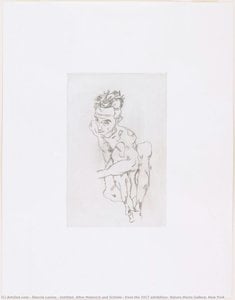
Explore Joseph Beuys' 'Actresses,' a poignant graphite drawing capturing two figures in movement. This preparatory sketch reveals his expressive style and explores themes of performance & humanity.

Beuys (1921-1986): artista tedesco, pioniere di Fluxus che fonde arte, politica e umanesimo. Esplora la sua 'Scultura Sociale' – feltro, grasso e concetti rivoluzionari.

L'opera d'arte visualizzata in questa pagina è protetta dalle leggi sul diritto d'autore, il che significa che non possiamo legalmente creare o vendere una riproduzione identica. Tale protezione è garantita da accordi internazionali quali la Convenzione di Berna e dalle leggi nazionali, incluse quelle stabilite da Legge sul copyright degli Stati Uniti - Titolo 17. Tutti i diritti riservati. Le immagini presenti su questo sito sono protette da copyright e non possono essere riprodotte o utilizzate senza l'autorizzazione scritta di WahooArt.com o dei rispettivi proprietari del copyright.

Questo metodo è pienamente conforme alle normative sul diritto d'autore poiché non prevede la copia o la duplicazione dell'opera protetta. Si tratta invece di una rielaborazione creativa: un nuovo dipinto che trae ispirazione dall'originale, senza tuttavia esserne identico.

Giclée / Stampe d'arte

Stampa giclée o su tela di qualità museale, con produzione rapida e diverse opzioni di finitura. ( Ordina la riproduzione dipinta a mano Passa all'immagine digitale)

Corner sample of the P118B picture frame: moulded polystyrene, 5 cm wide and 3 cm thick
P118B €10
Corner sample of the P118H picture frame: moulded polystyrene, 5 cm wide and 3 cm thick
P118H €10
Corner sample of the P118W picture frame: moulded polystyrene, 5 cm wide and 3 cm thick
P118W €10
Corner sample of the P438Z picture frame: moulded polystyrene, 5.5 cm wide and 3.5 cm thick
P438Z €10
Corner sample of the P508JH picture frame: moulded polystyrene, 7 cm wide and 3.5 cm thick
P508JH €12
Corner sample of the P508YH picture frame: moulded polystyrene, 7 cm wide and 3.5 cm thick
P508YH €12
Corner sample of the P805H picture frame: moulded polystyrene, 5 cm wide and 3.5 cm thick
P805H €10
Corner sample of the P805Z picture frame: moulded polystyrene, 5 cm wide and 3.5 cm thick
P805Z €10
Corner sample of the P919BZ picture frame: moulded polystyrene, 7 cm wide and 3.5 cm thick
P919BZ €10
Corner sample of the P919G picture frame: moulded polystyrene, 7 cm wide and 3.5 cm thick
P919G €10
Corner sample of the P919XJ picture frame: moulded polystyrene, 7 cm wide and 3.5 cm thick
P919XJ €10
Corner sample of the P959ZH picture frame: moulded polystyrene, 5 cm wide and 3 cm thick
P959ZH €10
Corner sample of the P968JZ picture frame: moulded polystyrene, 6 cm wide and 4 cm thick
P968JZ €12
Corner sample of the W106C picture frame: solid wood, 5 cm wide and 3 cm thick
W106C €8
Corner sample of the W218G picture frame: solid wood, 5 cm wide and 3 cm thick
W218G €10
Corner sample of the W218JH picture frame: solid wood, 5 cm wide and 3 cm thick
W218JH €8
Corner sample of the W218Y picture frame: solid wood, 5 cm wide and 3 cm thick
W218Y €10
Corner sample of the W307PJ picture frame: solid wood, 6 cm wide and 3 cm thick
W307PJ €10
Corner sample of the W316G picture frame: solid wood, 6 cm wide and 3 cm thick
W316G €10
Corner sample of the W316PJ picture frame: solid wood, 6 cm wide and 3 cm thick
W316PJ €8
Corner sample of the W316Y picture frame: solid wood, 6 cm wide and 3 cm thick
W316Y €10
Corner sample of the W398PJ picture frame: solid wood, 5 cm wide and 3 cm thick
W398PJ €8
Corner sample of the W4111J picture frame: solid wood, 6.5 cm wide and 3.5 cm thick
W4111J €10
Corner sample of the W500HY picture frame: solid wood, 7 cm wide and 5 cm thick
W500HY €15
Corner sample of the W500JH picture frame: solid wood, 7 cm wide and 5 cm thick
W500JH €15
Corner sample of the W692G picture frame: solid wood, 8 cm wide and 4 cm thick
W692G €12
Corner sample of the W849H picture frame: solid wood, 5 cm wide and 3 cm thick
W849H €8
Corner sample of the W940BG picture frame: solid wood, 7.5 cm wide and 4.5 cm thick
W940BG €15
Corner sample of the W953PJ picture frame: solid wood, 6 cm wide and 3.5 cm thick
W953PJ €8

Standard
personalizzato
CM
INCH

Scegli tra le nostre dimensioni predefinite, che rispettano le proporzioni originali dell'opera d'arte.

larghezza
altezza

È possibile inserire dimensioni personalizzate per adattare l'opera a una cornice o a uno spazio specifico. Se la dimensione selezionata non corrisponde alle proporzioni dell'immagine originale, procederemo al ritaglio dell'opera o all'estensione dell'immagine con un bordo specchiato o a tinta unita. Un mockup digitale ti verrà inviato per approvazione prima dell'inizio della produzione.
Si prega di notare che l'anteprima a schermo non riflette il ritaglio o l'estensione effettivi. Solo il mockup mostrerà accuratamente la composizione finale.
Sebbene siano disponibili dimensioni personalizzate, si raccomanda di selezionare una dimensione dall'elenco predefinito per preservare le proporzioni originali.

Consegna in tutto il mondo () in 2 settimane invece delle normali 4/5 settimane. (10 Ottobre)

Spedizione espressa gratuita in tutto il mondo
Tela in lino di alta qualità
Assicurazione completa sulla spedizione
Garanzia di rimborso dei dazi doganali
Garanzia di perfetta fedeltà cromatica
Politica di reso entro 100 giorni (solo per difetti di fabbricazione)
Garanzia di rimborso al 100%
Sconto per acquisti multipli

Prezzo totale

€ 59

Actresses

Giclée / Stampe d'arte

Dimensioni della riproduzione

-

Prezzo totale

€ 59

Dettagli rapidi

  • Artist: Joseph Beuys
  • Year: 1958
  • Dimensions: 21 x 29 cm
  • Movement: Neo-Dada
  • Medium: Graphite/Charcoal
  • Notable elements: Loose lines, gestural
  • Title: Actresses

Quiz d'arte

Per ogni domanda è presente una sola risposta corretta.

Domanda 1:
What artistic movement is most closely associated with Joseph Beuys’s work ‘Actresses’?
Domanda 2:
The drawing utilizes loose, sketchy lines. What does this technique primarily convey about the artwork?
Domanda 3:
What is the predominant color palette used in ‘Actresses’?
Domanda 4:
According to the description, what is a notable feature of the background in ‘Actresses’?
Domanda 5:
In what year was ‘Actresses’ created by Joseph Beuys?

The Weight of Performance: Joseph Beuys’s “Actresses”

Joseph Beuys's "Actresses," rendered in 1958 on a deceptively simple pale beige background, isn’t merely a sketch; it’s a distilled essence of performance, vulnerability, and the potent symbolism inherent within the human form. This preparatory drawing, a glimpse into the mind of one of the 20th century's most radical artists, immediately draws the viewer in with its loose, gestural lines – a deliberate rejection of rigid representation in favor of capturing a fleeting moment of embodied expression. The two figures, presented in profile and seemingly caught mid-movement, possess an immediate theatricality, hinting at dancers, performers, or perhaps even the silent drama of everyday life. Beuys wasn’t interested in replicating reality; he sought to translate feeling onto paper, imbuing his subjects with a palpable sense of energy and contained emotion.

Composition and Technique: A Study in Movement

The composition is strikingly asymmetrical, defying traditional notions of balance. The figures aren’t centered within the frame, instead occupying distinct points that create a dynamic imbalance—a visual representation of movement itself. Vertical lines, subtly introduced from the top edge, provide an anchor and structure to this otherwise fluid arrangement, preventing the drawing from dissolving into pure abstraction. Beuys's technique is characterized by a masterful use of hatching and cross-hatching, skillfully employed to build volume and shadow without resorting to precise shading. The loose, sketchy lines, rendered with charcoal or graphite, contribute significantly to the overall sense of spontaneity and immediacy—as if the artist were capturing a fleeting impression rather than meticulously crafting a finished image. Notice how he uses varying line weights to emphasize certain areas, drawing attention to the contours of the figures’ limbs and torsos.

Color Palette and Symbolism: Earthy Echoes

The muted color palette—dominated by earthy browns, ochres, and subtle touches of purple—reinforces the drawing's emotional depth. The beige background acts as a neutral canvas, allowing the figures to command attention without distraction. The small area of mauve on one figure introduces an element of mystery or perhaps even melancholy, hinting at hidden emotions beneath the surface. Beyond mere color choices, Beuys’s use of earth tones speaks to a deep connection with nature and the primal roots of human experience. Considering his later work focused heavily on social sculpture and the integration of art into everyday life, this grounding in natural materials and forms is profoundly significant. The elongated figures themselves can be interpreted as symbols of theatricality—a deliberate exaggeration that highlights the performative aspect of existence.

Historical Context and Artistic Influence

“Actresses” was created during a period of immense social and political upheaval in post-war Germany, a time when artists were grappling with questions of identity, purpose, and the role of art in society. Beuys’s work reflects this broader context, aligning with the burgeoning Expressionist movement and foreshadowing the rise of Fluxus and other avant-garde artistic practices. The drawing's emphasis on gesture and emotion anticipates the performance art that would become increasingly prominent in the latter half of the 20th century. Furthermore, it shares affinities with Surrealism, particularly in its exploration of the subconscious and its use of symbolic imagery. It’s worth noting that Beuys himself was deeply influenced by Carl Linnaeus's *Systema Naturae*, a book he rescued from a Nazi book burning—an event that profoundly shaped his artistic philosophy and his belief in art as a tool for social transformation. The drawing, therefore, can be seen as a meditation on the fragility of existence and the enduring power of human connection.

This preparatory sketch offers a rare glimpse into the creative process of one of the 20th century’s most visionary artists. “Actresses” is more than just a drawing; it's a testament to Beuys’s profound understanding of the human condition and his unwavering commitment to exploring the transformative potential of art.

Domande e risposte

Quanti anni aveva Giuseppe Beuys quando ha creato "Actresses" nel 1958?

Quando "Actresses" fu creata nel 1958, Giuseppe Beuys - nato nel 1921 - aveva 37 anni.

In quale movimento e in quale epoca si colloca "Actresses" di Giuseppe Beuys?

"Actresses" appartiene al movimento Neo-Dada, e il suo autore ha operato nell'epoca Età Moderna.

In che anno è stata realizzata l'opera "Actresses" di Giuseppe Beuys?

"Actresses" risale al 1958. La data colloca l'opera all'interno della carriera di Giuseppe Beuys e della sua epoca.

Come posso visualizzare "Actresses" di Giuseppe Beuys come presentazione di immagini?

Il diaporama di "Actresses" può essere visualizzato nella pagina Slideshow dell'opera.

Quanto sono armoniosi i colori di "Actresses" di Giuseppe Beuys?

L'armonia cromatica di "Actresses" è descritta come Unified Palette.

Chi ha creato "Actresses"?

"Actresses" è stata creata da Giuseppe Beuys. Le informazioni contenute in questa pagina descrivono l'opera originale di Giuseppe Beuys.

I colori di "Actresses" di Giuseppe Beuys sono vivaci o tenui?

"Actresses" di Giuseppe Beuys è caratterizzato da una saturazione di Balanced Soft e un'intensità di Vivid.


Biografia dell'artista

Joseph Beuys: Una Vita Dedicata alla Scultura Sociale

  • Nato: Krefeld, Germania (1921)
  • Morto: 1986

Joseph Beuys è stato un artista tedesco profondamente influente che ha trascenduto i confini artistici tradizionali. È riconosciuto come una figura chiave nel Fluxus, nei Happenings e nella performance art, ma il suo impatto si estende ben oltre questi movimenti. Il lavoro di Beuys comprendeva scultura, installazione, grafica, teoria e pedagogia, tutti intrecciati con concetti di umanesimo, filosofia sociale e antroposofia. Il suo contributo più significativo è stato probabilmente il concetto di "Scultura Sociale" (Soziale Plastik), una visione olistica in cui la creatività svolge un ruolo vitale nella formazione della società e della politica – un Gesamtkunstwerk che coinvolge il coinvolgimento partecipativo.

Primi Anni e Influenze

Nato in una famiglia di mercanti, i primi anni di vita di Beuys furono segnati da trasferimenti da Krefeld a Kleve. La sua istruzione rivelò un'attitudine al disegno e un'ampia gamma di interessi tra cui musica (pianoforte e violoncello), storia nordica, mitologia e scienze naturali. Un momento cruciale si verificò nel 1933 quando, da giovane ragazzo, salvò il Systema Naturae di Carl Linnaeus da un rogo di libri nazisti – un evento che risuonerebbe in seguito nella sua pratica artistica.

  • Istruzione Primaria: Frequentò la scuola elementare e secondaria a Kleve.
  • Inizi Artistici: Studiò sotto il pittore fiammingo Achilles Moortgat.
  • Servizio Militare: Si arruolò nella Luftwaffe nel 1941, vivendo un incidente aereo in Crimea nel 1944. Il successivo mito del suo salvataggio da parte delle tribù tatare, che coinvolgeva feltro e grasso, divenne centrale per la sua identità artistica e le sue scelte di materiali. Sebbene i registri contestino questo resoconto, Beuys lo abbracciò come una narrazione fondamentale.

Lo Sviluppo della Scultura Sociale

Dopo la seconda guerra mondiale, Beuys studiò all'Accademia di Belle Arti di Düsseldorf sotto Joseph Enseling e in seguito Ewald Mataré. Il suo impegno con l'antroposofia, in particolare la filosofia di Rudolf Steiner, plasmò profondamente la sua visione del mondo e il suo approccio artistico. Si allontanò dall'arte rappresentativa tradizionale verso una pratica più concettuale e orientata al processo.

  • Formazione Scolastica: Studiò scultura all'Accademia di Belle Arti di Düsseldorf.
  • Influenze Filosofiche: Profondamente influenzato dall'antroposofia di Rudolf Steiner, che enfatizzava il coinvolgimento diretto con la realtà e l'applicazione pratica.
  • Il Concetto di Scultura Sociale: Beuys immaginò l'arte come una forza trasformativa capace di rimodellare la società. Credeva che ogni individuo possedesse un potenziale creativo e potesse partecipare a questo processo, sfumando i confini tra artista, opera d'arte e pubblico. Questo concetto fu alla base delle sue numerose azioni, installazioni e iniziative pedagogiche.

Opere Chiave e Pratica Artistica

La pratica artistica di Beuys era incredibilmente diversificata, comprendendo performance art, installazioni, disegni, sculture e attivismo politico. Impiegava frequentemente materiali non convenzionali come feltro, grasso, miele, argilla, asfalto e pietre, imbuendoli di significato simbolico. Le sue performance spesso coinvolgevano azioni rituali e un diretto coinvolgimento con il pubblico.

  • Tute di Feltro: Opere iconiche in cui Beuys indossava una tuta di feltro, simbolo di calore, protezione e connessione con la natura.
  • Installazioni di Grasso: Utilizzò il grasso come simbolo di energia, guarigione e trasformazione.
  • "Mi Piace Imparare": Una performance del 1965 in cui Beuys sedeva alla finestra di una galleria con pietre e miele, invitando gli spettatori a condividere le loro conoscenze.
  • "Fulmine con Cervo nel suo Bagliore": Una scultura in bronzo che rappresenta le forze primordiali della natura e la coscienza umana.
  • Attivismo Politico: Partecipò attivamente ai dibattiti politici e fondò la Zona Internazionale Libera (FIZ) a documenta 7, uno spazio per la sperimentazione artistica e il dialogo sociale.

Eredità e Significato Storico

Joseph Beuys è ampiamente considerato uno degli artisti più importanti del XX secolo. Il suo approccio radicale all'arte ha sfidato le nozioni convenzionali di creatività e paternità, enfatizzando il ruolo della partecipazione e dell'impegno sociale. Ha ampliato la definizione di arte oltre le preoccupazioni estetiche per abbracciare dimensioni politiche, ambientali e spirituali. Il suo concetto di Scultura Sociale continua a ispirare artisti, attivisti e pensatori oggi, consolidando la sua eredità come un visionario che cercò di trasformare sia l'arte che la società.

Giuseppe Beuys

Giuseppe Beuys

1921 - 1986 , Germania

Informazioni rapide

  • Artistic Movement Or Style:
    • Fluxus
    • Happening
    • Performance Art
  • Artists Or Movements Influenced By This Artist: ['Neo-Espressionismo']
  • Artists Who Influenced This Artist:
    • Achilles Moortgat
    • Wilhelm Lehmbruck
    • Rudolf Steiner
  • Date Of Birth: 12 maggio 1921
  • Date Of Death: 1986
  • Full Name: Joseph Beuys
  • Nationality: Tedesco
  • Notable Artworks:
    • Seminar con Joseph Beuys
    • Una vera storia su J.B.
    • La figlia del re vede l'Islanda
    • Fulmine con cervo nel bagliore
    • Vasca da bagno
    • Abito di feltro
    • Sedia a forma di cervo illuminata
    • Cuori dei rivoluzionari
  • Place Of Birth: Krefeld, Germania