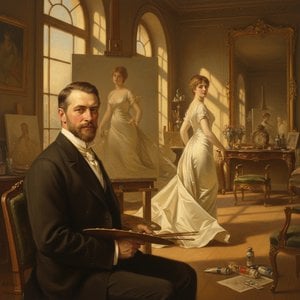
John Singer Sargent: Una Vita nell'Arte
John Singer Sargent (1856-1925) è stato un artista espatriato americano considerato il “principale pittore di ritratti della sua generazione” per la società dell’alta borghesia edoardiana. La sua opera incarna un mix unico di brillantezza tecnica, influenze impressioniste e intuizione psicologica.
Primi Anni e Formazione
Nato il 12 gennaio 1856 a Firenze, in Italia, da genitori americani Fitzwilliam e Mary Newbold Sargent, John Singer Sargent ha vissuto un’infanzia itinerante. I suoi genitori erano espatriati che si spostavano frequentemente tra Francia, Germania, Italia e Svizzera. Questo stile di vita ha favorito una vasta consapevolezza culturale, ma ha significato un'educazione meno convenzionale. Invece di una scuola formale, l'istruzione del giovane Sargent è stata incentrata sulla visita a musei e chiese in tutta Europa.
Nel 1874, Sargent iniziò a studiare con il pittore francese di ritratti Carolus-Duran a Parigi. Questa guida si è rivelata fondamentale. Duran ha enfatizzato la pittura diretta – una tecnica di applicazione del colore senza schizzi preliminari – che ha affinato la sua straordinaria abilità tecnica e la sua capacità di catturare le somiglianze con sorprendente velocità e accuratezza.
Carriera Artistica e Stile
La produzione artistica di Sargent può essere ampiamente divisa in due categorie: ritratti commissionati e studi informali. I suoi ritratti formali, spesso raffiguranti le figure ricche e influenti del suo tempo, aderivano alla tradizione del “grande stile” – enfatizzando l'eleganza, lo status e la profondità psicologica.
Tuttavia, Sargent ha anche perseguito uno stile più personale nei suoi paesaggi e studi en plein air. Questi lavori dimostrano una chiara affinità con l’impressionismo, caratterizzato da pennellate libere, vivaci tavolozze di colori e un'enfasi sulla cattura di momenti fugaci di luce e atmosfera.
Opere Principali e Realizzazioni
- Madame X (1884): Forse l’opera più famosa di Sargent, questo ritratto ha causato scandalo per la sua audace rappresentazione della socialite Virginie Amélie Avegno Gautreau.
- El Jaleo (1882): Una scena dinamica e colorata che cattura una danza flamenco spagnola, mostrando la maestria di Sargent nel movimento e nella luce.
- Carnation, Lily, Lily, Rose (1886): Un dipinto sereno ed evocativo che raffigura due giovani ragazze che accendono lanterne in un giardino inglese.
- A Dinner Table at Night (1882-83): Una composizione innovativa che cattura l'atmosfera intima di una festa da cena utilizzando la luce artificiale.
Influenze
Sargent è stato influenzato da una vasta gamma di artisti e movimenti:
- Carolus-Duran: Il suo insegnante, che gli ha instillato una tecnica di pittura diretta.
- Diego Velázquez: Sargent ammirava l'uso magistrale della luce e delle pennellate di Velázquez.
- Impressionismo: L’enfasi degli impressionisti sulla cattura di momenti fugaci e di effetti atmosferici ha avuto un profondo impatto sui suoi dipinti paesaggistici.
Significato Storico e Eredità
Inizialmente, Sargent è stato criticato per il suo approccio non convenzionale alla pittura di ritratti e per la sua volontà di sfidare le norme artistiche tradizionali. Tuttavia, all'inizio del XX secolo, si era affermato come uno degli artisti principali del suo tempo.
Negli anni ’80, c’è stata una rivalutazione significativa dell’opera di Sargent, in particolare dei suoi nudi maschili precedentemente trascurati. Questa riscoperta ha rivelato un artista più complesso e sfaccettato di quanto si pensasse in precedenza. Oggi, John Singer Sargent è celebrato per la sua virtuosismo tecnico, la sua capacità di catturare lo spirito del suo tempo e il suo contributo duraturo all’arte americana.
I suoi dipinti offrono una finestra affascinante sulla lussuria e sulle dinamiche sociali dell'epoca edoardiana, riflettendo al contempo la sua visione artistica personale. La sua opera continua a ispirare artisti e a catturare il pubblico di tutto il mondo.



 Anteprima in scala reale
 Passa alle stampe
 Condividi
 Condividi
 Dettagli
 Guida
Guida

 Scarica
 Articoli simili
 Radiografia
 Slideshow
 Statistiche


 Leggi tutto






































 L'opzione vetro è disponibile solo per dimensioni inferiori a 110 cm