Primi anni di vita, famiglia e formazione
John Constable nacque nel 1776 nel villaggio di East Bergholt, nel Suffolk. Era il secondo figlio di Golding e Ann (Watts) Constable. Suo padre era un prospero commerciante di cereali e carbone, proprietario di Flatford Mill. Questo legame indissolubile con il fiume e con il commercio locale significava che i ritmi dell'acqua e il movimento delle merci erano parte integrante della vita quotidiana della sua famiglia. Intorno al 1792, iniziò a lavorare nell'attività di famiglia, apprendendo le pratiche del commercio di cereali prima che il suo destino si spostasse verso la tela.
Il suo percorso formativo ebbe inizio seriamente quando, nel 1799, entrò come apprendista presso le Royal Academy Schools. Trascorse i suoi primi anni a studiare l'anatomia e a copiare le opere dei grandi maestri del passato, cercando di comprenderne la struttura profonda del mondo. Questa educazione formale fornì le basi fondamentali per le sue successive osservazioni del paesaggio. Si mosse così tra la vita tranquilla di un figlio di mercante e lo studio disciplinato del disegno e della pittura, trovando infine la sua strada verso Londra per dedicarsi all'arte come vera e propria vocazione.
Una vita radicata nella valle dello Stour
Il paesaggio della sua infanzia rimase una presenza costante nel suo spirito. Nato a East Bergholt, nel Regno Unito, John Constable crebbe in un luogo dove il fiume ne modellava il ritmo quotidiano. Suo padre, un mercante di cereali, deteneva l'affitto di mulini lungo il fiume Stour e possedeva terre all'interno di Dedham Vale. Questo legame con l'acqua e la terra non era una semplice questione di affari; era un attaccamento che lo avrebbe accompagnato per tutta la vita. Nutriva una profonda nostalgia per i villaggi del Suffolk, come East Bergholt, Dedham, Stratford St Mary e Langham. Persino quando si allontanò, l'immagine di un prato specifico o il modo in cui la luce accarezzava una particolare sponda dello Stour rimasero impressi nella sua memoria.
Col tempo, la vita lo trascinò verso la metropoli. Si stabilì a Bloomsbury, a Londra, trasferendosi a Keppel Street nel 1817 e successivamente in Charlotte Street nel 1822. Queste strade urbane erano l'antitesi delle rive del fiume. Durante i suoi anni, trascorse del tempo anche nello Staffordshire, nel Derbyshire, nel Lake District e a Brighton. Nonostante questi viaggi, i contorni familiari della valle dello Stour rimasero il suo punto di riferimento primario. Egli guardò il mondo attraverso la lente dei luoghi che conosceva meglio, trovando un senso di appartenenza nella terra umida e nelle nuvole mutevoli della sua regione natale.
Mecenati, Bottega e Commissioni
Il cammino verso una carriera professionale si snoda spesso attraverso le giuste presentazioni. Per John Constable, questo passaggio cruciale avvenne grazie a George Beaumont, un collezionista che gli aprì le porte verso una visione del mondo del tutto nuova. Attraverso il legame con Beaumont, l'artista scoprì le opere di Claude Lorrain, la cui influenza fu determinante nel plasmare la sua profonda comprensione del paesaggio. Questi primi contatti fornirono le fondamenta necessarie mentre John Constable si allontanava dall'attività commerciale della famiglia legata al commercio del grano per abbracciare lo studio formale dell'arte. Già nel 1805, ricevette una commissione specifica per dipingere una pala d'altare destinata alla chiesa di Brantham.
La sua posizione all'interno della comunità accademica si consolidò costantemente nel corso dei decenni. Nel 1819 fu eletto Associato della Royal Academy, un traguardo che sancì il crescente riconoscimento da parte dei suoi colleghi. Nel 1829, all'età di 52 anni, raggiunse il prestigioso grado di Royal Academician. Questa evoluzione rifletteva una carriera costruita su un'osservazione del mondo circostante, costante e silenziosa, capace di evolversi dalle piccole commissioni locali fino a conquistare un posto d'onore all'interno della struttura istituzionale dell'arte britannica.
Tecnica e Stile Artistico
John Constable non cercò mai la teatralità della bravura per affermare il proprio messaggio artistico. Al contrario, la sua ricerca si volse verso una rappresentazione autentica e veritiera del mondo naturale, un obiettivo che richiedeva un processo di osservazione lento e metodico. Spesso lavorava all'aperto, avvalendosi dello schizzo en plein air per catturare l'interazione dinamica tra la luce e il paesaggio. Per dare vita alle sue composizioni più ampie, si affidava a una solida base di schizzi a olio, disegni a grafite e studi ad acquerello; questi strati preliminari gli permettevano di sviscerare le complessità di una scena prima di impegnarsi definitivamente sulla tela finale.
La sua pennellata possiede un peso fisico quasi tangibile. Attraverso l'uso di un impasto denso, John Constable costruiva texture ricche che conferivano alla superficie un senso di movimento e vitalità pulsante. Questo approccio tattile fu fondamentale per catturare il modo specifico in cui la luce e l'atmosfera mutano attraversando un campo o un fiume. Egli definiva questo studio meticoloso di luci e ombre come il "chiaroscuro della natura", un metodo che gli permetteva di registrare le condizioni reali e mutevoli del cielo e dell'acqua, rifiutando ogni versione idealizzata o artificiale della realtà.
Opere Chiave e Capolavori
Il fiume e il cielo occupano gran parte del suo sguardo poetico. Nel 1821, John Constable realizzò The Hay Wain, una scena del fiume Stour che è diventata la sua opera più iconica e riconoscibile. Spesso l'artista prediligeva formati di grandi dimensioni per riuscire a catturare il dinamismo dell'aria e il fluire dell'acqua; questa ricerca lo portò a una serie di tele imponenti, come The Leaping Horse (1825), in cui utilizzava schizzi preparatori a olio a grandezza naturale per armonizzare la luce e la composizione. Queste maestose opere gli permettevano di definire con estrema precisione i dettagli del paesaggio prima di procedere con l'applicazione finale del colore.
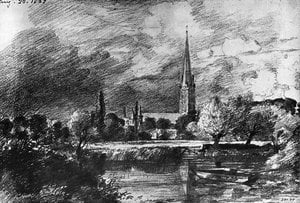
Il suo interesse per il paesaggio locale si estendeva anche alle tenute signorili e alle strutture che le abitavano. Nel 1816, dipinse Wivenhoe Park, immortalando l'armonia rurale della campagna dell'Essex. La sua attenzione si rivolse anche all'interazione tra luce e architettura, come dimostrato da Salisbury Cathedral from the Bishop's Grounds, realizzata nel 1823. La sua straordinaria capacità di tradurre l'atmosfera di un luogo specifico si rifletteva spesso nel modo in cui gestiva la densità delle nuvole e la matericità della terra.
Alcuni dei suoi dipinti hanno raggiunto valori straordinari molto tempo dopo la loro creazione. The Lock (1824) è stato venduto da Christie's nel 2012 per la cifra di £22.441.250. La sua produzione artistica comprende numerosi altri studi e opere finite, tra cui:
Circoli, Rivali e Influenze
La pennellata che ha definito la valle dello Stour è stata plasmata dalla presenza silenziosa di diversi maestri. Le opere di Claude Lorrain e Jacob van Ruisdael hanno offerto una visione che si distaccava dal gusto teatrale dell'epoca. John Constable ha inoltre attinto alle composizioni di Thomas Gainsborough e alle texture materiche di Peter Paul Rubens. Queste influenze lo hanno aiutato a superare le rigide regole accademiche della Royal Academy, spingendolo a cercare una verità autentica, racchiusa nell'umidità dell'aria e nel modo in cui la luce accarezza il corso di un fiume, piuttosto che nelle grandi scene mitologiche predilette dai suoi contemporanei.
Il suo cammino artistico si è spesso intrecciato con quello di JMW Turner. I due furono contemporanei e la loro rivalità divenne evidente durante le esposizioni alla Royal Academy. Mentre uno tendeva verso il drammatico e il sublime, l'altro rimaneva profondamente legato ai paesaggi familiari e locali della sua giovinezza. Questa dedizione all'osservazione diretta della natura finì per varcare la Manica: il suo approccio alla luce e all'atmosfera lasciò un segno indelebile sulla Scuola di Barbizon in Francia, dove i pittori cercavano un legame altrettanto profondo con il mondo naturale.
Anche i legami personali guidarono i suoi spostamenti e la sua evoluzione. Fu stretto amico di John Fisher, nipote del vescovo di Salisbury, che lo invitò a soggiornare nella zona. Queste amicizie non rappresentarono semplici contatti sociali, ma offrirono l'accesso a quei paesaggi specifici che avrebbe studiato e dipinto per anni. Attraverso queste persone e questi luoghi, la sua opera si trasformò in una testimonianza vibrante di una realtà vissuta e tangibile.
Gli ultimi anni e la morte
Gli anni successivi al matrimonio con Maria Bicknell, celebrato nel 1816, furono caratterizzati da un mutamento nel suo senso di appartenenza. Sebbene la sua opera rimanesse indissolubilmente legata al fiume e ai campi della sua giovinezza, la sua vita si spostò progressivamente verso la metropoli. Entro il 1827, John Constable si era stabilito definitivamente a Hampstead, nel cuore di Londra. Questo periodo fu tuttavia segnato dall'ombra della salute declinante di Maria; la sua morte, causata dalla tubercolosi nel 1828, lasciò un segno profondo e indelebile nell'anima dell'artista. Nonostante il dolore, egli continuò a dipingere, trovando spesso conforto nella luce mutevole dei paesaggi che aveva studiato con dedizione per decenni.
I suoi ultimi anni trascorsero a Bloomsbury, a Londra. John Constable rimase devoto alla sua arte, affrontando con resilienza le complessità della sua vita privata e le fatiche fisiche imposte dal suo mezzo espressivo. Il 31 marzo 1837, l'artista si spense a Bloomsbury. Fu sepolto nel cimitero della chiesa di St John's a Hampstead, un luogo che era diventato il suo rifugio e la sua dimora negli anni della maturità.
Eredità e Influenza
Volgendo il suo sguardo verso le comuni realtà della campagna inglese, John Constable ha trasformato radicalmente la percezione del paesaggio. Si è allontanato dalle scene teatrali e idealizzate predilette dalle accademie, scegliendo invece di trovare una dignità profonda nell'ordinario. Un carro da fieno o un semplice edificio rurale sono diventati soggetti degni di uno studio meticoloso. Questo cambiamento ha contribuito a spostare il focus della pittura dalle grandi narrazioni mitologiche verso una rappresentazione veritiera del mondo naturale. Egli ha dimostrato che un paesaggio può veicolare un profondo senso di sentimento personale, trasformando la veduta di un fiume o di un prato in un mezzo per esprimere stati d'animo interiori.
La sua abitudine di lavorare all'aperto per catturare il modo in cui la luce colpisce le nuvole e l'umidità dell'aria ha lasciato un segno indelebile in coloro che lo hanno seguito. Questo impegno verso l'osservazione diretta e lo studio degli effetti atmosferici ha anticipato molte delle preoccupazioni che avrebbero caratterizzato i pittori impressionisti. La sua influenza ha attraversato la Manica fino in Francia, dove il suo approccio ha trovato risonanza nella Scuola di Barbizon. Questi artisti condividevano il suo interesse per la pittura dal vero e per l'osservazione delle qualità immediate e mutevoli della natura. La sua opera rimane un legame con un modo di vedere che privilegia la texture reale della terra e la luce vibrante del cielo.
Dove ammirare le sue opere oggi
Seguire le tracce della sua presenza attraverso le diverse collezioni internazionali rivela come le sue visioni della campagna inglese siano state raccolte e preservate nel corso del tempo. Il Yale Center for British Art a New Haven custodisce venticinque delle sue opere, tra cui uno studio di un paesaggio vicino a Dedham risalente a circa il 1802. A Londra, l'eco del suo genio si avverte in diverse istituzioni prestigiose: il Victoria and Albert Museum conserva sei opere, come una scena di costruzione di barche vicino a Flatford Mill, mentre la National Gallery detiene cinque capolavori, tra cui la grande tela de The Hay Wain del 1821. Anche la Tate Gallery mantiene quattro opere, tra cui un dettaglio di Flatford Mill del 1817.
Il respiro della sua arte si estende oltre le Isole Britanniche, raggiungendo il continente europeo. Il Louvre di Parigi ospita due opere, tra cui una raffigurazione di Helmingham Dell. Questi pezzi testimoniano i molteplici modi in cui l'artista è riuscito a catturare la luce e l'atmosfera, dalle nubi cariche che sovrastano lo Stour ai silenziose anglicane esquine di un villaggio. Ammirare queste opere in contesti così diversi permette di osservare da vicino come John Constable utilizzasse spessi strati di colore per dare corpo e consistenza alla trama della tela.
Tra i suoi capolavori più iconici si ricordano:
- The Hay Wain (1821)
- Salisbury Cathedral from the Meadows (1831)
- The Lock (1824)
- Stonehenge at Sunset (1836)
- Wivenhoe Park, Essex (1816)


 Anteprima in scala reale
 Invia
Invia Condividi
 Dettagli opera
 Guida
Guida

 Scarica
 Simili
 Radiografia
 Slideshow
 Domande e risposte
 Statistiche
 Espandi i dettagli
 Passa alle stampe





































 L'opzione vetro è disponibile solo per dimensioni inferiori a 110 cm