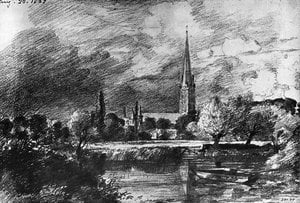
Una finestra sulla tranquillità rurale: l'Harnham Gate di John Constable
L’opera «Harnham Gate» di John Constable, dipinta tra il 1820 e il 1821, si erge come l'incarnazione quintessenziale della pittura di paesaggio romantica: una testimonianza del profondo legame dell'artista con la campagna inglese e della sua capacità di tradurre tale bellezza in una forma visiva emotivamente risonante. Situato all'interno della Young Gallery presso la Salisbury Library, questo capolavoro in olio su tela invita gli spettatori in una scena colma di una grandezza discreta e di contemplativa serenità.
- Soggetto: Il dipinto ritrae un ponte di pietra che attraversa il fiume Avon nel Wiltshire, caratterizzato da due arcate — una sul lato sinistro e l'altra sul destro — che creano un armonioso equilibrio visivo. Attorno al ponte si muovono figure impegnate in attività quotidiane: individui che passeggiano e un cavallo che attende pazientemente il comando del suo proprietario.
- Stile e Tecnica: Lo stile distintivo di Constable è caratterizzato da un senso dell'atmosfera quasi palpabile, ottenuto attraverso una meticolosa osservazione della luce e del colore. Egli impiegò pennellate fluide — tratto distintivo del Romanticismo — per catturare gli effetti fugaci della luce solare che filtra tra il fogliame, infondendo alla scena una qualità luminosa che trascende la mera rappresentazione.
- Contesto Storico: Dipinta durante gli anni formativi di Constable, «Harnham Gate» riflette il nascente interesse nel catturare il sublime — l'awe-inspiring grandezza della natura — che definì il movimento Romantico. L'opera si allinea perfettamente con la più ampia esplorazione della vita rurale da parte di Constable e con il suo desiderio di ritrarre i paesaggi come intrisi di significato spirituale.
L'eredità di Constable: plasmare la pittura di paesaggio
John Constable non si limitava a documentare una vista pittoresca; egli alterò fondamentalmente la traiettoria della pittura di paesaggio. Prima di lui, gli artisti tendevano spesso a idealizzare la natura, creando composizioni rifinite e decorative che privilegiavano la bellezza rispetto all'accuratezza. Constable rifiutò questa convenzione, dando priorità all'osservazione e alla risposta emotiva sopra ogni altra cosa. La sua influenza si estese ben oltre i suoi contemporanei, ispirando le generazioni successive di pittori ad abbracciare la spontaneità e l'espressività.
- Influenza sui Contemporanei: Artisti come George Beaumont, che sostennero la visione di Constable, riconobbero il potenziale trasformativo del ritrarre i paesaggi con incrollabile onestà, catturando sia il loro splendore che le loro imperfezioni.
- Opere Note Accanto a Harnham Gate: Si considerino opere come «Una chiatta sotto il lucchetto di Flatford» e «La cattedrale di Salisbury con i cottage», composizioni che dimostrano similmente l'impegno di Constable nel ritrarre la vita rurale con straordinaria sensibilità e dettaglio. Questi dipinti hanno cementato la sua reputazione di pioniere del paesaggio romantico.
Simbolismo e Risonanza Emotiva
«Harnham Gate» trascende la sua descrizione visiva, trasmettendo un messaggio più profondo sul rapporto dell'uomo con la natura. Il fiume tranquillo, immerso in una luce dorata, simboleggia la pace e il rinnovamento, temi centrali del pensiero romantico. Le figure che passeggiano lungo il ponte rappresentano l'interazione dell'umanità con il mondo naturale, invitando alla contemplazione e all'apprezzamento della sua bellezza duratura. L'uso magistrale del colore e della pennellata di Constable eleva il dipinto oltre la semplice rappresentazione, trasformandolo in un'esperienza di immersione emotiva.
Scoprire l'Harnham Gate: riproduzioni disponibili
Per sperimentare in prima persona il fascino avvincente di «Harnham Gate», si consideri la commissione di una riproduzione di alta qualità da WahooArt. Queste stampe, realizzate meticolosamente, catturano l'essenza e la luminosità della tela originale di Constable: un'aggiunta splendida a qualsiasi collezione d'arte o progetto di decorazione d'interni. Scopri di più sul viaggio artistico di John Constable sulla pagina di John Constable su WahooArt.
Domande e risposte
Quale posto occupa "Porta di Harnham, Salisbury" all'interno della produzione artistica di John Constable?
All'interno della produzione di John Constable, "Porta di Harnham, Salisbury" si inserisce nello stile Romantic Landscape Painting, affiancandosi ai temi di romantic vision, english landscape tradition, rural tranquility, constable’s legacy, nature observation.
In quale movimento e in quale epoca si colloca "Porta di Harnham, Salisbury" di John Constable?
In "Porta di Harnham, Salisbury" di John Constable, il movimento Romantic Landscape Painting incontra l'epoca XIX secolo.
Posso visualizzare un'anteprima di "Porta di Harnham, Salisbury" di John Constable prima di ordinare?
La pagina di Anteprima di "Porta di Harnham, Salisbury" ti permette di visualizzare l'anteprima dell'opera prima dell'ordine.



 Anteprima in scala reale
 Ordina la riproduzione dipinta a mano
 Condividi
 Condividi
 Dettagli
 Guida stampabile

 Scarica
 Articoli simili
 Radiografia
 Slideshow
 Statistiche
 Leggi tutto






































 L'opzione vetro è disponibile solo per dimensioni inferiori a 110 cm