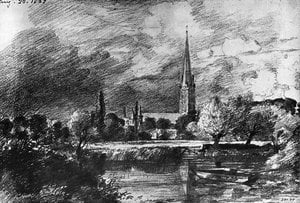
Harwich Lighthouse: A Symphony of Light and Tranquility
John Constable’s “Harwich Lighthouse” transcends mere depiction; it embodies the very spirit of Romantic landscape painting—a profound engagement with nature's beauty and an attempt to capture its fleeting moods. Painted in 1820, this monumental canvas showcases Constable’s mastery of atmospheric perspective and his unwavering dedication to portraying the sublime.
Subject Matter and Composition
The scene unfolds along the Suffolk coast, dominated by the imposing Harwich Lighthouse—a beacon of maritime history—rising against a turbulent sky. Beneath its watchful gaze stretches the tranquil expanse of the estuary, dotted with sailboats navigating the choppy waters. Constable meticulously observed the interplay between light and shadow, skillfully rendering the textures of the lighthouse’s stone façade and the ripples on the surface of the sea.
Style and Technique: Constable's Romantic Vision
Constable firmly established himself as a champion of the Romantic movement, rejecting Neoclassical formalism in favor of expressive brushstrokes and vibrant color palettes. His technique—characterized by loose, impasto layering—allowed him to convey the dynamism of the natural world with remarkable immediacy. The artist’s meticulous attention to detail—evident in the depiction of individual blades of grass and reflections on the water—served not merely to record reality but to infuse it with emotion.
Historical Context: The Sublime Landscape
“Harwich Lighthouse” emerged during a period of significant artistic innovation, fueled by philosophical debates about humanity’s relationship with nature. Edmund Burke's influential treatise “A Philosophical Enquiry into the Origin and Nature of Taste,” championed the concept of the sublime—experiences that inspire awe and terror simultaneously—inspiring artists like Constable to explore themes of grandeur, vulnerability, and spiritual contemplation. The painting reflects the Romantic fascination with capturing the overwhelming power of natural forces while simultaneously appreciating their aesthetic qualities.
Symbolism and Emotional Impact
Beyond its visual splendor, “Harwich Lighthouse” carries symbolic weight. The lighthouse represents resilience, guidance, and steadfastness—qualities admired in both the physical landscape and human character. Constable’s masterful use of color—particularly the muted blues and greys of the sky—creates a mood of melancholy beauty, inviting viewers to contemplate the passage of time and the enduring presence of nature. It's a painting that speaks to the soul, capturing not just what is seen but what is felt.
- Artist: John Constable
- Year Painted: 1820
- Size: 32 x 50 cm
- Medium: Oil on Canvas
- Location: Tate Britain
A stunning reproduction of this iconic artwork will bring the serenity and grandeur of Constable’s vision into any interior space.
Domande e risposte
A quale emozione è associata "Faro di Harwich"?
"Faro di Harwich" di John Constable trasmette un tono emotivo Calma e serenità.
Quale tecnica è stata utilizzata per "Faro di Harwich" di John Constable?
John Constable ha utilizzato la tecnica del Acrilico su tela per "Faro di Harwich". La tecnica definisce la natura materica dell'opera originale.
"Faro di Harwich" di John Constable si trova nel paese d'origine dell'artista?
Sì - l'opera è conservata nel paese d'origine dell'artista. Il paese di nascita di John Constable è Regno Unito, mentre il museo che custodisce l'originale di "Faro di Harwich" si trova in Regno Unito.



 Anteprima in scala reale
 Passa alle stampe
 Condividi
 Condividi
 Dettagli
 Guida stampabile

 Scarica
 Articoli simili
 Radiografia
 Slideshow
 Statistiche


 Leggi tutto






































 L'opzione vetro è disponibile solo per dimensioni inferiori a 110 cm