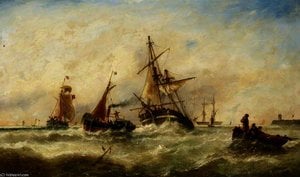
John Callow: Un Maestro della Luce e dell'Ombra Inglese
Nato a Londra nel 1822, John Callow emerse come una figura di rilievo nella pittura ad acquerello britannica del XIX secolo. La sua opera si distingue non solo per la maestria tecnica – sebbene innegabilmente impressionante – ma per la profonda capacità di catturare l'atmosfera e il carattere dei paesaggi inglesi, dell'architettura e, in particolare, delle scene religiose. A differenza di molti suoi contemporanei che prediligevano ampie vedute o soggetti storici, l'attenzione di Callow rimase saldamente radicata nella bellezza quotidiana della sua terra natia, offrendo agli spettatori intimi scorci di un mondo in rapido cambiamento.
Il percorso artistico di Callow ebbe inizio sotto la tutela del fratello, William Callow, anch'egli un eccellente acquerellista. Questa influenza precoce plasmò indubbiamente il suo approccio al colore e alla composizione. Ottenne rapidamente riconoscimento nei circoli artistici consolidati, diventando membro sia della New Watercolour Society che della Old Watercolour Society, prestigiose organizzazioni che fungevano da vitali piattaforme per la presentazione di talenti emergenti. La sua carriera prese una svolta significativa quando fu nominato professore junior di disegno al Royal Military College di Addiscombe, dal 1855 al 1861. Questa posizione gli fornì una preziosa esperienza nell'osservare e documentare il mondo naturale, competenze che avrebbero successivamente informato la sua pratica artistica.
Tuttavia, la vita di Callow non fu priva di complessità. Le cronache dell'epoca dipingono l'immagine di un artista spesso descritto come "bileggiante" e "saturnino", privo di calore o grazia sociale. H.M. Vibart, scrivendo nel 1894, notò la sua scarsa popolarità tra i cadetti del Royal Military College, attribuendola alla sua personalità riservata. Nonostante questo temperamento talvolta difficile, Callow continuò a evolversi come artista, diventando infine maestro di paesaggio presso la Royal Military Academy di Woolwich e, successivamente, professore al Queen’s College di Londra. La sua produzione artistica in questi anni tardi rifletté una comprensione sempre più profonda della luce, dell'ombra e della consistenza materica, elementi che sarebbero diventati i tratti distintivi del suo stile unico.
Il Linguaggio dell'Acquerello: Tecnica e Stile
La maestria di Callow risiedeva nella sua abile manipolazione delle tecniche ad acquerello. Egli evitava le campiture pesanti e sfumate favorite da alcuni suoi contemporanei, preferendo invece un approccio delicato e stratificato. La sua pennellata era spesso libera ed espressiva, capace di creare un senso di immediatezza e di catturare gli effetti fugaci della luce e dell'atmosfera. Ciò è particolarmente evidente in opere come “Coast Scene With Shipping”, dove utilizza tocchi impressionistici per trasmettere il movimento del mare e la qualità nebbiosa dei paesaggi costieri. Le tonalità calde – ocra, gialli e bruni – contribuiscono al senso generale di calore e tranquillità del dipinto.
Il suo uso del colore era altrettanto sfumato. Callow raramente si affidava a tinte brillanti e sature; preferiva invece tonalità smorzate e gradazioni sottili, creando un effetto armonioso e atmosferico. Utilizzava con perizia la tecnica del pennello asciutto per costruire texture e suggerire la rugosità dei muri in pietra o il fogliame degli alberi. Inoltre, le sue composizioni erano accuratamente costruite, impiegando spesso disposizioni asimmetriche e linee guida per condurre l'occhio dello spettatore attraverso la scena.
Soggetti e Temi: Paesaggio, Religione e l'Inghilterra Vittoriana
Sebbene Callow eccellesse nella rappresentazione dei paesaggi – in particolare quelli dell'Inghilterra rurale – è forse più noto per i suoi acquerelli di scene religiose. Queste opere sono caratterizzate da una quieta riverenza e da una profonda comprensione delle narrazioni bibliche. Egli evitava rappresentazioni drammatiche o apertamente emotive, concentrandosi invece sul catturare la serena bellezza degli ambienti e le espressioni contemplative delle figure ritratte.
I suoi soggetti riflettevano spesso il contesto sociale e culturale dell'Inghilterra vittoriana. Dipingeva frequentemente scene di vita rurale – contadini al lavoro nei campi, villaggi che si radunano nel cimitero della chiesa – offrendo uno sguardo sulle vite della gente comune. I suoi dipinti catturavano anche la bellezza architettonica delle chiese e delle cattedrali inglesi, mostrando i loro dettagli intricati e la loro imponente grandezza. Queste opere forniscono preziose intuizioni sulle credenze religiose e sulle sensibilità artistiche dell'epoca.
Eredità e Influenza
L'opera di John Callow potrebbe non aver raggiunto una fama capillare durante la sua vita, ma è da allora stata riconosciuta per la sua bellezza silenziosa e la sua elegante sobrietà. I suoi dipinti offrono una prospettiva unica sui paesaggi inglesi e sulla vita religiosa, catturando l'essenza di un'epoca passata. La sua meticolosa attenzione al dettaglio, combinata con l'uso magistrale delle tecniche ad acquerello, assicura che il suo lavoro continui a risuonare negli spettatori di oggi.
Ulteriori ricerche sulla vita e sulle opere di Callow possono essere trovate attraverso risorse come il sito web WahooArt (https://www.WahooArt.com/en/artists/john-callow-en/) e Wikipedia (https://en.wikipedia.org/wiki/John_Callow). L'articolo di Wikipedia fornisce un resoconto biografico dettagliato, mentre il sito WahooArt offre l'accesso a diversi dei suoi dipinti e informazioni correlate.



 Anteprima in scala reale
 Passa alle stampe
 Condividi
 Condividi
 Dettagli
 Guida stampabile

 Scarica
 Articoli simili
 Radiografia
 Slideshow
 Statistiche
 Leggi tutto