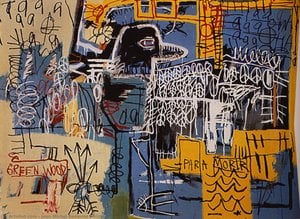
Pece nera e piume (1982) di Jean Michel Basquiat, riproduzione di un dipinto a olio realizzato a mano da un maestro d'arte
Anteprima in scala reale Anteprima in AR Passa alle stampe Passa all'immagine digitale Invia
Dettagli opera Guida Aggiungi ai preferiti Scarica Simili Radiografia Slideshow Domande e risposte Scarica presentazione Statistiche

Pece nera e piume Riproduzione di un dipinto a olio dipinto a mano

Dimensioni
274.0 x 233.0 cm

Quest'opera del 1982 di Jean Michel Basquiat mostra una figura centrale tra elementi simbolici. Scopri oggi l'energia di questo capolavoro.

Jean-Michel Basquiat: artista simbolo dell'Espressionismo Astratto e della cultura hip hop, noto per opere iconiche come "Boy and Dog" e "Untitled (Skull)", esplora temi sociali profondi.

L'opera d'arte visualizzata in questa pagina è protetta dalle leggi sul diritto d'autore, il che significa che non possiamo legalmente creare o vendere una riproduzione identica. Tale protezione è garantita da accordi internazionali quali la Convenzione di Berna e dalle leggi nazionali, incluse quelle stabilite da Legge sul copyright degli Stati Uniti - Titolo 17. Tutti i diritti riservati. Le immagini presenti su questo sito sono protette da copyright e non possono essere riprodotte o utilizzate senza l'autorizzazione scritta di WahooArt.com o dei rispettivi proprietari del copyright.

Come alternativa rispettosa e legale, offriamo opere d'arte personalizzate e dipinte a mano, ispirate all'originale. I nostri artisti esperti e professionisti studiano con cura lo stile, l'atmosfera e l'essenza artistica dell'opera originale per creare un pezzo nuovo e unico che evochi la stessa emozione, pur rimanendo una creazione originale a pieno titolo.

Questo metodo è pienamente conforme alle normative sul diritto d'autore poiché non prevede la copia o la duplicazione dell'opera protetta. Si tratta invece di una rielaborazione creativa: un nuovo dipinto che trae ispirazione dall'originale, senza tuttavia esserne identico.

Riproduzione a olio fatta a mano

Olio su tela dipinto a mano nelle tue dimensioni e con la tua cornice, realizzato su ordinazione dai nostri artisti. ( Passa alle stampe Passa all'immagine digitale)


Corner sample of the P118B picture frame: polistirene stampato, 5 cm wide and 3 cm thick
P118B €10
Corner sample of the P118H picture frame: polistirene stampato, 5 cm wide and 3 cm thick
P118H €10
Corner sample of the P118W picture frame: polistirene stampato, 5 cm wide and 3 cm thick
P118W €10
Corner sample of the P438Z picture frame: polistirene stampato, 5.5 cm wide and 3.5 cm thick
P438Z €10
Corner sample of the P508JH picture frame: polistirene stampato, 7 cm wide and 3.5 cm thick
P508JH €12
Corner sample of the P508YH picture frame: polistirene stampato, 7 cm wide and 3.5 cm thick
P508YH €12
Corner sample of the P805H picture frame: polistirene stampato, 5 cm wide and 3.5 cm thick
P805H €10
Corner sample of the P805Z picture frame: polistirene stampato, 5 cm wide and 3.5 cm thick
P805Z €10
Corner sample of the P919BZ picture frame: polistirene stampato, 7 cm wide and 3.5 cm thick
P919BZ €10
Corner sample of the P919G picture frame: polistirene stampato, 7 cm wide and 3.5 cm thick
P919G €10
Corner sample of the P919XJ picture frame: polistirene stampato, 7 cm wide and 3.5 cm thick
P919XJ €10
Corner sample of the P959ZH picture frame: polistirene stampato, 5 cm wide and 3 cm thick
P959ZH €10
Corner sample of the P968JZ picture frame: polistirene stampato, 6 cm wide and 4 cm thick
P968JZ €12
Corner sample of the W106C picture frame: legno massello, 5 cm wide and 3 cm thick
W106C €8
Corner sample of the W218G picture frame: legno massello, 5 cm wide and 3 cm thick
W218G €10
Corner sample of the W218JH picture frame: legno massello, 5 cm wide and 3 cm thick
W218JH €8
Corner sample of the W218Y picture frame: legno massello, 5 cm wide and 3 cm thick
W218Y €10
Corner sample of the W307PJ picture frame: legno massello, 6 cm wide and 3 cm thick
W307PJ €10
Corner sample of the W316G picture frame: legno massello, 6 cm wide and 3 cm thick
W316G €10
Corner sample of the W316PJ picture frame: legno massello, 6 cm wide and 3 cm thick
W316PJ €8
Corner sample of the W316Y picture frame: legno massello, 6 cm wide and 3 cm thick
W316Y €10
Corner sample of the W398PJ picture frame: legno massello, 5 cm wide and 3 cm thick
W398PJ €8
Corner sample of the W4111J picture frame: legno massello, 6.5 cm wide and 3.5 cm thick
W4111J €10
Corner sample of the W500HY picture frame: legno massello, 7 cm wide and 5 cm thick
W500HY €15
Corner sample of the W500JH picture frame: legno massello, 7 cm wide and 5 cm thick
W500JH €15
Corner sample of the W692G picture frame: legno massello, 8 cm wide and 4 cm thick
W692G €12
Corner sample of the W849H picture frame: legno massello, 5 cm wide and 3 cm thick
W849H €8
Corner sample of the W940BG picture frame: legno massello, 7.5 cm wide and 4.5 cm thick
W940BG €15
Corner sample of the W953PJ picture frame: legno massello, 6 cm wide and 3.5 cm thick
W953PJ €8

Formato standard
su misura
CM
INCH

Scegli tra le nostre dimensioni predefinite, che rispettano le proporzioni originali dell'opera d'arte.

larghezza
altezza

Inserisci la larghezza e l'altezza desiderate, per adattarle alla tua cornice o alla tua parete. Trattandosi di un'opera dipinta a mano, in caso di dimensioni con un formato differente, l'artista può estendere leggermente il dipinto oltre i bordi dell'immagine o ritagliare una piccola parte — la scelta spetta a te. Ti invieremo un mockup digitale da approvare prima che la realizzazione abbia inizio. L'immagine mostrata in questa pagina non rappresenta il risultato finale — solo il mockup lo fa.

Esempi di ciò che può essere modificato: sostituire il volto con una foto del cliente; aggiungere un animale domestico (ad esempio, sostituire un gatto con un cane); inserire un messaggio nascosto nello sfondo; cambiare il paesaggio o gli elementi dello sfondo.
Dopo l'ordine, il team di WahooArt.com contatterà il cliente via e-mail per ricevere le istruzioni e fornirà un'anteprima del mockup

Consegna in tutto il mondo () in 3/4 settimane anziché nelle normali 5 settimane. (16 Novembre). Nessun compromesso sulla qualità.

Spedizione espressa gratuita in tutto il mondo
Tela in lino di alta qualità
Assicurazione completa sulla spedizione
Garanzia di rimborso dei dazi doganali
Garanzia di fedeltà cromatica assoluta
Politica di reso entro 100 giorni (solo per difetti di fabbricazione)
Garanzia di rimborso al 100%
Offerta per acquisti multipli

Prezzo totale

€ 242

Pece nera e piume

Tecnica di riproduzione

Dimensioni riproduzione

-

Prezzo finale calcolato

€ 242

Informazioni rapide

  • Year: 1982
  • Artist: Jean Michel Basquiat
  • Dimensions: 274 x 233 cm
  • Artistic style: Neo-Espressionismo

Quiz d'arte

Per ogni domanda è presente una sola risposta corretta.

Domanda 1:
In che anno è stato creato il dipinto 'Black Tar and Feathers'?
Domanda 2:
Quali sono le dimensioni dell'opera?
Domanda 3:
In base alla descrizione della foto, dove si trova la figura dell'animale nel dipinto?
Domanda 4:
Qual è il titolo dell'opera?
Domanda 5:
Qual è il mezzo della fotografia descritta?

Identificazione dell'Opera e dell'Artista

La tela conosciuta come "Pece nera e piume" emerge dal 1982, un anno in cui Jean Michel Basquiat stava affermando una presenza singolare nel mondo dell'arte. Quest'opera esiste in un dialogo silenzioso con un altro pezzo, Untitled (Yellow Tar and Feathers), agendo come sua compagna. Insieme, occupano uno spazio di intento condiviso, rispecchiandosi l'una nell'altra attraverso la loro stessa esistenza come entità accoppiate.

Jean Michel Basquiat infonde un'energia cruda e immediata in questo pezzo. Il dipinto porta il peso del suo titolo attraverso la sua presenza fisica. È un'opera che esige attenzione attraverso la sua specifica realtà materiale. In questo momento, l'arte esiste come espressione diretta della mano dell'artista e del suo ambiente circostante.

Composizione Visiva e Soggetto

Un uomo si erge proprio al centro della tela, con le braccia allargate come se cercasse di raggiungere qualcosa di invisibile. È una figura maschile nera in piedi, un elemento che domina lo spazio circostante pur essendo simultaneamente circondato da un insieme caotico di immagini simboliche. Alla sua sinistra, varie figure emergono dallo sfondo, mentre altre occupano il lato destro della composizione. In alto, nell'angolo in alto a destra, una figura animale osserva dalla periferia. L'intera scena esiste come un mix inquieto di elementi astratti e figurativi, dove i confini tra forme e simboli sfumano l'uno nell'altro.

L'opera porta con sé una profonda narrazione di trionfo, ritraendo la vittoria della libertà sull'avversità fisica. Questa figura centrale, sebbene circondata da un turbine di segni e tratti, rimane l'ancora del pezzo. La composizione appare viva, pervasa da un senso di movimento, come se i simboli e le figure fossero colti in un momento di improvvisa ed energica disposizione. Ogni segno contribuisce a una storia più ampia di liberazione, trasformando la tela in un luogo di profonda lotta e di ultimo successo.

Opere Correlate di Jean Michel Basquiat

L'energia creativa di questo pezzo trova un compagno diretto in Untitled (Yellow Tar and Feathers). Queste due opere esistono in un dialogo condiviso, essendo state appese su pareti opposte durante la loro esposizione del 1982. Mentre una esplora una tavolozza più scura, l'altra utilizza acrilico, bastoncini a olio, pastelli e collage di carta per portare vere piume nella trama dell'opera. Esse esistono come due facce di un'unica esplorazione verso modi innovativi di sostenere una pittura.

Echi di questi temi appaiono in altre composizioni dell'epoca prolifica dell'artista. In Acque Pericolose, una tensione simile si svela attraverso la raffigurazione di una figura stante accanto a una creatura a quattro zampe. Questo accostamento visivo rispecchia il modo in cui figure e animali occupano lo spazio in quest'opera. Altri pezzi di questo periodo includono Obnoxious Liberals del 1982 e Melting Point of Ice, emerso intorno al 1984.

Domande e risposte

"Pece nera e piume" è una delle opere più celebri di Jean Michel Basquiat?

"Pece nera e piume" è classificata come Iconici.

Qual è l'uso consigliato per una stampa di "Pece nera e piume"?

L'uso suggerito per "Pece nera e piume" di Jean Michel Basquiat è Dialogo. Può essere impiegato anche per altri scopi.

In che modo i colori di "Pece nera e piume" di Jean Michel Basquiat si riflettono nel suo impatto emotivo?

"Pece nera e piume" di Jean Michel Basquiat unisce una tavolozza Toni della terra a un tono Drammatico.


Biografia dell'artista

A Brooklyn Beginning and the Rise of SAMO

Jean-Michel Basquiat emerged onto the 1980s art scene as a force of raw energy and intellectual depth, an impact that continues to resonate profoundly today. Born on December 22, 1960, in Brooklyn, New York, to Haitian and Puerto Rican parents, his upbringing was a vibrant tapestry woven with diverse cultures and languages—Spanish, English, and French filled his childhood home. This multilingual environment, coupled with his mother’s dedication to artistic pursuits—she enrolled him as a Junior Member of the Brooklyn Museum at age six—laid an early foundation for his creative journey. However, Basquiat’s life wasn’t without hardship; a car accident at eight years old resulted in a splenectomy and a period of convalescence during which he became captivated by a copy of *Gray’s Anatomy* gifted by his mother. The book’s detailed illustrations would later profoundly influence the anatomical imagery that frequently appears in his work, becoming a haunting motif throughout his career. Before achieving recognition as a painter, Basquiat made his mark under the pseudonym SAMO, alongside friend Al Diaz. Together they covered Lower Manhattan with cryptic, poetic graffiti—epigrams challenging societal norms and questioning established power structures. These weren’t mere tags; they were thought-provoking statements that captured the spirit of the burgeoning hip-hop culture and the gritty energy of 1970s New York City. SAMO was more than just street art; it was a philosophical intervention, a visual disruption designed to provoke dialogue and challenge perceptions.

Neo-Expressionism and Artistic Innovation

By the early 1980s, Basquiat transitioned from graffiti to canvas, rapidly gaining recognition within the New York art world. His paintings weren’t easily categorized; they were a unique synthesis of influences ranging from Abstract Expressionism to tribal art, comic books, and historical painting. He became a central figure in the Neo-Expressionist movement, though he resisted easy labeling. His canvases are characterized by a frenetic energy—a chaotic layering of text, symbols, figures, and colors. Basquiat’s technique was deliberately raw and improvisational, often incorporating collage, scratching, and dripping paint. He wasn’t interested in technical perfection; instead, he sought to convey emotion, ideas, and social commentary with visceral immediacy. Recurring motifs—crowns, skulls, anatomical diagrams, words crossed out or repeated—became his signature visual language. The crown, perhaps his most iconic symbol, has been interpreted as a representation of aspiration, self-mythologization, and the complexities of Black identity in America. His work frequently grappled with themes of wealth versus poverty, integration versus segregation, and the internal struggles of the individual within society. Paintings like *Piscine versus the Best Hotels (or various loin)* exemplify his ability to juxtapose seemingly disparate elements—luxury and deprivation, beauty and decay—creating a powerful commentary on social inequalities. Basquiat’s art was not merely about what he depicted but how he depicted it, creating a visual language that was both deeply personal and universally resonant.

Collaboration, Recognition, and a Tragic End

Basquiat’s ascent was meteoric. In 1982, at just twenty-one years old, he participated in Documenta in Kassel, Germany, becoming the youngest artist ever to exhibit there. The following year, he showcased his work at the Whitney Biennial, further solidifying his position within the art establishment. A pivotal moment came with his friendship and artistic collaboration with Andy Warhol. The two artists pushed each other creatively, exploring themes of consumerism, celebrity, and mass media in a series of collaborative paintings. While their partnership was complex and sometimes fraught with tension, it undoubtedly elevated both artists’ profiles. Despite achieving international acclaim and financial success, Basquiat struggled with the pressures of fame and his ongoing battle with drug addiction. His work became increasingly introspective and darker as he grappled with personal demons and societal injustices. Tragically, Jean-Michel Basquiat died on August 12, 1988, at the age of twenty-seven from a heroin overdose. His untimely death cemented his status as a tragic figure—a brilliant artist whose life was cut short by addiction and the complexities of navigating the art world.

Legacy and Lasting Influence

In the years since his death, Basquiat’s reputation has only grown. His work continues to captivate audiences with its raw energy, intellectual depth, and unflinching social commentary. In 2017, *Untitled* (1982), a powerful depiction of a skull, sold for $110.5 million at Sotheby's, setting a new record for any U.S. artist at auction—a testament to the enduring value and cultural significance of his work. Basquiat’s influence can be seen in the work of countless contemporary artists, particularly those who explore themes of identity, race, and social justice. He paved the way for a more diverse and inclusive art world, challenging traditional notions of artistic expression and representation. His ability to seamlessly blend high and low culture—graffiti, fine art, music, poetry—continues to inspire artists today. He remains a potent symbol of creative rebellion, intellectual curiosity, and the power of art to challenge the status quo. His paintings are not merely aesthetic objects; they are windows into a complex mind grappling with profound questions about humanity, society, and the search for meaning in a chaotic world.
Jean Michel Basquiat

Jean Michel Basquiat

1960 - 1988 , Stati Uniti d'America

Dettagli rapidi

  • Artistic Movement Or Style: Neo-Expressionismo
  • Artists Who Influenced This Artist:
    • Abstract Expressionisti
    • Arte tribale
  • Date Of Birth: Dicembre 22, 1960
  • Date Of Death: Agosto 12, 1988
  • Full Name: Jean-Michel Basquiat
  • Nationality: American
  • Notable Artworks:
    • Untitled (Skull)
    • Piscine vs. Hotels
    • Portrait Derelict
  • Place Of Birth: Brooklyn, USA
Esplora le opere d'arte organizzate per temi, stili e caratteristiche.