CONSULENZA D'ARTE GRATUITA

x
Acquista stampa Acquista stampaAcquista download Acquista download InviaInvia
DetailsDetails Aggiungi ai preferiti Aggiungi ai preferiti ScaricaScarica SimiliSimili X-RayX-Ray SlideshowSlideshow

Turkish

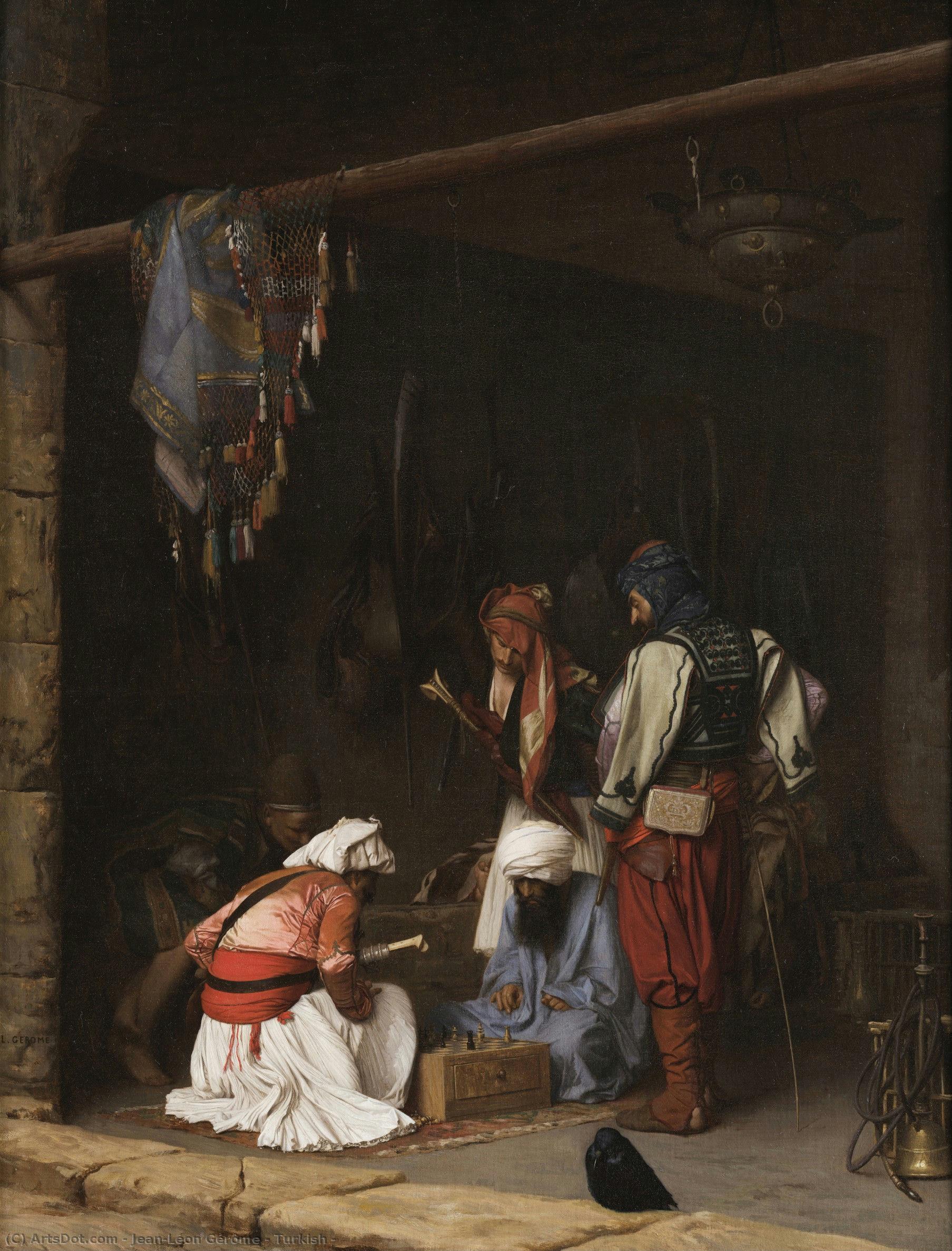
Jean-Léon Gérôme's "Turkish" vividly depicts Ottoman mercenaries playing chess amidst a bustling scene. A masterpiece of academic realism, it captures the allure and drama of the Near East.

Scopri Jean-Léon Gérôme (1824-1904), maestro francese del XIX secolo! Dettagli meticolosi, scene storiche e orientaliste, narrazioni drammatiche. Influenzò Sargent & Cassatt.

Riproduzione a olio fatta a mano

Olio su tela dipinto a mano nelle tue dimensioni e con la tua cornice, realizzato su ordinazione dai nostri artisti.


P118B $10
P118H $10
P118W $10
P438Z $10
P508JH $12
P508YH $12
P805H $10
P805Z $10
P919BZ $10
P919G $10
P919XJ $10
P959ZH $10
P968JZ $12
W106C $8
W218G $10
W218JH $8
W218Y $10
W307PJ $10
W316G $10
W316PJ $8
W316Y $10
W398PJ $8
W4111J $10
W500HY $15
W500JH $15
W692G $12
W849H $8
W940BG $15
W953PJ $8

Standard
custom
CM
INCH

Scegli tra le nostre dimensioni predefinite, che rispettano le proporzioni originali dell'opera d'arte.

larghezza
altezza

È possibile inserire dimensioni personalizzate per adattare l'opera a una cornice o a uno spazio specifico. Se la dimensione selezionata non corrisponde alle proporzioni dell'immagine originale, provvederemo a ritagliare l'opera o a estendere il dipinto con elementi aggiuntivi dipinti a mano. Un mockup digitale ti sarà inviato per approvazione prima dell'inizio della produzione.
Si prega di notare che l'anteprima a schermo non riflette il ritaglio o l'estensione effettivi. Solo il mockup mostrerà accuratamente la composizione finale.
Sebbene siano disponibili dimensioni personalizzate, consigliamo di selezionare una dimensione dall'elenco predefinito per preservare le proporzioni originali.

Esempi di modifiche possibili: sostituire il volto con una foto del cliente; aggiungere un animale domestico (ad esempio, sostituire un gatto con un cane); inserire un messaggio nascosto sullo sfondo; modificare il paesaggio o gli elementi dello sfondo.
Dopo l'ordine, il team di WahooArt.com invierà un'e-mail al cliente per le istruzioni e fornirà un'anteprima del mockup

Consegna in tutto il mondo () in 3/4 settimane anziché nelle normali 5 settimane. (1 Luglio). Nessun compromesso sulla qualità.

why_choose_icon
Spedizione espressa gratuita in tutto il mondo
why_choose_icon
Tela in lino di alta qualità
why_choose_icon
Assicurazione completa sulla spedizione
why_choose_icon
Garanzia di rimborso dei dazi doganali
why_choose_icon
Garanzia di fedeltà cromatica
why_choose_icon
Politica di reso entro 60 giorni (solo per difetti)
why_choose_icon
Garanzia di rimborso al 100%
why_choose_icon
Sconto per acquisti multipli

Prezzo totale

-

reproduction

Turkish

Tecnica di riproduzione

Dimensioni riproduzione

-

Prezzo totale finale

-

Informazioni rapide

  • Dimensions: 94 x 79 cm
  • Movement: Academicism
  • Year: 1873
  • Artist: Jean-Léon Gérôme
  • Influences:
    • Delaroche
    • Gleyre
  • Medium: Oil on canvas
  • Title: Turkish

Descrizione dell'opera

A Window into the Ottoman World: Jean-Léon Gérôme’s “Turkish”

Jean-Léon Gérôme's "Turkish," painted in 1873, isn’t merely a depiction of a scene; it’s a meticulously crafted portal into the vibrant and often turbulent world of 19th-century Ottoman society. Born in Vesoul, France, Gérôme dedicated his career to capturing exotic locales and historical narratives with an unparalleled level of detail – a pursuit fueled by his extensive travels throughout the Middle East and North Africa. This particular work, housed within the collection of WahooArt.com, offers a rare glimpse into the lives of “bashi-bazouk,” irregular Ottoman troops known for their mercenary status and often shadowy reputation. The painting immediately draws the eye with its rich palette – deep browns, ochres, and blues dominate, evoking the heat and dust of the region while simultaneously conveying a sense of quiet contemplation.

A Study in Realism and Narrative Detail

Gérôme’s mastery lies not just in his technical skill but also in his ability to weave historical context into compelling narratives. The scene unfolds within what appears to be an old-fashioned marketplace or caravanserai, a space brimming with everyday life – merchants haggling, children playing, and soldiers engaged in a game of chess. The figures are rendered with remarkable realism; each face bears the marks of time and experience, reflecting Gérôme’s commitment to portraying subjects authentically. Notice the intricate details: the folds of the men's robes, the worn leather of their boots, the glint of sunlight on the polished brass of a chessboard. This level of detail wasn’t simply decorative; it was crucial to conveying the atmosphere and social dynamics of the scene. Gérôme meticulously researched his subjects, often relying on firsthand accounts and sketches from travelers like Emile Augier and August Bartholdi during their expeditions to Egypt and Turkey.

Symbolism and the Shadowy World of the Bashi-Bazouk

The “bashi-bazouk” themselves are central to the painting’s narrative complexity. These irregular troops, often recruited from diverse ethnic backgrounds, were a fascinating paradox – simultaneously feared for their brutality and valued for their military prowess. Their presence in Ottoman armies was a constant source of instability, yet they played a significant role in shaping the empire's history. Gérôme doesn’t shy away from portraying their somewhat rough appearance; however, he also imbues them with a sense of humanity through their engagement in a seemingly mundane activity – chess. The game itself can be interpreted as a symbol of strategic thinking and social interaction within this often chaotic environment. The scene subtly hints at the underlying tensions and power dynamics that defined Ottoman society during this period.

Historical Context and Artistic Influence

“Turkish” was painted in 1873, a time when European artists were increasingly fascinated by the Orient – a fascination often fueled by colonial ambitions and romanticized notions of exoticism. Gérôme’s work exemplifies this trend, offering a meticulously rendered depiction of a world largely unknown to most Europeans at the time. The painting's influence can be seen in later works by Richard Caton Woodville, who similarly depicted scenes of Ottoman military life with dramatic realism. Furthermore, it resonates with earlier depictions of similar subjects, such as “Pollice Verso,” which explored the gesture of approval or disapproval used by spectators at gladiatorial contests – a visual metaphor for power and control. The painting’s enduring appeal lies in its ability to transport viewers to another time and place, inviting them to contemplate the complexities of Ottoman society and the artistry of Jean-Léon Gérôme.
  • Size: 94 x 79 cm
  • Date: 1873
  • Artist: Jean-Léon Gérôme
  • Birth Year: 1824
  • Death Year: 1904
  • Birth City: Vesoul
  • Birth Country: France

For a high-quality reproduction of “Turkish,” please visit WahooArt.com.

Opere simili

Ivan Konstantinovich Aivazovskij - Scena Orientale
Ivan Konstantinovich Aivazovskij
Scena Orientale
count mihaly von zichy - Ballo in Onore di Alessandro II
count mihaly von zichy
Ballo in Onore di Alessandro II
Jean Leon Gerome Ferris - Bashi-Bazouk
Jean Leon Gerome Ferris
Bashi-Bazouk
Ivan Konstantinovich Aivazovskij - Oriental scene
Ivan Konstantinovich Aivazovskij
Oriental scene
David Roberts - Oriental Scene
David Roberts
Oriental Scene
aleksei danilovich kivshenko - A Scene From The Russian-turkish War
aleksei danilovich kivshenko
A Scene From The Russian-turkish War

Biografia dell'artista

La Vita e l'Opera di Jean-Léon Gérôme

Jean-Léon Gérôme, nato a Vesoul, Alta Saona, l’11 maggio 1824 e deceduto a Parigi il 10 gennaio 1904, è stato un pittore e scultore francese di grande rilievo. La sua carriera si distinse per una combinazione di virtuosismo tecnico, attenzione al dettaglio e una predilezione per soggetti storici, orientalisti e di genere che catturarono l'immaginario del pubblico dell’epoca.

Formazione e Primi Successi

Gérôme ricevette le prime istruzioni in disegno dal pittore locale Claude-Basile Cariage. Nel 1840 si trasferì a Parigi per studiare sotto la guida di Paul Delaroche, un rinomato pittore storico, frequentando successivamente l'École des Beaux-Arts. Il suo dipinto "Il combattimento dei galli" (1846) gli valse una medaglia di terzo grado al Salon di Parigi del 1847, segnando l’inizio della sua carriera e consacrandolo come esponente di spicco del movimento neo-greco.

Soggetto Orientalisti e Successo Popolare

Gérôme divenne celebre per le sue rappresentazioni dettagliate e spesso sensazionalistiche dell'Oriente. Opere come "Donne dell’harem che nutrono piccioni in un cortile" e "Preghiera pubblica nella moschea di Amr, Il Cairo" riscossero un enorme successo popolare grazie alla loro capacità di evocare atmosfere esotiche e di rappresentare scene di vita quotidiana orientale con una precisione quasi fotografica. Questi dipinti, tuttavia, furono anche criticati per la loro visione stereotipata e talvolta orientalista dell'Oriente.

  • Donne dell’harem che nutrono piccioni in un cortile: Un capolavoro orientalista che cattura l'intimità della vita domestica orientale.
  • Preghiera pubblica nella moschea di Amr, Il Cairo: Una rappresentazione imponente della devozione islamica e dell’architettura religiosa.

Influenza Artistica e Didattica

Gérôme fu un insegnante influente, avendo tra i suoi allievi artisti di fama come Thomas Eakins, John Singer Sargent e Mary Cassatt. La sua abilità nel trasmettere le tecniche pittoriche tradizionali contribuì a formare una generazione di artisti americani ed europei. La sua influenza si estese anche al campo della scultura, dove sperimentò con la policromia su marmo, riprendendo temi dell'antichità classica.

Eredità e Significato Storico

L’eredità di Jean-Léon Gérôme risiede nella sua capacità di combinare virtuosismo tecnico, narrazione drammatica e una profonda comprensione della storia e delle culture che rappresentava. Sebbene le sue opere siano state oggetto di critiche per la loro visione a volte idealizzata o stereotipata del mondo, il suo impatto sull'arte del XIX secolo è innegabile. Gérôme rimane un esempio significativo dell’arte accademica francese, capace di affascinare e ispirare ancora oggi.

  • Influenza su Sargent: John Singer Sargent, uno dei suoi allievi più celebri, ne ereditò l'attenzione al dettaglio e la maestria tecnica.
  • Neo-Grecismo: Gérôme fu un esponente chiave del movimento neo-greco, che si ispirava all’arte dell’antica Grecia.

Per esplorare ulteriormente le opere di Jean-Léon Gérôme, si consiglia di visitare:

  • Il Musée d'Art et d'Histoire de Cholet (Francia)
  • WahooArt per ammirare la sua opera "Snake Charmer"
Jean-Léon Gérôme

Jean-Léon Gérôme

1824 - 1904 , Francia

Dati rapidi

  • Artisti Influenti: ['Paul Delaroche']
  • Artisti Influenzati:
    • Thomas Eakins
    • John Singer Sargent
    • Mary Cassatt
  • Data Di Nascita: 11 maggio 1824
  • Luogo Di Nascita: Vesoul, Francia
  • Movimento Artistico: Neo-Grec, Orientalismo
  • Nazionalità: Francese
  • Nome Completo: Jean-Léon Gérôme
  • Opere Notevoli:
    • Il combattimento dei galli
    • Donne dell'harem che nutrono piccioni
    • Preghiera Pubblica nella Moschea di Amr
Esplora opere d'arte organizzate per temi, stili e caratteristiche.