CONSULENZA D'ARTE GRATUITA

x
Acquista stampa Acquista stampaAcquista download Acquista download InviaInvia
DetailsDetails Aggiungi ai preferiti Aggiungi ai preferiti ScaricaScarica SimiliSimili X-RayX-Ray SlideshowSlideshow

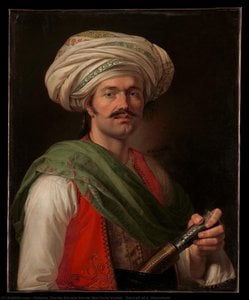
Bashi-Bazouk

Explore Jean Leon Gerome Ferris’ ‘Bashi-Bazouk,’ a 1868 oil painting of a Turkish warrior. Realistic style, dramatic lighting & rich details – a captivating historical piece.

Explore Jean Leon Gerome Ferris’s monumental ‘Pageant of a Nation’ series and iconic American art! Witness his masterful depiction of historical events with meticulous detail and emotive expression – a cornerstone of 19th-century artistic achievement.

Riproduzione a olio fatta a mano

Olio su tela dipinto a mano nelle tue dimensioni e con la tua cornice, realizzato su ordinazione dai nostri artisti.

P118B $10
P118H $10
P118W $10
P438Z $10
P508JH $12
P508YH $12
P805H $10
P805Z $10
P919BZ $10
P919G $10
P919XJ $10
P959ZH $10
P968JZ $12
W106C $8
W218G $10
W218JH $8
W218Y $10
W307PJ $10
W316G $10
W316PJ $8
W316Y $10
W398PJ $8
W4111J $10
W500HY $15
W500JH $15
W692G $12
W849H $8
W940BG $15
W953PJ $8

Standard
custom
CM
INCH

Scegli tra le nostre dimensioni predefinite, che rispettano le proporzioni originali dell'opera d'arte.

larghezza
altezza

È possibile inserire dimensioni personalizzate per adattare l'opera a una cornice o a uno spazio specifico. Se la dimensione selezionata non corrisponde alle proporzioni dell'immagine originale, provvederemo a ritagliare l'opera o a estendere il dipinto con elementi aggiuntivi dipinti a mano. Un mockup digitale ti sarà inviato per approvazione prima dell'inizio della produzione.
Si prega di notare che l'anteprima a schermo non riflette il ritaglio o l'estensione effettivi. Solo il mockup mostrerà accuratamente la composizione finale.
Sebbene siano disponibili dimensioni personalizzate, consigliamo di selezionare una dimensione dall'elenco predefinito per preservare le proporzioni originali.

Esempi di modifiche possibili: sostituire il volto con una foto del cliente; aggiungere un animale domestico (ad esempio, sostituire un gatto con un cane); inserire un messaggio nascosto sullo sfondo; modificare il paesaggio o gli elementi dello sfondo.
Dopo l'ordine, il team di WahooArt.com invierà un'e-mail al cliente per le istruzioni e fornirà un'anteprima del mockup

Consegna in tutto il mondo () in 3/4 settimane anziché nelle normali 5 settimane. (1 Luglio). Nessun compromesso sulla qualità.

why_choose_icon
Spedizione espressa gratuita in tutto il mondo
why_choose_icon
Tela in lino di alta qualità
why_choose_icon
Assicurazione completa sulla spedizione
why_choose_icon
Garanzia di rimborso dei dazi doganali
why_choose_icon
Garanzia di fedeltà cromatica
why_choose_icon
Politica di reso entro 60 giorni (solo per difetti)
why_choose_icon
Garanzia di rimborso al 100%
why_choose_icon
Sconto per acquisti multipli

Prezzo totale

-

reproduction

Bashi-Bazouk

Tecnica di riproduzione

Dimensioni riproduzione

-

Prezzo totale finale

-

Informazioni rapide

  • Notable elements or techniques: Dramatic lighting; Detailed rendering
  • Medium: Oil on Canvas
  • Location: Metropolitan Museum of Art
  • Artistic style: Realistic Style
  • Movement: Academic Painting
  • Title: Bashi-Bazouk
  • Year: 1868

Quiz d'arte

Per ogni domanda è presente una sola risposta corretta.

Domanda 1:
What is Jean Leon Gerome Ferris’s most famous artistic project?
Domanda 2:
According to the description, what is Gérôme’s Turkish title for ‘Bashi-Bazouk’?
Domanda 3:
What artistic style is characterized by accurate representation and detailed observation, as exemplified in ‘Bashi-Bazouk’?
Domanda 4:
Where was ‘Bashi-Bazouk’ originally created?
Domanda 5:
Who acquired ‘Bashi-Bazouk’ shortly after its completion?

Descrizione dell'opera

A Portrait of Ottoman Dignity: Jean Leon Gerome’s “Bashi-Bazouk”

The painting "Bashi-Bazouk," executed by Jean Leon Gerome Ferris in 1868, transcends mere visual representation; it embodies a meticulously crafted distillation of artistic ambition and historical observation. Created during the burgeoning Victorian era, this portrait delves into the complexities of cultural identity and commemorates John Taylor Johnston’s acquisition by the Metropolitan Museum. Gerome's masterful depiction captures not just an individual's likeness but also a palpable sense of his status within Ottoman society—a warrior adorned with symbols of authority and power.
  • Subject Matter & Context: Gerome skillfully portrays a man dressed in attire indicative of Middle Eastern or North African heritage, specifically referencing the “headless” moniker attributed to Ottoman auxiliary soldiers known for their ferocious dedication to plunder. The artist’s deliberate choice of costume—a headdress and weaponry—underscores this symbolic representation of military prowess and aristocratic bearing.
  • Style & Technique: Gerome adheres to academic realism, mirroring the artistic conventions prevalent in 19th-century portraiture. His technique employs oil painting, characterized by smooth blending of colors and visible brushstrokes that contribute to a rich textural surface. Careful shading and contrast enhance depth perception, grounding the figure within a darkened background.
  • Color Palette & Composition: The artwork’s color scheme—dominated by browns, greens, and golds—creates a warm yet subdued atmosphere. Lines delineate facial contours and clothing folds, establishing form and volume while guiding the viewer's gaze toward the central subject.
  • Symbolism & Emotional Impact: Beyond its formal elements, “Bashi-Bazouk” speaks to broader themes of cultural heritage and aristocratic dignity. Gerome’s meticulous attention to detail aims to evoke contemplation on identity and commemorates Johnston’s contribution to art history.
Dimensions: 26 x 22 cm This reproduction offers an exceptional opportunity to appreciate Gerome's artistic prowess and immerse oneself in the spirit of Victorian grandeur. Its nuanced portrayal of Ottoman culture—combined with a masterful technique—makes it ideal for discerning collectors and interior designers seeking pieces that resonate with both aesthetic beauty and historical significance.

Opere simili

John Singer Sargent - Las Meninas (dopo Velazquez)
John Singer Sargent
Las Meninas (dopo Velazquez)
Jean Leon Gerome Ferris - Bashi-Bazouk
Jean Leon Gerome Ferris
Bashi-Bazouk
Alexandre Cabanel - Portrait of Victor Massé
Alexandre Cabanel
Portrait of Victor Massé
Jean-Léon Gérôme - Carpet Merchant in Cairo
Jean-Léon Gérôme
Carpet Merchant in Cairo
lourens alma tadema - Self Portrait
lourens alma tadema
Self Portrait
Jean-Léon Gérôme - Grande Piscine de Brousse
Jean-Léon Gérôme
Grande Piscine de Brousse
Jean Leon Gerome Ferris - Their country's call
Jean Leon Gerome Ferris
Their country's call
Jean Leon Gerome Ferris - Washington's birthday
Jean Leon Gerome Ferris
Washington's birthday

Biografia dell'artista

Jean Leon Gerome Ferris: Chronicler of American History

Jean Leon Gerome Ferris (1863 – 1930) stands as a singular figure in the landscape of American art history, primarily recognized for his monumental ‘Pageant of a Nation’ series—the largest undertaking of its kind by a single artist during the late nineteenth century. Born in Philadelphia, Pennsylvania, Ferris inherited an artistic lineage steeped in tradition and nurtured by exceptional mentors; his father, Stephen James Ferris, was himself a portrait painter deeply influenced by Jean-Léon Gérôme, and equally captivated by Mariano Fortuny—a connection that profoundly shaped Ferris’s artistic trajectory. Growing up amidst this vibrant artistic milieu instilled within him an unwavering dedication to the craft, culminating in formal training at the Pennsylvania Academy of Fine Arts and subsequent studies at the Académie Julian under William-Adolphe Bouguereau. Crucially, he encountered his namesake, Jean Léon Gérôme, whose artistic vision served as a cornerstone for Ferris’s ambition to depict pivotal moments from American history. As Ferris eloquently stated, “axiom was that one would paint best that with which he is most familiar,” and he chose to immerse himself in the narrative of his nation—a decision that yielded extraordinary results.

Early Influences & Training: The Seeds of Artistic Mastery

Ferris’s artistic education began under his father's tutelage, alongside the mentorship of his uncles Edward Moran and Thomas Moran – both celebrated marine painters who championed a distinctly Romantic aesthetic. This formative period solidified his understanding of artistic technique and instilled in him an appreciation for dramatic composition and emotive expression. The Moran brothers’ dedication to capturing the grandeur of the sea instilled in Ferris a profound respect for scale and perspective—elements that would become hallmarks of his monumental canvases. Furthermore, Stephen James Ferris's unwavering belief in meticulous observation and anatomical accuracy provided Ferris with a foundational skillset upon which he would build his artistic endeavors.

Orientalist Beginnings: Exploring Exotic Landscapes

Like many artists of his era, Ferris initially pursued subjects rooted in Orientalism—a fashionable movement characterized by exotic landscapes and idealized portrayals of Eastern cultures. His painting “Feeding the Ibis” (1882), valued at $600, exemplifies this stylistic inclination and demonstrates a masterful command of color and detail. The influence of Mariano Fortuny’s use of chiaroscuro – dramatic contrasts between light and dark – is palpable in Ferris's compositions, contributing to an atmosphere of mystery and grandeur that aligns perfectly with the Romantic sensibility prevalent during his formative years. This early exploration of Orientalism honed Ferris’s ability to convey emotion through visual cues—a skill he would later apply to his ambitious historical narratives.

The Pageant of a Nation: A Monumental Vision

Ferris’s magnum opus commenced in 1895 with the audacious undertaking to chronicle American history through a series of seventy-eight paintings—a project that would define his artistic legacy and solidify his reputation as one of America's foremost chroniclers of history. Driven by an unwavering belief in the power of visual storytelling, he meticulously researched historical events and translated them into emotionally resonant depictions. Recognizing the limitations inherent in presenting individual scenes in isolation, Ferris strategically partnered with publishing companies to secure reproduction rights—a decision that propelled his work into widespread circulation. Lithographic prints, postcards, calendars, and trade cards featuring images from “The Pageant of a Nation” became ubiquitous advertising mediums throughout the 1920s and beyond, ensuring that Ferris’s artistic vision reached audiences far beyond the confines of the art world. Remarkably, laminated reproductions of his paintings were still available for sale as late as 1984—a testament to the enduring appeal of his historical narratives and their ability to transcend time.

A Style Defined by Detail & Emotion

Ferris’s artistic style was characterized by a meticulous attention to detail, informed by Bouguereau's academic tradition yet infused with an expressive dynamism reminiscent of Gérôme’s influence. His paintings captured idealized representations of significant historical events—scenes from the American Revolution, Civil War battles, and explorations of the West—presented with unwavering realism and imbued with moral grandeur. Among his most celebrated pieces are “Napoleon in Egypt,” “Dancer with an Apple,” and “Painting Breathes Life into Sculpture”—each demonstrating Ferris’s exceptional skill in conveying emotion through gesture and posture, alongside masterful rendering of texture and light. The careful layering of pigments—a technique championed by Gérôme—created surfaces rich in tonal variation and luminescence, enhancing the dramatic impact of his compositions.

Legacy & Historical Significance: An Enduring Influence

Jean Leon Gerome Ferris's contribution to American art history extends beyond his artistic achievements; he established a precedent for ambitious historical painting projects—a genre that had largely faded from prominence by the early twentieth century. His ‘Pageant of a Nation’ series remains an unparalleled achievement in visual storytelling, capturing the spirit of its time and cementing Ferris’s place as one of America's foremost chroniclers of history. Furthermore, his success in securing commercial reproductions ensured that his artwork continued to inspire generations of artists and viewers alike—a remarkable feat considering the challenges faced by artists attempting to disseminate their vision during a period marked by shifting artistic tastes and evolving cultural priorities. His enduring legacy serves as an inspiration for contemporary artists striving to engage audiences with narratives rooted in history and imbued with emotional resonance.
Jean Leon Gerome Ferris

Jean Leon Gerome Ferris

1863 - 1930 , Stati Uniti d'America

Dati rapidi

  • Artistic Movement Or Style: Academic Painting
  • Artists Who Influenced This Artist:
    • Jean Leon Gerome
    • Mariano Fortuny
  • Date Of Birth: Philadelphia, USA (1863)
  • Date Of Death: 1930
  • Full Name: Jean Leon Gerome Ferris
  • Nationality: American
  • Notable Artworks:
    • Napoleon in Egypt
    • Dancer with an Apple
    • Painting Breathes Life into Sculpture
  • Place Of Birth: Philadelphia, Pennsylvania
Esplora opere d'arte organizzate per temi, stili e caratteristiche.