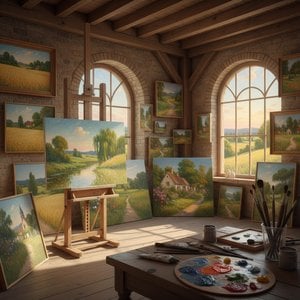
A Symphony in Ochre and Shadow – Exploring Jean Baptiste Camille Corot’s Landscape Vision
Jean Baptiste Camille Corot (1796–1875), considered one of the foremost landscape painters of his era, possessed an unparalleled ability to capture the subtle beauty of the natural world. His canvases rarely depict grand vistas or dramatic storms; instead, they offer intimate glimpses into rural landscapes bathed in soft light and imbued with a profound sense of tranquility.
The Style: Impressionistic Reverence for Atmosphere
Corot’s style aligns closely with the burgeoning Impressionist movement, though he resisted categorization. Unlike Monet or Renoir who prioritized capturing fleeting moments of color and luminosity, Corot focused on conveying the overall mood and atmosphere of a scene—a technique known as atmospherism. He achieved this remarkable feat through meticulous observation and layering of thin glazes of oil paint, allowing light to penetrate through the pigment and creating an ethereal effect.
Technique: Delicate Brushstrokes and Layered Glazing
Corot’s distinctive brushwork is characterized by loose, horizontal strokes that mimic the contours of hillsides and valleys. These strokes are blended seamlessly together, blurring edges and merging colors to create a hazy, dreamlike quality. Crucially, he employed a technique of glazing—applying thin layers of translucent paint over previously applied layers—to build up tonal depth and luminosity gradually. This painstaking process resulted in surfaces that shimmer with reflected light and evoke the feeling of observing a landscape through mist.
Historical Context: Romanticism’s Legacy
Corot emerged from the Romantic movement, which championed emotion and imagination as responses to the grandeur of nature. However, he distanced himself from the overtly sentimental tendencies of his contemporaries, prioritizing accuracy and restraint. His landscapes reflect a deep appreciation for the sublime—the awe-inspiring beauty that simultaneously inspires terror and reverence—but tempered with a humanist sensibility rooted in observation and empathy.
Symbolism: Quiet Contemplation and Connection to Earth
While Corot’s paintings rarely bear explicit symbolic references, they resonate with themes of solitude, contemplation, and communion with the natural world. The muted palette – dominated by ochre yellows, earthy browns, and subtle greens – reflects the colors of the soil and vegetation, grounding the viewer in a tangible connection to the landscape. These canvases invite viewers to pause, breathe deeply, and experience the restorative power of unspoiled beauty—a timeless message that continues to captivate audiences today.
Emotional Impact: A Balm for the Soul
Ultimately, Corot’s landscapes transcend mere representation; they evoke a profound emotional response. They convey a sense of peace, serenity, and melancholy – capturing the fleeting moments of beauty found in everyday rural life. Viewing his paintings is akin to stepping into a tranquil sanctuary where worries fade away and one finds solace in the enduring presence of nature.



 Anteprima in scala reale
 Ordina la riproduzione dipinta a mano
 Condividi
 Condividi
 Dettagli

 Scarica
 Articoli simili
 Radiografia
 Slideshow
 Statistiche

 Leggi tutto






































 L'opzione vetro è disponibile solo per dimensioni inferiori a 110 cm