Anteprima in scala reale Prova in AR Ordina la riproduzione dipinta a mano Passa all'immagine digitale Condividi
Dettagli Guida Aggiungi ai preferiti Scarica Articoli simili Radiografia Slideshow Statistiche

The Pool

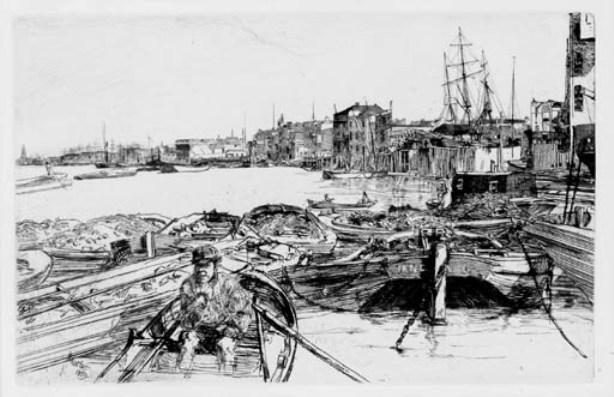
James Abbott McNeill Whistler's "The Pool" (1859) is an evocative etching capturing London’s bustling harbor scene with masterful detail and tonal harmony – a key work of the Aesthetic movement.

Esplora James Abbott McNeill Whistler (1834-1903): artista americano del Tonalismo e dell'Estetismo. Scopri 'La madre di Whistler', notturni, ritratti e la sua filosofia 'l'arte per l'arte'.

Giclée / Stampe d'arte

Stampa giclée o su tela di qualità museale, con produzione rapida e diverse opzioni di finitura. ( Ordina la riproduzione dipinta a mano Passa all'immagine digitale)

P118B $10
P118H $10
P118W $10
P438Z $10
P508JH $12
P508YH $12
P805H $10
P805Z $10
P919BZ $10
P919G $10
P919XJ $10
P959ZH $10
P968JZ $12
W106C $8
W218G $10
W218JH $8
W218Y $10
W307PJ $10
W316G $10
W316PJ $8
W316Y $10
W398PJ $8
W4111J $10
W500HY $15
W500JH $15
W692G $12
W849H $8
W940BG $15
W953PJ $8

Standard
personalizzato
CM
INCH

Scegli tra le nostre dimensioni predefinite, che rispettano le proporzioni originali dell'opera d'arte.

larghezza
altezza

È possibile inserire dimensioni personalizzate per adattare l'opera a una cornice o a uno spazio specifico. Se la dimensione selezionata non corrisponde alle proporzioni dell'immagine originale, procederemo al ritaglio dell'opera o all'estensione dell'immagine con un bordo specchiato o a tinta unita. Un mockup digitale ti verrà inviato per approvazione prima dell'inizio della produzione.
Si prega di notare che l'anteprima a schermo non riflette il ritaglio o l'estensione effettivi. Solo il mockup mostrerà accuratamente la composizione finale.
Sebbene siano disponibili dimensioni personalizzate, si raccomanda di selezionare una dimensione dall'elenco predefinito per preservare le proporzioni originali.

Consegna in tutto il mondo () in 2 settimane invece delle normali 4/5 settimane. (21 Settembre)

why_choose_icon
Spedizione espressa gratuita in tutto il mondo
why_choose_icon
Tela in lino di alta qualità
why_choose_icon
Assicurazione completa sulla spedizione
why_choose_icon
Garanzia di rimborso dei dazi doganali
why_choose_icon
Garanzia di perfetta fedeltà cromatica
why_choose_icon
Politica di reso entro 100 giorni (solo per difetti di fabbricazione)
why_choose_icon
Garanzia di rimborso al 100%
why_choose_icon
Sconto per acquisti multipli

Prezzo totale

$ 68

reproduction

The Pool

Giclée / Stampe d'arte

Dimensioni della riproduzione

-

Prezzo totale

$ 68

Dettagli rapidi

  • Location: Metropolitan Museum
  • Title: The Pool
  • Medium: Etching & Drypoint
  • Subject or theme: Harbor scene, working man
  • Year: 1859
  • Artist: Whistler
  • Dimensions: 13.7 x 21 cm

Quiz d'arte

Per ogni domanda è presente una sola risposta corretta.

Domanda 1:
What artistic movement is James Abbott McNeill Whistler most closely associated with?
Domanda 2:
The etching 'The Pool' primarily depicts:
Domanda 3:
What technique is predominantly used to create the tonal variations in 'The Pool'?
Domanda 4:
Which of the following best describes Whistler's artistic philosophy as expressed in works like 'The Pool'?
Domanda 5:
The image description mentions Whistler's influence from which artistic tradition?

A Glimpse of Urban Life: Whistler’s “The Pool”

James Abbott McNeill Whistler's "The Pool," painted in 1859, isn’t merely a depiction of London’s bustling waterfront; it’s a carefully constructed meditation on light, atmosphere, and the quiet drama of everyday existence. This etching, rendered with exquisite precision and a masterful understanding of tonal variation, offers a poignant snapshot of a rapidly changing city – a world poised between tradition and modernity. Whistler, a key figure in the Aesthetic movement, deliberately rejected the prevailing Victorian obsession with narrative and moralizing, advocating instead for “art for art’s sake,” prioritizing beauty and sensory experience above all else. "The Pool" embodies this philosophy perfectly, inviting the viewer to lose themselves within its subtle harmonies and understated elegance.

The scene itself is deceptively simple: a solitary figure seated in a small boat, seemingly lost in contemplation amidst the chaotic activity of the Pool – the area around London Bridge where ships docked and goods were exchanged. Yet, Whistler elevates this commonplace subject to something profoundly evocative. He strips away extraneous detail, focusing instead on the interplay of light and shadow, the textures of water and brick, and the subtle gestures of his central figure. The composition is carefully balanced, drawing the eye towards the distant buildings while anchoring it in the foreground with the boatman’s presence.

Technique and Style: Mastering the Etching Process

Whistler's skill as an etcher is immediately apparent. He employs a meticulous technique of hatching and cross-hatching – parallel lines and intersecting patterns – to build up tones and create a remarkable sense of depth and texture. The work isn’t rendered with bold, dramatic contrasts; instead, Whistler utilizes a delicate gradated scale of grays, mimicking the subtle shifts in light that define the scene. This tonal control is crucial to the painting's atmospheric effect, creating an illusion of diffused light and hazy distance.

The choice of paper – heavy laid Japan tissue – further enhances the work’s quality. Its slightly textured surface provides a beautiful contrast to the smooth lines of the etching, adding another layer of visual interest. Whistler's use of drypoint, a technique that allows for greater tonal variation and subtle shading, is particularly noteworthy. This combination of techniques demonstrates his mastery of printmaking and his ability to capture the nuances of light and shadow with remarkable subtlety.

Historical Context: Whistler’s Aesthetic Vision

“The Pool” was created during a period of significant social and economic change in London. The city was undergoing rapid industrialization, transforming from a primarily mercantile center into a global financial powerhouse. Whistler's work reflects this transformation, capturing the dynamism of the waterfront while simultaneously suggesting a sense of melancholy and isolation. He wasn’t interested in documenting historical events or celebrating heroic deeds; instead, he sought to capture the essence of a particular moment in time – a fleeting glimpse of urban life.

Whistler's approach was revolutionary for his time. He challenged the conventions of academic art, rejecting the emphasis on narrative and moralizing that had dominated the artistic landscape for centuries. His Aestheticism sought to elevate visual experience above all else, prioritizing beauty, harmony, and sensory pleasure. “The Pool” exemplifies this philosophy perfectly, offering a quiet meditation on light, atmosphere, and the subtle rhythms of urban life.

Symbolic Resonance: A Portrait of Solitude

While seemingly simple, "The Pool" is rich in symbolic meaning. The solitary figure in the boat represents not just an individual but also humanity’s place within the vastness of the city and the natural world. His posture – chin resting on his hand – suggests contemplation, perhaps even a sense of detachment or melancholy. The surrounding activity—the bustling harbor filled with boats and buildings—creates a powerful contrast, highlighting the figure's isolation.

Furthermore, the muted color palette contributes to the painting’s emotional impact. The absence of bright colors reinforces the feeling of quiet contemplation and suggests a deeper, more subtle beauty. Whistler wasn’t interested in creating a visually stimulating spectacle; instead, he sought to evoke a mood – a sense of understated elegance, melancholy, and perhaps even a hint of longing. "The Pool” is not just a depiction of a scene; it's an invitation to contemplate the human condition within the context of a rapidly changing world.


Biografia dell'artista

James Abbott McNeill Whistler: Una Vita nell'Arte

Primi Anni di Vita e Influenze

  • Nato il 14 luglio 1834 a Lowell, Massachusetts, la vita giovanile di James Abbott McNeill Whistler è stata plasmata dalla carriera del suo padre come ingegnere ferroviario.
  • Traslochi frequenti gli hanno instillato adattabilità ed esposizione a ambienti diversi.
  • Ha frequentato brevemente l'Accademia Militare degli Stati Uniti a West Point, ma si è scoperto inadatto alle sue inclinazioni artistiche.
  • Un successivo incarico con la U.S. Coast and Geodetic Survey ha ritardato, ma non spento, la sua ricerca artistica.
  • I suoi anni formativi sono stati segnati da un precoce interesse per il disegno e dal desiderio di diventare un artista professionista.

Sviluppo Artistico & Inizi a Parigi

  • Whistler si è trasferito a Parigi nel 1855, un momento cruciale del suo percorso artistico.
  • Ha studiato sotto la guida di Sébastien Bouré, affinando le sue abilità nella pittura ad olio, nell'acquerello e nella stampa.
  • Le prime opere riflettevano influenze dai pittori del Realismo francese e della Scuola di Barbizon.
  • Whistler ha rapidamente sviluppato uno stile distintivo caratterizzato da armonie tonali ed effetti atmosferici.

Temi Chiave & Stile Artistico

  • Whistler ha promosso il concetto di “arte per l’arte stessa”, rifiutando narrazioni didattiche o moralizzanti a favore di considerazioni estetiche.
  • Il suo lavoro si concentrava spesso sulla cattura delle sottili sfumature di luce, colore e atmosfera.
  • Spesso impiegava palette limitate e pennellate delicate per creare atmosfere evocative.
  • Notturni, dipinti atmosferici di scene al crepuscolo, erano un elemento distintivo della sua produzione artistica.
  • Anche i ritratti erano centrali alla sua pratica, spesso enfatizzando gli arrangiamenti formali e le relazioni tonali piuttosto che la somiglianza rigorosa.

Opere Notevoli & Realizzazioni Importanti

  • La Fonderia (1861): Una vivida rappresentazione di un laboratorio di fabbro che mostrava la maestria di Whistler nella luce e nell'ombra.
  • Ritratto di Charles Lang Freer (1873): Dimostrava la sua abilità nel catturare l'essenza dei suoi soggetti attraverso sottili variazioni tonali.
  • Brown and Gold: The Gold Girl—Connie Gilchrist (1876-77): Un esempio esemplare di Tonalismo, con un uso innovativo del colore e della composizione.
  • Arrangement in Grey and Black No. 1 (Whistler’s Mother) (1871): Forse la sua opera più famosa, un'immagine iconica della maternità vittoriana e una testimonianza del suo approccio formalista.
  • Notturno in Nero e Oro – The Falling Rocket (1875): Un dipinto controverso che ha scatenato una causa per diffamazione con il critico d'arte John Ruskin, evidenziando la difesa di Whistler dell'autonomia artistica.

Influenze & Eredità

  • Whistler è stato influenzato dai stampe giapponesi (ukiyo-e), che hanno informato i suoi principi compositivi e l'enfasi sui motivi decorativi.
  • Ha anche ammirato il lavoro di pittori spagnoli come Velázquez, in particolare la loro maestria dei valori tonali.
  • La sua difesa dell’“arte per l’arte stessa” ha avuto un impatto profondo sul movimento estetico in Inghilterra e negli Stati Uniti.
  • L'influenza di Whistler si è estesa alle generazioni successive di artisti che hanno abbracciato approcci formalisti ed esplorato il potenziale espressivo del colore e della composizione.
  • Ha lasciato un segno indelebile nell’arte americana, sfidando le concezioni convenzionali dello scopo artistico e aprendo la strada al modernismo.

Significato Storico

  • La carriera di Whistler coincise con un periodo di significativi cambiamenti sociali e culturali in Europa e negli Stati Uniti.
  • Il suo lavoro sfidò le sensibilità vittoriane e contribuì a un più ampio spostamento verso l'estetismo e l'individualismo.
  • La causa per diffamazione contro Ruskin elevò il profilo di Whistler e scatenò importanti dibattiti sulla natura della critica d’arte e della libertà artistica.
  • Resta una figura fondamentale nella storia dell'arte americana, celebrata per il suo stile innovativo, la sua rigorosità intellettuale e il suo incrollabile impegno per i principi artistici.
James Abbott McNeill Whistler

James Abbott McNeill Whistler

1834 - 1903 , Stati Uniti d'America

Informazioni rapide

  • Artisti Influenti:
    • Sebastián Bouré
    • Velázquez
  • Artisti Influenzati: ['Generazioni successive di artisti']
  • Data Di Nascita: 14 luglio 1834
  • Luogo Di Nascita: Lowell, Stati Uniti d'America
  • Movimento Artistico: Tonalismo, Estetismo
  • Nazionalità: Americano
  • Nome Completo: James Abbott McNeill Whistler
  • Opere Notevoli:
    • La Fonderia
    • Ritratto di Charles Lang Freer
    • Brown and Gold: Connie Gilchrist
    • Arrangement in Grey and Black
    • Nocturne in Nero e Oro
Esplora le opere d'arte organizzate per temi, stili e caratteristiche.