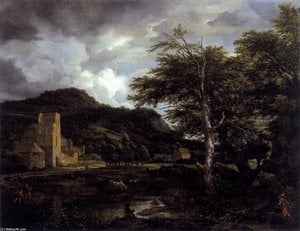
Wheat Fields (1670) by Jacob Van Ruisdael, hand-painted oil painting reproduction by a master artist
Anteprima in scala reale Anteprima in AR Passa alle stampe Passa all'immagine digitale Invia
Dettagli opera Guida Aggiungi ai preferiti Scarica Simili Radiografia Slideshow Q&A Statistiche

Wheat Fields Hand-painted oil painting reproduction

Dimensioni
100.0 x 130.0 cm

Explore the life & work of Jacob van Ruisdael, the preeminent Dutch landscape painter. Discover his technical brilliance, symbolic depth, and lasting influence on art history. Learn about collecting Ruisdael's masterpieces.

Jacob van Ruisdael (1628-1682) è stato il pittore di paesaggio più importante dell’età d’oro olandese. Ammira i suoi drammatici cieli, le serene scene rurali e le città. Influenzò gli inglesi romantici e oltre!

Riproduzione a olio fatta a mano

Olio su tela dipinto a mano nelle tue dimensioni e con la tua cornice, realizzato su ordinazione dai nostri artisti. ( Passa alle stampe Passa all'immagine digitale)

Corner sample of the P118B picture frame: polistirene stampato, 5 cm wide and 3 cm thick
P118B €10
Corner sample of the P118H picture frame: polistirene stampato, 5 cm wide and 3 cm thick
P118H €10
Corner sample of the P118W picture frame: polistirene stampato, 5 cm wide and 3 cm thick
P118W €10
Corner sample of the P438Z picture frame: polistirene stampato, 5.5 cm wide and 3.5 cm thick
P438Z €10
Corner sample of the P508JH picture frame: polistirene stampato, 7 cm wide and 3.5 cm thick
P508JH €12
Corner sample of the P508YH picture frame: polistirene stampato, 7 cm wide and 3.5 cm thick
P508YH €12
Corner sample of the P805H picture frame: polistirene stampato, 5 cm wide and 3.5 cm thick
P805H €10
Corner sample of the P805Z picture frame: polistirene stampato, 5 cm wide and 3.5 cm thick
P805Z €10
Corner sample of the P919BZ picture frame: polistirene stampato, 7 cm wide and 3.5 cm thick
P919BZ €10
Corner sample of the P919G picture frame: polistirene stampato, 7 cm wide and 3.5 cm thick
P919G €10
Corner sample of the P919XJ picture frame: polistirene stampato, 7 cm wide and 3.5 cm thick
P919XJ €10
Corner sample of the P959ZH picture frame: polistirene stampato, 5 cm wide and 3 cm thick
P959ZH €10
Corner sample of the P968JZ picture frame: polistirene stampato, 6 cm wide and 4 cm thick
P968JZ €12
Corner sample of the W106C picture frame: legno massello, 5 cm wide and 3 cm thick
W106C €8
Corner sample of the W218G picture frame: legno massello, 5 cm wide and 3 cm thick
W218G €10
Corner sample of the W218JH picture frame: legno massello, 5 cm wide and 3 cm thick
W218JH €8
Corner sample of the W218Y picture frame: legno massello, 5 cm wide and 3 cm thick
W218Y €10
Corner sample of the W307PJ picture frame: legno massello, 6 cm wide and 3 cm thick
W307PJ €10
Corner sample of the W316G picture frame: legno massello, 6 cm wide and 3 cm thick
W316G €10
Corner sample of the W316PJ picture frame: legno massello, 6 cm wide and 3 cm thick
W316PJ €8
Corner sample of the W316Y picture frame: legno massello, 6 cm wide and 3 cm thick
W316Y €10
Corner sample of the W398PJ picture frame: legno massello, 5 cm wide and 3 cm thick
W398PJ €8
Corner sample of the W4111J picture frame: legno massello, 6.5 cm wide and 3.5 cm thick
W4111J €10
Corner sample of the W500HY picture frame: legno massello, 7 cm wide and 5 cm thick
W500HY €15
Corner sample of the W500JH picture frame: legno massello, 7 cm wide and 5 cm thick
W500JH €15
Corner sample of the W692G picture frame: legno massello, 8 cm wide and 4 cm thick
W692G €12
Corner sample of the W849H picture frame: legno massello, 5 cm wide and 3 cm thick
W849H €8
Corner sample of the W940BG picture frame: legno massello, 7.5 cm wide and 4.5 cm thick
W940BG €15
Corner sample of the W953PJ picture frame: legno massello, 6 cm wide and 3.5 cm thick
W953PJ €8

Formato standard
su misura
CM
INCH

Scegli tra le nostre dimensioni predefinite, che rispettano le proporzioni originali dell'opera d'arte.

larghezza
altezza

Inserisci la larghezza e l'altezza desiderate, per adattarle alla tua cornice o alla tua parete. Trattandosi di un'opera dipinta a mano, in caso di dimensioni con un formato differente, l'artista può estendere leggermente il dipinto oltre i bordi dell'immagine o ritagliare una piccola parte — la scelta spetta a te. Ti invieremo un mockup digitale da approvare prima che la realizzazione abbia inizio. L'immagine mostrata in questa pagina non rappresenta il risultato finale — solo il mockup lo fa.

Esempi di ciò che può essere modificato: sostituire il volto con una foto del cliente; aggiungere un animale domestico (ad esempio, sostituire un gatto con un cane); inserire un messaggio nascosto nello sfondo; cambiare il paesaggio o gli elementi dello sfondo.
Dopo l'ordine, il team di WahooArt.com contatterà il cliente via e-mail per ricevere le istruzioni e fornirà un'anteprima del mockup

Consegna in tutto il mondo () in 3/4 settimane anziché nelle normali 5 settimane. (1 Novembre). Nessun compromesso sulla qualità.

Spedizione espressa gratuita in tutto il mondo
Tela in lino di alta qualità
Assicurazione completa sulla spedizione
Garanzia di rimborso dei dazi doganali
Garanzia di fedeltà cromatica assoluta
Politica di reso entro 100 giorni (solo per difetti di fabbricazione)
Garanzia di rimborso al 100%
Offerta per acquisti multipli

Prezzo totale

€ 242

Wheat Fields

Tecnica di riproduzione

Dimensioni riproduzione

-

Prezzo finale calcolato

€ 242

Jacob van Ruisdael’s “Wheat Fields”: A Symphony of Light and Landscape

“Wheat Fields,” painted circa 1670 by Jacob Jansz van Ruisdael, stands as arguably the most arresting depiction of Dutch pastoralism from the Golden Age. More than just a scenic vista, it's a masterful orchestration of atmospheric perspective and compositional dynamism—a painting that continues to resonate with viewers centuries later. Examining its intricacies reveals not only Van Ruisdael’s technical prowess but also his profound understanding of conveying emotion through visual language.

A Masterclass in Atmospheric Perspective

Van Ruisdael's signature style is characterized by a deliberate flattening of depth, achieved through subtle gradations of color and tonal variation. The distant wheat field recedes into hazy blues and greens—a technique known as atmospheric perspective—creating an illusion of vastness and conveying the serenity of rural life. Unlike many contemporaries who prioritized detailed realism, Ruisdael prioritized capturing the essence of a landscape rather than meticulously recreating every blade of grass. This approach aligns perfectly with the prevailing philosophical currents of the time, where contemplation and reflection on nature held considerable sway. The artist skillfully uses light—particularly diffused sunlight filtering through clouds—to sculpt the forms of the field and its inhabitants, imbuing the scene with an ethereal quality.

Compositional Drama: Figures Amidst Vastness

The inclusion of two figures—a man carrying a bag and a woman accompanied by a child—adds a crucial element of narrative complexity to the landscape. Their placement at the forefront draws the eye inward, anchoring the viewer’s gaze amidst the expansive expanse of wheat and sky. The figures aren't merely decorative additions; they serve as symbols of human presence within the natural world, prompting contemplation about our relationship with the environment. Furthermore, Van Ruisdael employs a dynamic diagonal line that bisects the canvas, guiding the eye across the scene and enhancing its visual impact. This compositional device contributes to the painting’s dramatic tension—the subtle interplay between light and shadow emphasizing the contours of the landscape and the figures alike.

Symbolism Rooted in Dutch Identity

“Wheat Fields” embodies the spirit of the Dutch Golden Age, reflecting a fascination with idealized representations of national identity. The wheat field itself symbolizes fertility and prosperity—themes central to Dutch agricultural traditions and economic success during this period. The inclusion of livestock reinforces these associations, grounding the scene in tangible realities while simultaneously elevating it to a realm of symbolic significance. Van Ruisdael’s depiction of the sky—dominated by swirling clouds illuminated by sunlight—suggests both beauty and vulnerability—a motif that resonates with broader anxieties about the unpredictable forces of nature.

Emotional Resonance: Tranquility and Reflection

Ultimately, “Wheat Fields” succeeds in evoking a profound sense of tranquility and contemplation. The muted palette—primarily blues, greens, and browns—creates an atmosphere of calm repose, inviting viewers to immerse themselves in the stillness of the countryside. Yet, beneath this surface serenity lies a subtle undercurrent of drama—the interplay of light and shadow hinting at hidden complexities. As Gavin Finney eloquently describes it, Ruisdael “picks the moment you’d want to press the shutter on a camera,” capturing not just what is seen but also what is felt—a testament to Van Ruisdael's ability to transform visual observation into emotionally resonant art.
  • Artist: Jacob Jansz van Ruisdael
  • Date: Circa 1670
  • Medium: Oil on Canvas
  • Dimensions: 39 3/8 x 51 1/4 in. (100 x 130.2 cm)
Provenance: Bequest of Benjamin Altman, 1913 Location: The Metropolitan Museum of Art

Domande e risposte

Quanto è marcato il contrasto in "Wheat Fields" di Jacob Van Ruisdael?

"Wheat Fields" di Jacob Van Ruisdael presenta un contrasto Dichiarazione tra le sue zone chiare e scure.

Che atmosfera dona "Wheat Fields" di Jacob Van Ruisdael a un ambiente?

L'atmosfera Sereno di "Wheat Fields" di Jacob Van Ruisdael si sposa perfettamente con lo spazio consigliato: un/una Zona living.

"Wheat Fields" di Jacob Van Ruisdael è di pubblico dominio? E perché?

Lo stato del copyright di "Wheat Fields" - di pubblico dominio - il copyright è scaduto - è determinato dalla data di morte dell'artista, avvenuta nel 1682.


Biografia dell'artista

Early Life and Career

Jacob Isaackszoon van Ruisdael, una figura di spicco del panorama artistico olandese, nacque a Haarlem nel 1628, in un contesto familiare profondamente legato alla pittura. Il padre, Isaack van Ruisdael, era un abile fabbricante di cornici e pittore dilettante, mentre lo zio Salomon van Ruysdael era anch'egli un apprezzato paesaggista. Questa eredità artistica plasmò fin da giovane la sua passione per la rappresentazione del mondo naturale. Entrò nella gilda dei pittori di Haarlem intorno al 1646, un passo fondamentale per affermarsi come artista professionista e accedere a un mercato più ampio.

Le sue prime opere, databili intorno al 1646, rivelano già una sensibilità particolare per la luce e l'atmosfera, elementi che diventeranno distintivi del suo stile. Inizialmente, Ruisdael si ispirò alla tradizione pittorica locale, assimilando le tecniche e i soggetti tipici della scuola di Haarlem, influenzato da artisti come Cornelis Vroom e Allaert van Everdingen. Tuttavia, ben presto iniziò a sviluppare un linguaggio personale, caratterizzato da una visione del paesaggio che andava oltre la mera rappresentazione realistica.

Artistic Style and Contributions

Lo stile di Ruisdael è noto per la sua straordinaria versatilità e la sua capacità di affrontare una vasta gamma di soggetti. Dalla metà degli anni '40, dipinse scene idilliache della campagna olandese, che successivamente acquisirono un carattere più eroico dopo il suo viaggio in Germania nel 1650. La sua produzione tardiva, realizzata durante il periodo amsterdamese, fu dominata da panorami urbani e marine, spesso con il cielo che occupava due terzi del dipinto – una scelta compositiva audace e innovativa per l'epoca.

Un esempio emblematico della maestria di Ruisdael è “Cascata in un Paesaggio Montuoso Settentrionale” (circa 1657), dove la luce si diffonde attraverso le nuvole, creando un’atmosfera suggestiva e quasi mistica. Allo stesso modo, “Vista di Haarlem con i campi di sbiancamento” (circa 1659) cattura l'essenza della vita quotidiana nei villaggi olandesi, con la sua attenzione ai dettagli e alla resa atmosferica. La sua abilità nel rappresentare le città, come dimostra “Vista del ponte Damrak ad Amsterdam”, è altrettanto notevole, evidenziando la sua capacità di cogliere l'architettura e il movimento della vita urbana.

Museums and Collections

Le opere di Ruisdael sono oggi conservate in importanti musei e collezioni private in tutto il mondo. Tra i più significativi si possono citare:

  • La National Gallery a Londra
  • Il Rijksmuseum ad Amsterdam
  • Il Museo dell'Hermitage a San Pietroburgo

Influence and Legacy

L’influenza di Ruisdael sulla tradizione pittorica del paesaggio è profonda e duratura. Il suo lavoro ha ispirato generazioni di artisti, tra cui i romantici inglesi, la scuola di Barbizon in Francia e la Scuola del fiume Hudson negli Stati Uniti. La sua capacità di evocare l'atmosfera e la spiritualità della natura ha lasciato un segno indelebile nella storia dell’arte occidentale. Artisti come Thomas Gainsborough, John Constable, Théodore Rousseau e Vincent van Gogh hanno tratto ispirazione dalla sua visione del paesaggio, reinterpretandola in chiave personale.

Ruisdael non fu solo un pittore di paesaggi; fu anche un interprete della condizione umana, capace di esprimere attraverso le sue opere la bellezza, la fragilità e l'inevitabile transitorietà della vita. La sua eredità artistica continua a vivere oggi, affascinando e commuovendo gli spettatori di tutto il mondo.

Jacob Van Ruisdael

Jacob Van Ruisdael

1628 - 1682 , Paesi Bassi

Dettagli rapidi

  • Artistic Movement Or Style: Barocco, Paesaggismo Olandese
  • Artists Or Movements Influenced By This Artist:
    • Romantici Inglesi
    • Scuola di Barbizon
  • Artists Who Influenced This Artist:
    • Vroom
    • Van Everdingen
  • Date Of Birth: 1628/1629, Haarlem
  • Date Of Death: 1682, Amsterdam
  • Full Name: Jacob Isaackszoon van Ruisdael
  • Nationality: Olandese
  • Notable Artworks:
    • Paesaggio con cascata
    • Vista di Haarlem
    • Veduta di Amsterdam
  • Place Of Birth: Haarlem, Paesi Bassi
Esplora le opere d'arte organizzate per temi, stili e caratteristiche.