CONSULENZA D'ARTE GRATUITA

x
Ordina la riproduzione Ordina la riproduzioneAcquista download Acquista download InviaInvia
Dettagli operaDettagli opera Aggiungi ai preferiti Aggiungi ai preferiti ScaricaScarica SimiliSimili RadiografiaRadiografia SlideshowSlideshow

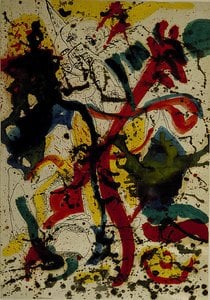
Totem Lesson 2

"Totem Lesson 2": Un affascinante esempio di Astrattismo Espressionista di Jackson Pollock, caratterizzato da una composizione dinamica e complessa con colori vibranti e linee energiche. Scopri l'opera originale su WikiArt."

Scopri Jackson Pollock (1912-1956), il rivoluzionario artista dell'Espressionismo Astratto e della tecnica del dripping! Esplora i suoi capolavori iconici e l'energia creativa che hanno cambiato la storia dell'arte moderna.

Giclée / Stampa d'arte

Stampa giclée o su tela di qualità museale, con produzione rapida e diverse opzioni di finitura.

P118B $10
P118H $10
P118W $10
P438Z $10
P508JH $12
P508YH $12
P805H $10
P805Z $10
P919BZ $10
P919G $10
P919XJ $10
P959ZH $10
P968JZ $12
W106C $8
W218G $10
W218JH $8
W218Y $10
W307PJ $10
W316G $10
W316PJ $8
W316Y $10
W398PJ $8
W4111J $10
W500HY $15
W500JH $15
W692G $12
W849H $8
W940BG $15
W953PJ $8

Standard
custom
CM
INCH

Scegli tra le nostre dimensioni predefinite, che rispettano le proporzioni originali dell'opera d'arte.

larghezza
altezza

È possibile inserire dimensioni personalizzate per adattare l'opera a una cornice o a uno spazio specifico. Se la dimensione selezionata non corrisponde alle proporzioni dell'immagine originale, procederemo al ritaglio dell'opera o all'estensione dell'immagine con un bordo specchiato o a tinta unita. Un mockup digitale ti verrà inviato per approvazione prima dell'inizio della produzione.
Si prega di notare che l'anteprima a schermo non riflette il ritaglio o l'estensione effettivi. Solo il mockup mostrerà accuratamente la composizione finale.
Sebbene siano disponibili dimensioni personalizzate, si raccomanda di selezionare una dimensione dall'elenco predefinito per preservare le proporzioni originali.

Consegna in tutto il mondo () in 2 settimane invece delle normali 4/5 settimane. (6 Luglio)

why_choose_icon
Spedizione espressa gratuita in tutto il mondo
why_choose_icon
Tela in lino di alta qualità
why_choose_icon
Assicurazione completa sulla spedizione
why_choose_icon
Garanzia di rimborso dei dazi doganali
why_choose_icon
Garanzia di fedeltà cromatica
why_choose_icon
Politica di reso entro 60 giorni (solo per difetti)
why_choose_icon
Garanzia di rimborso al 100%
why_choose_icon
Sconto per acquisti multipli

Prezzo totale

-

reproduction

Totem Lesson 2

Giclée / Stampa d'arte

Dimensioni riproduzione

-

Prezzo totale finale

-

Informazioni rapide

  • Notable elements or techniques: Drip technique, all-over painting
  • Artistic style: Action Painting
  • Medium: Oil paint on canvas
  • Subject or theme: Abstraction
  • Movement: Abstract Expressionism
  • Artist: Paul Jackson Pollock
  • Year: 1945

Descrizione dell'opera

Totem Lesson 2: An Exploration of Abstract Expressionism’s Chaotic Harmony

Paul Jackson Pollock's "Totem Lesson 2," painted in 1945, stands as a cornerstone of Abstract Expressionism—a movement that irrevocably altered the landscape of American art and continues to fascinate viewers today. More than just pigment splashed onto canvas, this artwork embodies a profound dialogue between spontaneity and control, mirroring the anxieties and aspirations of its era while simultaneously transcending temporal boundaries through its enduring visual language.
  • Historical Context: The painting emerged during World War II’s shadow, reflecting the pervasive sense of unease and uncertainty felt across Europe and America. Pollock's artistic explorations coincided with a burgeoning interest in psychoanalysis—particularly Jungian psychology—which influenced his conceptual framework and informed his preoccupation with archetypal imagery.
  • Style & Technique: Pollock’s signature “drip” technique – pouring, dripping, and splattering paint onto a horizontal surface – revolutionized painting practice. Unlike traditional methods prioritizing meticulous brushstrokes and illusionistic perspective, this approach prioritized process over product, emphasizing the artist's physical engagement with the canvas as an integral component of the creative act. The resulting textured surface—a dense layering of interwoven lines and pools of color—captures the dynamism inherent in the subconscious mind.
  • Composition & Color Palette: The artwork eschews conventional compositional rules; instead, it presents a deliberately asymmetrical arrangement where shapes overlap and intersect, creating visual depth without resorting to spatial recession. Dominating the palette is grey – a hue often associated with melancholy and contemplation—but punctuated by bursts of orange, brown, white, and subtle hints of red. These contrasting colors generate tension and vibrancy, mirroring the complexities of human emotion.
  • Symbolism & Emotional Impact: The central dark form resembling a totem or figure is interpreted as representing primal instincts and ancestral wisdom – themes prevalent in Native American art, which profoundly impacted Pollock’s artistic sensibilities during his formative years. The overall impression conveyed by “Totem Lesson 2” is one of restless energy and profound contemplation; it invites viewers to confront the ambiguities of existence and to embrace the beauty found within apparent chaos.
  • Materials Used: Executed in oil paints on canvas, "Totem Lesson 2" exemplifies Pollock’s commitment to utilizing readily available materials—a deliberate rejection of academic conventions—to achieve maximum expressive potential. The thick impasto technique further enhances the textural quality of the artwork, grounding it in a physicality that resonates with viewers and underscores its connection to the artist's physical presence during creation.

Further Research & Inspiration

For deeper insights into Pollock’s artistic vision and the broader context of Abstract Expressionism, explore resources such as WikiArt () and the National Gallery ()’s exhibition on Abstract Expressionism, where you can discover related artworks and biographical information about Jackson Pollock himself. Consider how "Totem Lesson 2" might contribute to a thoughtfully curated interior design scheme—its bold color palette and textured surface offering a striking counterpoint to softer furnishings and neutral backgrounds.

Opere simili


Biografia dell'artista

Early Life and the Seeds of Innovation

Paul Jackson Pollock, born in Cody, Wyoming, in 1912, was a restless spirit from the outset. His early life was marked by frequent relocation as his father pursued work as a land surveyor across the vast landscapes of the American West. This itinerant existence instilled in young Pollock a deep connection to the natural world and an exposure to diverse cultures, particularly through encounters with Native American art during those surveying trips – impressions that would subtly permeate his artistic vision later in life.

Pollock’s formal artistic training began at the Manual Arts High School in Los Angeles, followed by studies at the Art Students League of New York under the tutelage of Thomas Hart Benton. Benton, a prominent figure in the Regionalist movement, emphasized rhythmic composition and narrative themes rooted in American life. While Pollock initially absorbed these lessons, his inherent inclination leaned toward more abstract explorations. He was also profoundly impacted by Mexican muralists like José Clemente Orozco, whose powerful depictions of social struggle resonated deeply with him. These early influences laid a foundation, but it was the burgeoning world of Surrealism that truly unlocked Pollock’s artistic potential.

The Birth of Action Painting and a Revolutionary Technique

The 1930s saw Pollock experimenting with various techniques, seeking alternatives to traditional brushwork. He began pouring paint, exploring its fluidity and unpredictable nature. However, it was around 1947 that his artistic trajectory underwent a radical transformation. Abandoning the easel altogether, Pollock laid canvases directly on the floor, initiating what would become known as his “drip painting” technique.

This wasn’t merely about applying paint; it was about embodying the act of creation itself. Pollock's canvases became arenas for physical expression, capturing the immediacy of his gestures and emotions. The resulting paintings are characterized by their “all-over” composition – a lack of central focus that invites the viewer to explore the entire surface as a unified field of energy. Intricate networks of lines and colors intertwine, creating a visual complexity that is both captivating and challenging. He employed unconventional tools—sticks, knives, even syringes—to manipulate the paint in unpredictable ways, further emphasizing the spontaneous nature of his process.

This innovative approach positioned Pollock as a central figure in the burgeoning Abstract Expressionist movement, which emerged in post-World War II New York City. Abstract Expressionism prioritized spontaneous gesture, large scale, and non-representational imagery, reflecting a broader cultural shift away from traditional artistic conventions. His marriage to fellow artist Lee Krasner was also pivotal; she provided unwavering emotional support and actively encouraged his artistic development, recognizing the groundbreaking nature of his work.

Iconic Works and Lasting Legacy

Pollock’s most celebrated works—such as Number 1, 1950 (Lavender Mist), One: Number 31, 1950, Blue Poles: Number 11, 1952, and Convergence—are testaments to his revolutionary technique. These paintings are not simply images; they are records of a performance, imbued with the artist’s physical presence and emotional intensity. The dynamic energy that emanates from these canvases is palpable, drawing viewers into a world of pure abstraction.

His style transcends mere aesthetics; it's an exploration of process over product. Pollock sought to capture the immediacy of his actions and emotions on canvas, rejecting traditional notions of composition and representation. He delved into Jungian psychology, exploring archetypes and the subconscious in his art, seeking to tap into universal symbols and primal energies.

Pollock’s impact on the history of art is immeasurable. He fundamentally altered the way artists approached painting, breaking free from easel-based methods and embracing a more performative approach. His work helped solidify New York City's position as a global center for modern art, shifting the focus away from European dominance. His influence can be seen in the work of countless artists who followed, including those associated with Color Field painting and later forms of abstract expressionism.

Though initially met with mixed reviews—some critics dismissed his work as chaotic or lacking skill—Pollock’s reputation grew steadily after his untimely death in 1956 at the age of 44. Today, he is universally recognized as one of the most important and influential artists of the 20th century, a visionary who dared to challenge conventions and redefine the boundaries of artistic expression.

Jackson Pollock

Jackson Pollock

1912 - 1956 , Stati Uniti d'America

Dati rapidi

  • Artistic Movement Or Style: Abstract Expressionismo
  • Artists Who Influenced This Artist:
    • José Clemente Orozco
    • Thomas Hart Benton
  • Date Of Birth: 28 gennaio 1912
  • Date Of Death: 11 agosto 1956
  • Full Name: Paul Jackson Pollock
  • Nationality: American
  • Notable Artworks:
    • Numero Uno, 1950 (Lavanda Nebulosa)
    • Uno: Numero 31, 1950
    • Blu Poles: Numero 11, 1952
    • Convergenza
  • Place Of Birth: Cody, Wyoming
Esplora opere d'arte organizzate per temi, stili e caratteristiche.