The Soul in Ink: The Raw Power of Ikkyū Sōjun’s Calligraphy
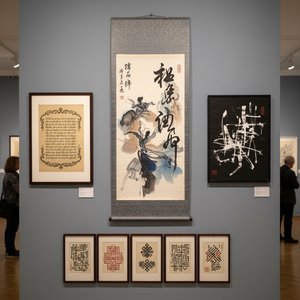
In the quiet, contemplative spaces of a curated collection, few pieces command attention with such visceral intensity as the Calligraphy (Bokuseki) by the legendary Zen master Ikkyū Sōjun. This work is not merely an arrangement of characters on paper; it is a direct transmission of spirit, a moment of profound enlightenment captured in the rhythmic dance of black ink. To behold this piece is to witness the "traces of ink" that define the Bokuseki tradition, where the brushstroke serves as a mirror to the artist's internal state. The composition, characterized by its striking contrast and spontaneous energy, invites the viewer into a meditative dialogue with the Muromachi period, offering a window into a time when art and spiritual practice were inextricably linked.
The technique employed here is a masterclass in controlled spontaneity. Each character emerges from the aged, textured paper with a weight that suggests both permanence and fleetingness. The ink varies in density, from deep, saturated blacks that anchor the composition to lighter, more translucent washes that suggest movement and breath. This interplay of light and shadow within the strokes creates a three-dimensional quality, making the calligraphy feel alive, as if the energy of the monk’s hand is still vibrating upon the surface. For the discerning collector or interior designer, this piece offers a sophisticated focal point, bringing an organic, historical gravity to modern minimalist settings or classical East Asian-inspired interiors.
A Legacy of Rebellion and Zen Truth
To understand the emotional depth of this calligraphy, one must understand the man behind the brush. Ikkyū Sōjun was no ordinary monk; he was a radical iconoclast who famously challenged the rigid, often hypocritical, monastic structures of his era. His life was a whirlwind of poetry, eccentricity, and profound spiritual inquiry. This rebellious spirit is etched into every line of his calligraphy. Unlike the more formal, disciplined styles of courtly calligraphy, Ikkyū’s work embraces a certain ruggedness and unvarnished truth. It reflects the Zen ideal of mushin, or "no-mind," where the ego vanishes, leaving only the pure, unfiltered expression of the present moment.
The historical significance of this piece is further elevated by its provenance and cultural weight. Held within prestigious institutions like the Tokugawa Art Museum, such works are recognized as vital artifacts of Japanese heritage. For those seeking to incorporate art into their homes that transcends mere decoration, this reproduction offers more than aesthetic beauty; it provides a connection to a lineage of profound philosophical thought. It is an invitation to embrace imperfection, to find beauty in the weathered and the worn, and to cultivate a space of deep, resonant peace.
Domande e risposte
Quali colori dominano "Calligraphy (Bokuseki)" di Ikkyū Sōjun?
"Calligraphy (Bokuseki)" di Ikkyū Sōjun utilizza una tavolozza Neutrals, con Phthalo Green (#1d231f) come colore dominante.
Quale emozione trasmette l'opera del Zen "Calligraphy (Bokuseki)"?
L'emozione Spiritual di "Calligraphy (Bokuseki)" accompagna il suo stile Zen.
Dove posso trovare una guida per "Calligraphy (Bokuseki)"?
La pagina Schede didattiche di "Calligraphy (Bokuseki)" di Ikkyū Sōjun offre una scheda informativa stampabile in due fogli: l'opera d'arte con la sua tabella identificativa, una linea temporale decennale che la colloca nel periodo di vita dell'artista, altre opere dello stesso autore, la tavolozza dei colori misurata e citazioni pronte per essere copiate in quattro stili diversi.



 Anteprima in scala reale
 Passa alle stampe
 Condividi
 Condividi
 Dettagli
 Guida stampabile

 Scarica
 Articoli simili
 Radiografia
 Slideshow
 Statistiche


 Leggi tutto






































 L'opzione vetro è disponibile solo per dimensioni inferiori a 110 cm